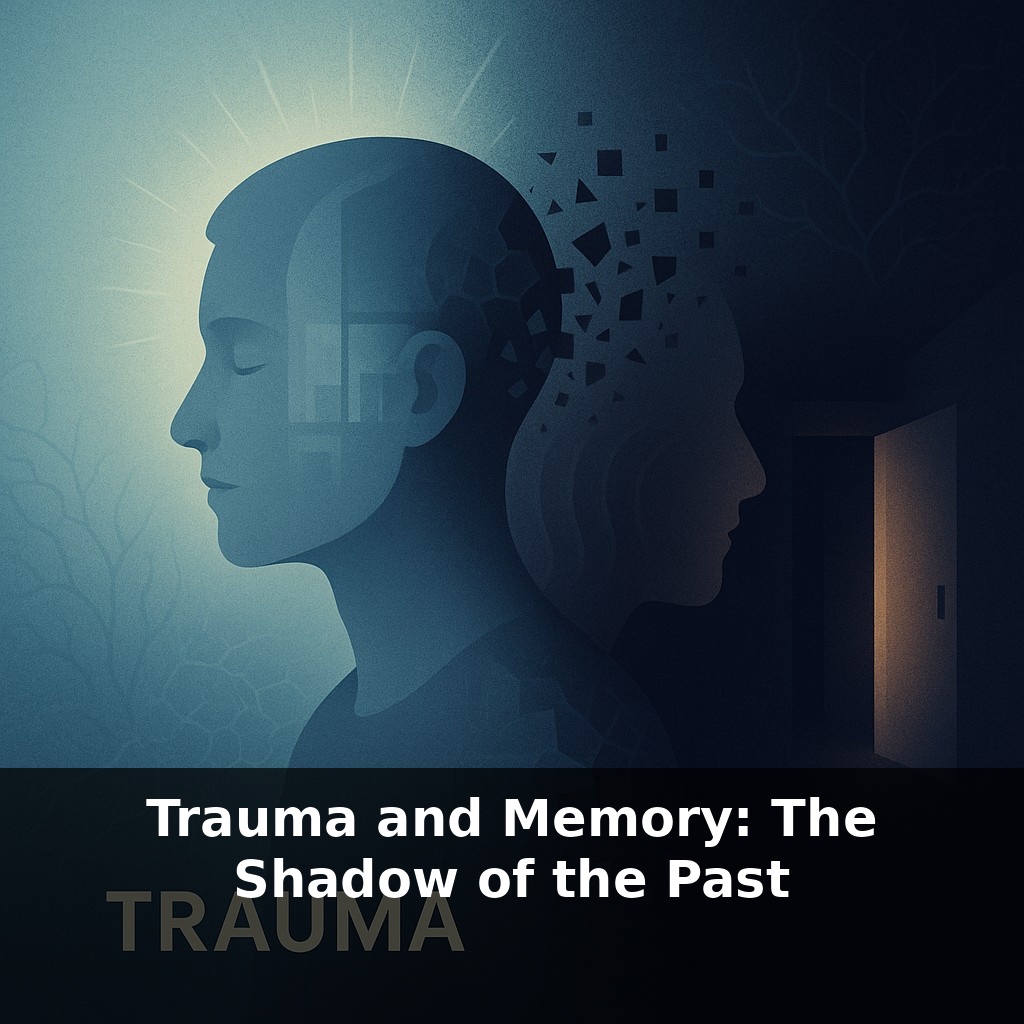
A single bad day can echo louder than an entire decade of ordinary life. A slammed door, a certain song, a smell from a hallway—and suddenly you’re not in the present anymore. You’re back there. Why does the brain treat some moments like rumors, and others like they’re carved in stone?
About 60–80% of people will live through at least one event that meets clinical definitions of trauma—yet most will never develop PTSD. Two people can walk out of the same crash, assault, or disaster with memories that age in completely different ways: for one, the event becomes a sharp, haunting loop; for the other, a painful but quiet chapter that rarely forces itself open. The difference isn’t willpower or moral strength. It’s a mix of biology, timing, support, and how the brain stitches the experience into a story afterward. Some brains keep traumatic moments “raw,” like unsaved edits on a document that pop up every time you open the file. Others manage, over weeks and months, to tuck them into context: still awful, but no longer in charge. In this episode, we’ll explore what pushes memory toward one path or the other—and how therapy can gently redirect it.
Some of this difference shows up in where attention goes afterward. After trauma, some people become expert threat-detectors: every hallway scanned, every stranger evaluated, like a browser with too many security tabs open. Others lean hard into distraction—overworking, overhelping, overnumbing—to avoid any mental “pop‑ups” at all. Both are understandable, and both quietly train the brain. What we repeatedly notice or push away teaches our memory systems what “matters.” In the next section, we’ll look at how this training shapes which fragments stay sharp, which blur, and which go missing.
Around 1 in 10 people exposed to trauma will go on to develop PTSD. That gap isn’t random; it reflects how attention, meaning‑making, and physiology interact in the weeks and months after the event.
One big factor is what your mind does *between* the obvious distressing moments. For some, the brain keeps running “silent rehearsals”—brief, automatic replays of worst parts, especially before sleep or during idle time. The more often those fragments are revisited without new context, the more efficiently the brain retrieves them. It’s like an algorithm learning: “Oh, you keep clicking this? I’ll make it load faster.”
Others, with similar symptoms at first, end up having different conversations around the event. They might tell the story in ways that highlight survival, community response, or practical lessons. That doesn’t erase pain, but it quietly adds alternative “routes” the memory can take when it surfaces: not only terror, but also, “this is something awful that happened, and here’s what came next.”
Physical state matters too. High, prolonged stress hormone levels in the aftermath can keep the nervous system in emergency mode. Poor sleep, substance use, and ongoing danger all make it harder for the brain to sort and “file” what happened. By contrast, predictable routines, safe relationships, and even very ordinary pleasures (warm meals, walks, familiar voices) send repeated signals that the emergency is *over*, nudging the system toward consolidation instead of perpetual alert.
Social reactions shape memory as well. Being believed and supported reduces the need to keep internally “proving” the event to yourself, which can lower intrusive replay. Dismissal, blame, or minimization often do the opposite, driving people to mentally re‑examine every detail, searching for certainty or justification.
Over time, these loops—rehearsal, meaning, body state, and social response—either reinforce the sense that the trauma is still happening, or slowly anchor it in the past. No single moment decides the outcome; it’s the accumulation of hundreds of small, often invisible, interactions between brain, body, and world.
A firefighter and a violinist can walk past the same construction site and react in completely different ways. For the firefighter who once survived a building collapse, the clatter of scaffolding might yank loose a sharp, disorienting replay. For the violinist, the same sound just blends into city noise. What differs isn’t toughness; it’s the web of associations each brain has built since. Over time, some people start surrounding the traumatic episode with new links: the coworker who checked on them, the skill they learned, the small ritual that helps them sleep. Those added threads don’t delete the original scene, but they give it more neighboring “shelves” it can sit on when it shows up. Others, especially when stuck in blame or secrecy, end up with the episode floating almost alone, connected mainly to fear or shame. Like a piece of code with only one function call, it keeps executing the same routine every time it’s triggered, leaving little room for an updated version to take hold.
Only a fraction of traumatic experiences will ever reach a therapist’s office. As digital tools spread, we may see “micro‑interventions” woven into daily life: a breathing prompt on your watch when news alerts spike, or an app that quietly suggests grounding exercises after you report a bad dream. Like adjusting a recipe while it simmers, small, well‑timed tweaks to attention, sleep, and meaning‑making could reshape how future memories settle—long before symptoms harden into a disorder.
The shadow of trauma isn’t erased; it’s edited over time. New experiences, like slow deposits into an emotional savings account, can gradually outweigh the early shocks. Future tools may help people “rebalance” sooner—pairing brief check‑ins, body awareness, and guided recall so the past becomes one chapter, not the whole book.
To go deeper, here are 3 next steps: (1) Watch Bessel van der Kolk’s free Google Talk on *The Body Keeps the Score* and follow along by literally pausing to note each example he gives of “body memories” (nightmares, startle responses, numbness) that feels familiar to you. (2) Try a 10-minute somatic grounding practice from the free “TRF Tension & Trauma Releasing Exercises (TRE) Introduction” video on YouTube and notice, without judging, how your body reacts before and after. (3) If the episode’s discussion of fragmented or missing memories resonated, read chapter 3 of *The Body Keeps the Score* (or the free sample on Kindle/Google Books) and bring one specific question from it to r/CPTSD or r/traumatoolbox on Reddit to hear how others have grappled with similar memory gaps.