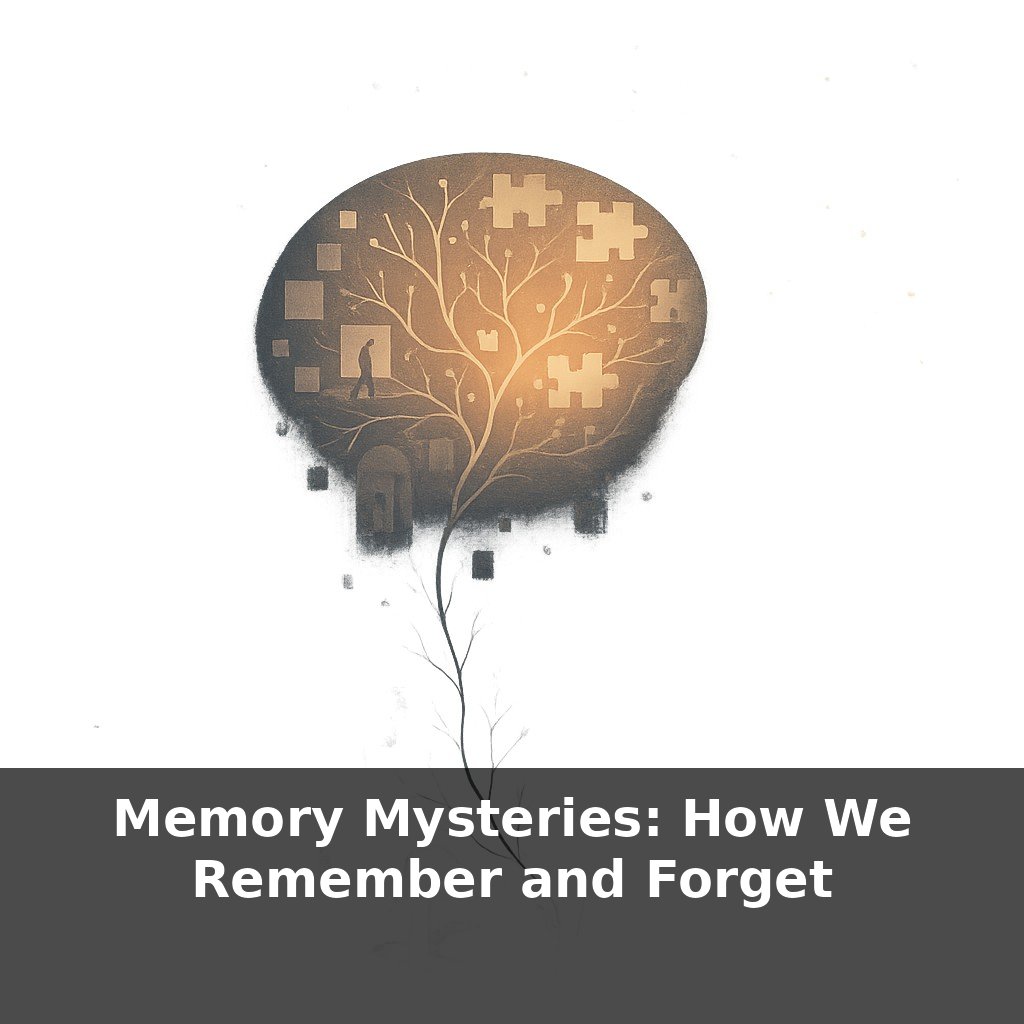
Right now, as you listen, your brain is quietly time-traveling. Neuroscientists find that many of the same regions that replay your past also construct your imagined future. So when you “remember,” you’re already rehearsing who you might become tomorrow.
Neuroscientists have a name for this future-focused side of memory: “prospection.” It’s not a crystal ball—it’s closer to a mental prototype workshop. Each time you project yourself into next week’s meeting or next year’s vacation, your brain quietly pulls fragments from countless prior moments and assembles a rough draft of what might happen. These drafts don’t stay in your head. They change how long you’re willing to wait for a reward, whether you save or spend, even how healthy you expect to be at 70. Subtle design choices in the world around you exploit this: a retirement app that shows an age-progressed image of your face, or a grocery site that highlights when your delivery will arrive, can shift real behavior. Prospection isn’t just a private movie—it’s a lever society can pull, for better or worse.
Prospection quietly shapes choices that seem purely “rational.” When you decide whether to hit snooze, accept a job, or order dessert, you’re really betting on one imagined storyline over another. The twist: those storylines are often sketchy and biased. We’re prone to overestimate how happy a promotion will make us, yet underestimate how quickly we’ll adapt. Policymakers, marketers, and even health apps exploit these blind spots—countdown timers, streaks, and “limited spots left” all tug on your sense of what tomorrow might bring, nudging you before you notice any memory-like machinery at work.
Around 60–70 percent of the neural “footprint” for reliving yesterday overlaps with projecting yourself into tomorrow. That overlap is the backbone of the Constructive Episodic Simulation Hypothesis: your memory system is optimized less for accuracy and more for recombining stored details into useful forecasts. Neuroscientist Daniel Schacter calls this a “feature, not a bug”—the same flexibility that lets you invent tomorrow’s meeting also leaves yesterday’s meeting open to distortion.
You can see this flexibility most clearly when it’s missing. People with severe hippocampal damage don’t just struggle to recall the past; they also struggle to build rich scenes of the future. In lab tasks, they produce only a handful of concrete details when asked to describe an upcoming picnic or holiday. Their futures sound thin and schematic, more like a to‑do list than a lived experience. This suggests the hippocampus isn’t just an archive; it’s a scene-construction engine that stitches together who was there, what the place felt like, how events might unfold.
Yet in everyday life, healthy brains lean hard on this machinery. Experience-sampling studies show that our minds spontaneously drift to upcoming events dozens of times per day—planning dinner, anticipating a friend’s reaction, rehearsing a difficult conversation. These aren’t idle fantasies. They’re typically constrained by your goals, your beliefs, and the semantic scaffolding of what “normally” happens in such situations. Prospection is less like daydreaming in a hammock and more like rapid A/B testing of possible timelines.
Designers and institutions harness this continuously. When Amazon highlights a specific delivery date, it’s not just supplying information; it’s seeding a vivid mini-simulation in which the package is already on your doorstep, making “later” feel concrete enough to wait for. Financial apps do something similar when they project your savings balance into a future scenario, complete with milestones you haven’t hit yet. In both cases, the quality and emotional tone of the scenario—how detailed, how plausible, how personally relevant—can tip real choices in the present.
A job candidate walks into an interview having silently rehearsed the conversation all week. They’ve already “seen” the room, the questions, even the awkward joke they might crack. Those private run‑throughs matter: candidates who mentally script specific future interactions tend to speak more fluently and negotiate better terms, not because they guessed the questions, but because their nervous system has sampled the terrain.
You can watch the same engine at work in everyday tools. Calendar apps that color‑code tomorrow’s events, fitness trackers that preview your “next milestone,” even airline sites that show a progress bar to departure—all are cues that invite you to pre‑live a slice of the future and decide accordingly. Think of the hippocampus as a smart investing algorithm: instead of tracking every past transaction, it continuously rebalances a portfolio of memories into simulated “what‑if” scenarios, and your behavior follows the forecast it finds most compelling.
Tech that leans on future‑thinking won’t just sell you things; it could reshape your values. A learning app might let teens “test‑drive” different careers by walking through ordinary Tuesdays, not just highlight reels. Cities could crowd‑source visions of safer streets, then plan around the most shared scenes. But once institutions can steer which futures you rehearse, we’ll need guardrails—transparent settings, “why this scenario?” labels, even digital second opinions on long‑term choices.
Your future thoughts aren’t just previews; they’re levers. Each time you sketch tomorrow—choosing routes, words, even snacks—you nudge probabilities, like tweaking code before deployment. Your challenge this week: notice one decision a day you steer by “seeing ahead,” and deliberately run an alternate version before you act.