In less time than it takes to unlock your phone, most people have already decided if they’d date you—just from your first photo and a single sentence. You’re not in the room to explain. So the real question is: what story is your profile telling before you ever say a word?
Most people respond to this by polishing harder: better angles, smarter jokes, more “optimized” photos. But there’s a catch: the more you curate, the easier it becomes to drift away from how you actually look, live, and connect. Research keeps finding the same pattern—profiles that feel a bit “too perfect” might win quick swipes, but they’re less likely to turn into real conversations, real dates, or real chemistry. Why? Because the moment something feels off, people pull back. Instead of trying to impress “everyone out there,” it’s more effective to help the right people recognize you. That means recent photos that show your real life, bios that reveal how you think (not just what you like), and a consistent vibe between your images and words. Authenticity here isn’t a moral issue; it’s a strategy for attracting people who actually enjoy you in person.
So if polishing isn’t the answer, what is? Think less about “selling yourself” and more about calibrating expectations. The profiles that actually lead to easy, relaxed dates tend to do three things well: they narrow the audience instead of widening it, they reveal enough specifics that someone can start a real conversation, and they avoid surprises between screen and real life. Like adjusting a recipe, tiny tweaks—one clearer photo, one more concrete detail, one less vague cliché—can shift your matches from “anyone who swipes right” to “people who might actually fit your day-to-day.”
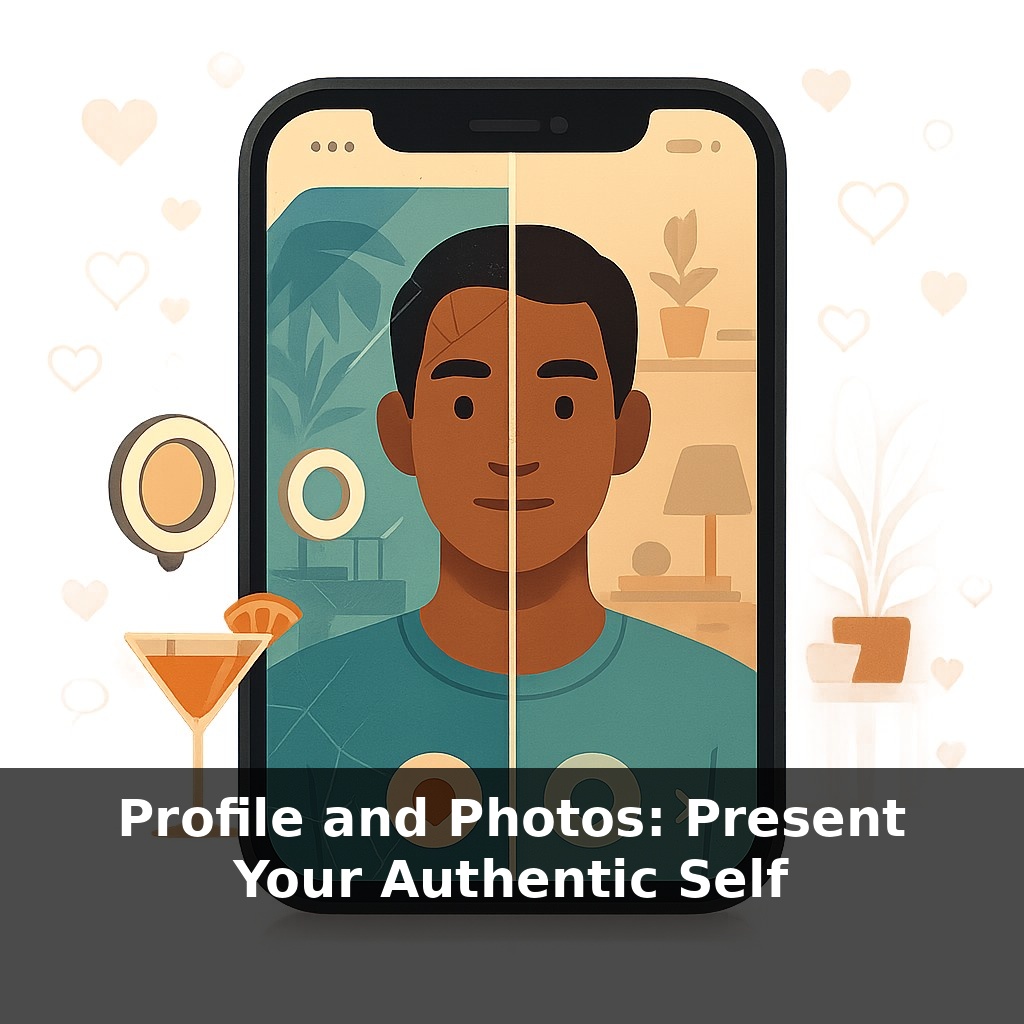
Start with what people actually see first: your photos. Not “best ever” photos—typical ones. Ask, “If someone bumped into me this week, would they recognize me from these?” That question is more important than “Do I look hot here?” because tiny mismatches add up. A slightly older haircut, a slightly edited jawline, a slightly filtered skin tone—none of these seem huge alone, but together they create that subtle “something’s off” feeling when you finally meet.
Aim for 3–6 images that each answer a different question:
- “What do you look like, clearly?” One close, well-lit shot of your face, neutral background, minimal sunglasses/hats.
- “How do you move through the world?” A candid full-body shot: walking the dog, cooking, at a park—anything where your posture and style are visible.
- “What does a normal weekend look like?” Not your wildest adventure; your most common one. A coffee shop, a book on the couch, climbing gym, pickup game, brunch with a small group.
- “How social are you?” One group photo max, where it’s obvious who you are. Avoid the “Where’s Waldo?” collage of friends.
- “What are you into that shapes your days?” Instruments, art supplies, running shoes, a half-finished puzzle. Action, not props posed like a catalog.
Keep the lighting honest: natural daylight near a window beats any smoothing filter. If a photo requires an explanation (“I don’t usually dress like this…”), it probably doesn’t belong in your core set.
Then, let your text quietly confirm what your photos already hint at. Instead of listing traits (“funny, loyal, ambitious”), show micro-snapshots of your habits, preferences, and quirks. Think in terms of “headline plus proof”:
- Headline: Morning person Proof: “6 a.m. coffee and a podcast is my version of nightlife.”
- Headline: Family-oriented Proof: “I never miss my niece’s soccer games, even when it’s freezing.”
You’re not trying to cover everything; you’re giving people just enough to say, “I can see how a Tuesday with this person would feel.” That matters more than demonstrating range or impressiveness. The more your photos and words quietly agree about who you are, the less work your matches have to do to trust what they’re seeing.
Think of this stage like checking your vital signs before leaving the hospital: small, quick measurements that reveal whether your profile is “healthy enough” to meet people in the wild. One way to test it is to look for micro-mismatches. Do your photos say “homebody” while your prompts read like a constant festival? Does your “love quiet nights in” line sit next to three party shots? These aren’t moral issues; they’re tiny promises your profile can’t keep.
Try stress‑testing your profile with context questions: “If someone only saw my photos, what assumptions would they make about my lifestyle, schedule, or social energy?” Then ask, “Do my words support those assumptions, gently adjust them, or contradict them?” If your pictures suggest “busy, urban, late nights” but you’re in bed by 10 most days, tweak one side or the other.
When in doubt, add one concrete, present‑tense detail that anchors you in your actual week: a recurring ritual, a real constraint, or something you reliably look forward to.
In the near future, “authentic” may stop being a vague vibe and become something apps actively measure. As AI gets better at spotting heavy filters and fabricated details, platforms can reward profiles that line up across time: photos, prompts, even how you text. That might sound strict, but it favors people whose online selves already match their offline lives, and shifts the game from performance to consistency—less about dazzling strangers, more about being easy to trust over months, not minutes.
Treat your profile as a living thing, not a finished project. As your routines, priorities, and sense of self shift, let your photos and words evolve too. Tiny updates—swapping in a new hobby shot, changing one line to match your current season—signal that you’re present, not on autopilot. You’re not carving a statue; you’re tending a small garden that grows with you.
Before next week, ask yourself: 1) If someone who really gets me looked at my current profile photos, which ones would they say feel most “like me,” and which ones feel like I’m performing a role—and why? 2) When I scroll my camera roll from the last 3–6 months, which 3 photos show me doing things I actually love (with real expressions, real settings), and what would change if I swapped those into my profile today? 3) If my profile photos could quietly say one message about who I am (e.g., “curious,” “playful,” “grounded,” “creative”), what small tweak—changing one photo, background, outfit, or expression—could I make today so that message comes through more clearly?