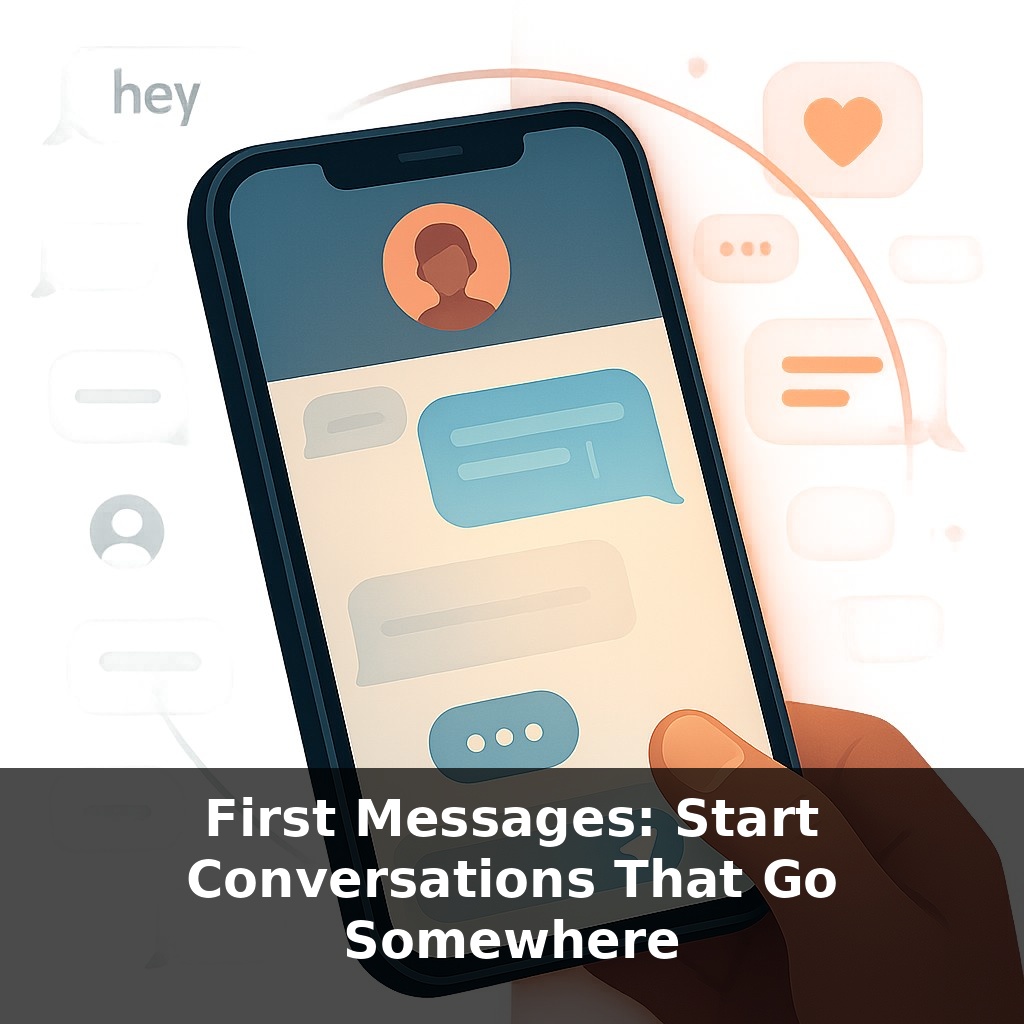
About four out of five “hey” messages on dating apps vanish into silence—no reply, no spark, nothing. Now jump into that split-second moment: your thumb hovering over “send,” their profile still open. Same app, same photos, but a first line that actually makes them feel seen.
Seventy characters. That’s about how much space you have before most people decide “reply” or “ignore” and flick their thumb away. Not a paragraph, not your life story—barely a sentence. But inside that tiny window, you can signal something powerful: “I actually paid attention to you, and I’m willing to go first.”
This is where most people panic and default to the safest, blandest options: “Hey,” “How’s your day?” or a recycled line that’s been used on half the city. The irony is, those safe choices usually feel the riskiest on the receiving end, because they give the other person absolutely nothing to work with.
Instead of chasing the perfect clever line, you’re going to build messages that quietly stack the odds in your favor: specific, a little vulnerable, and easy to answer—more like seasoning a dish than dumping the whole spice rack on at once.
Here’s the twist most people miss: your opener isn’t really about impressing them—it’s about making a decision easy for their tired, distracted brain. They’ve got work emails, group chats, and three other apps pinging. In that tiny gap before they swipe away, their mind is scanning for three things: “Is this safe? Is this interesting? Is this effortless to answer?” When your message does all three, it doesn’t feel like work to respond; it feels like relief. Instead of forcing chemistry, you’re lowering the barrier to a genuine “Hey, I could actually talk to this person.”
Think of your first message as doing three tiny jobs in under ten seconds: (1) prove you’re talking to them, not a template, (2) give a glimpse of who you are, and (3) hand them a reply on a silver platter. Done right, it feels casual. Underneath, it’s extremely deliberate.
Start with the most concrete piece: reference something specific. Not “you seem nice” or “cool profile,” but a detail they chose to show you. The more observable, the better: a photo, a hobby, a line in their bio, a place they’ve been. Vague compliments blur together; specifics stick. “You’ve got great taste in live music” is fine. “You saw Boygenius at Red Rocks? I’m extremely jealous” is sharper—anchored in something they can see you noticed.
Next, instead of interrogating them, offer a sliver of yourself. One sentence is enough. The goal isn’t to dump history; it’s to put a little skin in the game so they’re not answering a stranger, they’re continuing something you started. If you comment on their hiking photo, you might add, “I’m more of a coastal-trails person, but I’m trying to get over my fear of steep drop-offs.” You’ve now shared a preference and a tiny quirk. People instinctively answer in the same key.
Then, turn that into an easy, specific question. Not a life interview, not “So, what are you looking for here?” Just one low-effort choice or opinion. “What’s your go-to trail near the city?” beats “How’s your weekend going?” because it narrows the mental search. Wide-open questions sound deep but often stall; constrained questions get actual answers.
Put together, a solid opener might follow this spine:
1) Specific hook 2) Mini self-reveal 3) Clear, narrow question
For example: “Your photo at the street-food stall made me instantly hungry. I’m on a personal mission to find the best dumplings in the city. Where should I go next—do you have a favorite spot?”
Notice what this does: it orients them to a concrete thing, shows a bit of your personality, and asks for a small, winnable response. No over-the-top wit, no pressure. And because you’ve given them multiple threads (food, the city, your “mission”), they can pick whichever feels easiest.
Your challenge this week: send five first messages that all follow this pattern—specific detail, one-line self-share, and a small, clear question. Vary the topic each time (music, travel, books, food, etc.), and after each reply—or silence—screenshot the exchange. By the end of the week, compare which detail-hooks and questions got people talking the most, and keep those patterns.
Think of those three parts of your message—specific detail, tiny self-share, easy question—like ingredients that change flavor depending on how you combine them. The trick now is learning to swap pieces in and out so you don’t sound like you’re copy‑pasting yourself.
You can lean on three “dials”:
First, tone: playful, sincere, or dry. “You and that dog both look like you run this park” reads differently from “Your dog looks like the best walking partner.”
Second, depth: light surface topics (food, music, memes) versus slightly richer ones (values, routines, aspirations). On some profiles, “I just switched to a four‑day workweek experiment—how’s your ideal week structured?” will land better than another brunch joke.
Third, tempo: short bursts versus slightly longer setups. On apps where 50–90 characters perform best, you might compress:
“Your travel photos make my passport jealous. I’m plotting a quick escape—where would you send me for a 3‑day trip?”
Reply rates are already shaped by tiny wording tweaks; soon, algorithms will join the conversation. As AI tools suggest “smart” introductions and platforms filter for “authenticity,” your job shifts from inventing lines to editing them so they still sound like you. Voice and video intros will turn pauses, eye contact, and tone into part of that first impression, the way seasoning quietly transforms the same basic dish into something memorable—or forgettable.
Treat these first messages like draft recipes, not final exams. You’ll tweak the seasoning as you go, noticing who lights up at book talk versus banter about road trips or social causes. Over time, your openers become less about “impressing” and more about filtering: the people who answer in your flavor are the ones worth pouring energy into.
Try this experiment: for the next 3 days, send exactly 5 first messages on your dating app that all follow this formula: (1) a specific callback to something in their profile, (2) a playful “what if” or “either/or” question, and (3) a tiny, shareable detail about you. For example: “You mentioned loving road trips—what’s your *actual* road-trip snack strategy: salty, sweet, or chaotic mix? I once drove 6 hours powered only by pretzels and true-crime podcasts.” Log how many people respond and, even more importantly, how many send more than one message back. On day 4, tweak one part of the formula (e.g., make the questions more specific or your self-detail a bit quirkier) and send 5 more, then compare which version got deeper replies.