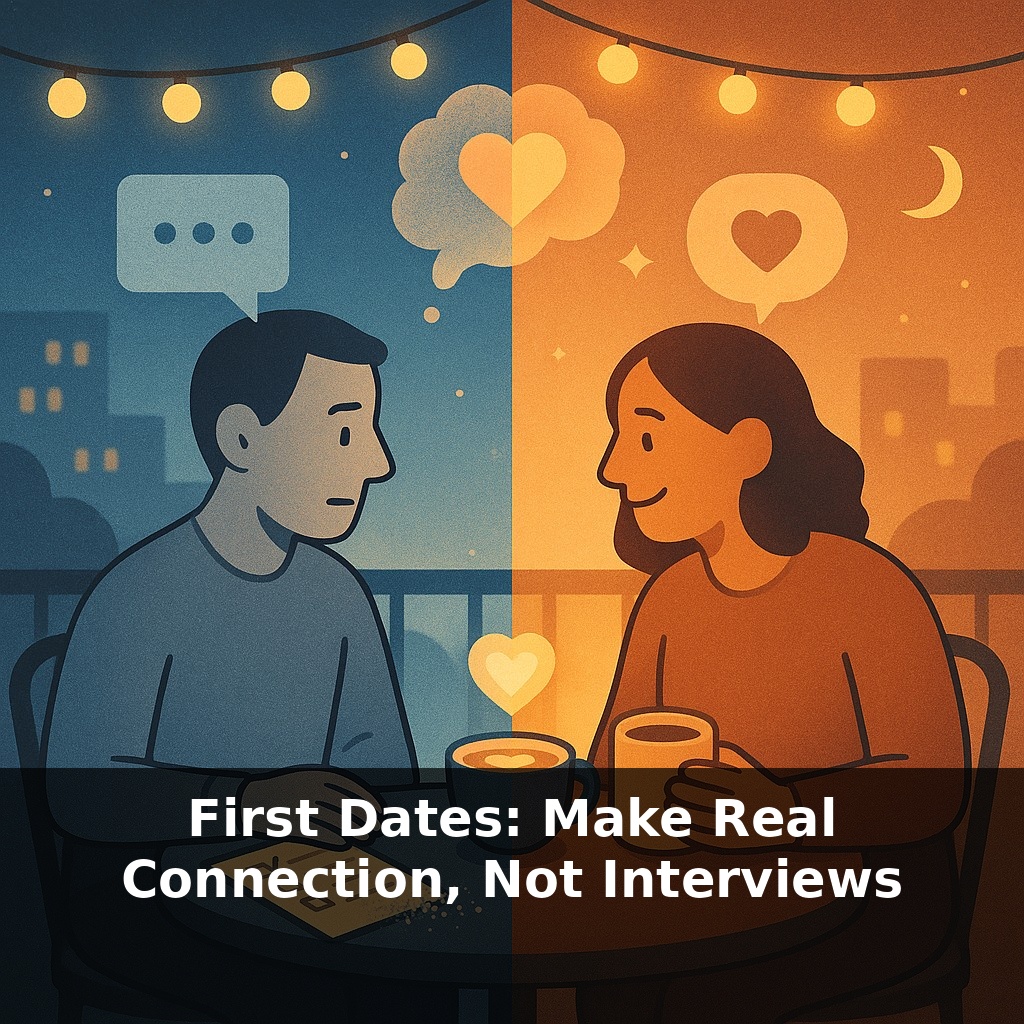
In the time it takes to read a menu, your date’s brain has already decided if you seem safe. Now picture two first dates: one feels like a job interview, the other like sharing secrets on a porch at midnight. Same people, same facts—yet one leads to a second date, the other vanishes.
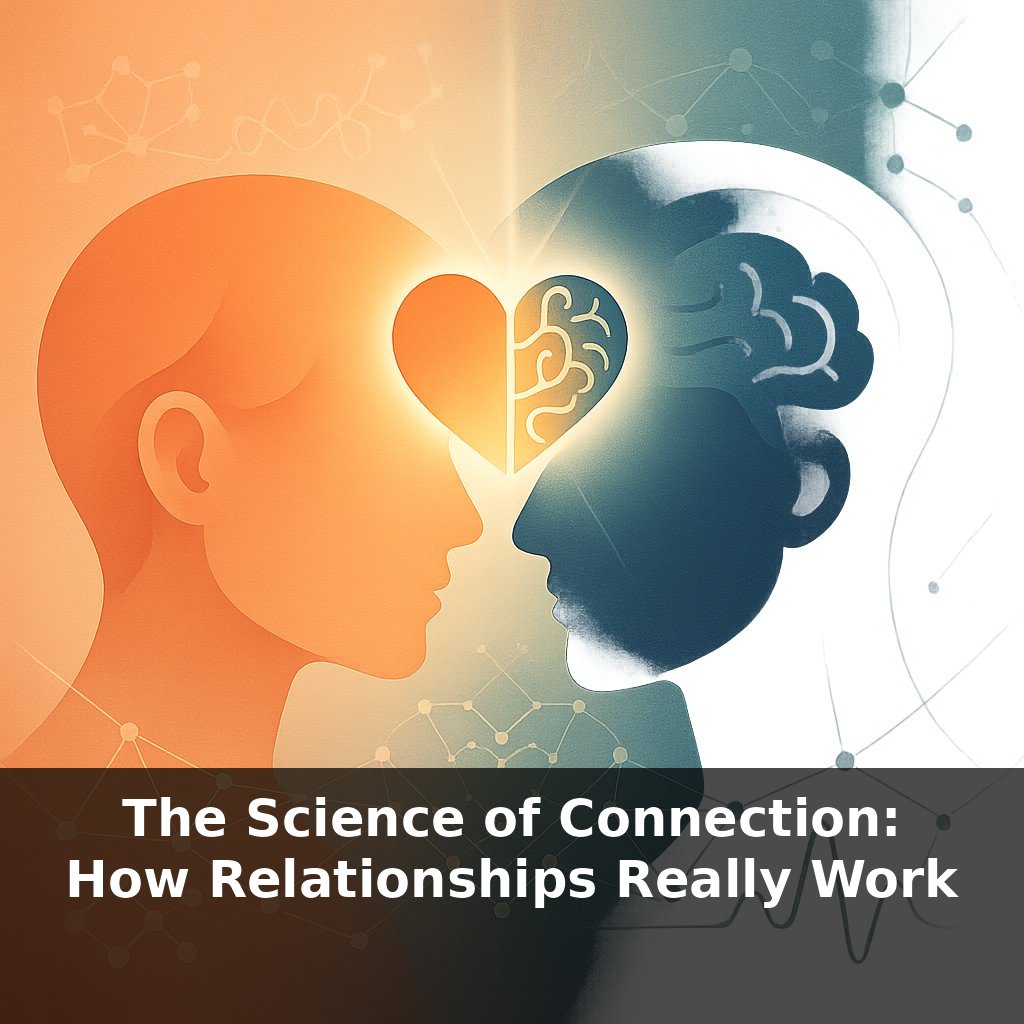
Most people walk into a first date secretly running a checklist: job, hobbies, politics, family, five‑year plan. But here’s the twist—your brain doesn’t fall for someone because their résumé lines up; it responds to how it *feels* to be with them. Think less “data collection,” more “sharing a campfire.” You’re not there to extract facts; you’re there to see what kind of energy the two of you create when those facts slowly surface. That’s where reciprocal self‑disclosure and the subtle rhythm of listening start to matter. When you ask a question, share a little back, and then stay present long enough for the moment to breathe, you’re sending a quiet signal: “It’s safe to be real here.” And when both people get that signal, tension drops, humor shows up, and even silences feel less like failure and more like a comfortable pause in a song you’re both still learning.
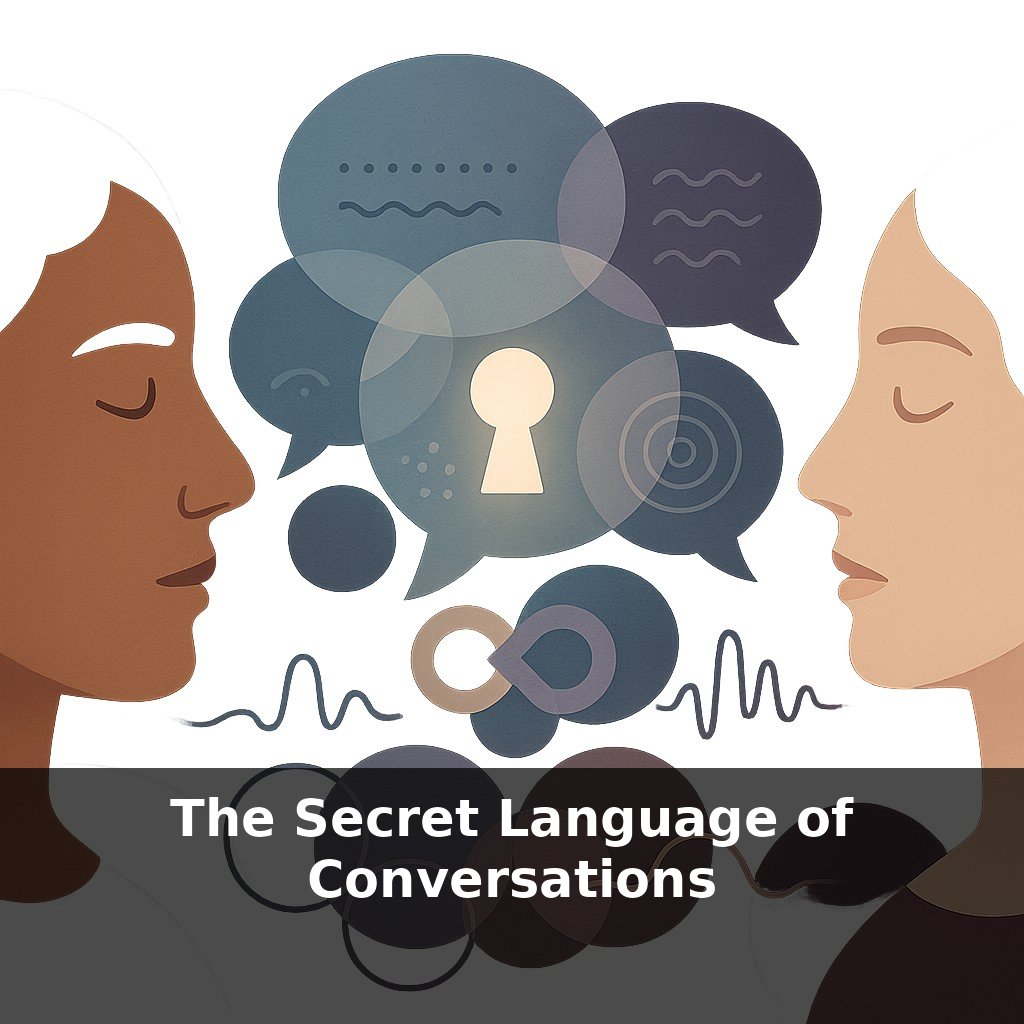
So instead of grilling each other on “Where are you from?” and “What do you do?”, think about *how* the conversation moves. Is it ping‑pong—short, safe, factual volleys—or more like a dance, where sometimes you lead, sometimes you follow, and sometimes you both pause on the same beat? Research shows that what actually pulls people closer is this rhythm: trading slightly more personal details over time, matching each other’s tone, and letting small moments of vulnerability land without rushing to fill the space. That’s when a stranger starts to feel less like a profile and more like a person you’re genuinely curious about.
Most people think the secret to a “great first date” is *being interesting*. Psychologically, what matters more is being **interested**—in a way that feels easy, not intense. That’s where the research on connection gets practical.
One powerful piece is *how* you ask about someone’s life. Instead of “So, what do you do?”, you can soften the spotlight: “What parts of your week do you actually look forward to?” It invites stories, not stats. When they answer, don’t just jump to your turn—linger for a beat. A simple “That makes sense” or “How did you get into that?” tells their nervous system you’re tracking them, not just waiting to talk.
There’s also a quiet skill in revealing just a little more than the situation strictly requires. Not a trauma dump, more like taking off emotional sunglasses. If they say, “I moved here a couple years ago,” you might say, “Same—my first year here was rougher than I expected.” That tiny confession opens the door for honesty without pressure. Sprecher’s work on growing intimacy shows that these small, mutual upgrades in honesty are what shift a date from polite to memorable.
Because trust impressions form in seconds, your body sends signals before your words catch up. Facing them instead of angling away, uncrossing your arms, and keeping your phone out of sight do more to say “I’m here with you” than any clever line. Matching their pace—speaking a bit slower if they’re thoughtful, or loosening up if they’re playful—helps you land in the same emotional neighborhood without mimicking.
For people meeting through apps—almost 4 in 10 straight couples now do—the temptation is to use the date to verify the profile: job, height, timeline, green flags, red flags. That’s when it starts feeling like an audit. Try flipping the script: use basic facts just as launchpads into experiences. “Consulting” becomes “So what’s a work story that still makes you laugh?” “Two siblings” becomes “Where did you fall in the chaos—oldest, middle, youngest?”
Think of it less as sorting someone into yes/no, and more as getting a real sample of what it’s like to be around them on a random Tuesday. The goal isn’t to decide their ultimate role in your life—it’s simply to learn whether you’re both curious enough to see a little more.
You can feel this difference in tiny, practical moments. You ask, “What’s something totally ordinary that makes your day 10 % better?” They mention their perfect morning coffee. You light up and say, “Oh, I have a ridiculous coffee ritual too,” and suddenly you’re trading micro‑details about mugs, smells, and half‑awake thoughts. That’s not small talk—it’s two inner worlds brushing up against each other.
Or you hit an awkward lull. Instead of panicking and firing off the next résumé question, you say, “My mind just went blank in the most unhelpful way,” and laugh. Now the pause belongs to both of you, not just you silently grading yourself.
Even logistical choices can support this. Sitting side‑by‑side at a bar, walking while you talk, or sharing a snack platter nudges the mood away from across‑the‑table negotiation and toward “we’re on the same team, exploring this together.”
Think of it like slow‑cooking a stew: the flavors deepen not because you keep throwing in new ingredients, but because you give what’s already there time to blend.
As tech creeps into dating, the real advantage will go to people who treat tools as prompts, not scripts. An AI nudge might flag that you’re talking over matches, but only you can choose to leave more silence, or let a story run long. VR hangouts may even expose habits you never see—like how often you glance away when you’re unsure. Think of these tools less as judges and more as gentle mirrors, reflecting patterns you can tweak long before the next first date.
Real connection isn’t a trick; it’s a skill you can keep refining. Over time, you’ll spot which moments make you both lean in—like shared side comments, inside jokes forming, or that easy quiet that feels more like a held breath than a void. Your challenge this week: on your next date, notice just *one* of those micro‑shifts and gently follow it instead of your mental script.