Seven out of ten adults say money is their number-one source of stress. Yet most of them can do basic math just fine. So here’s the puzzle: if we can add and subtract, why does checking a bank app feel like stepping into a dark room, waiting for something to jump out?
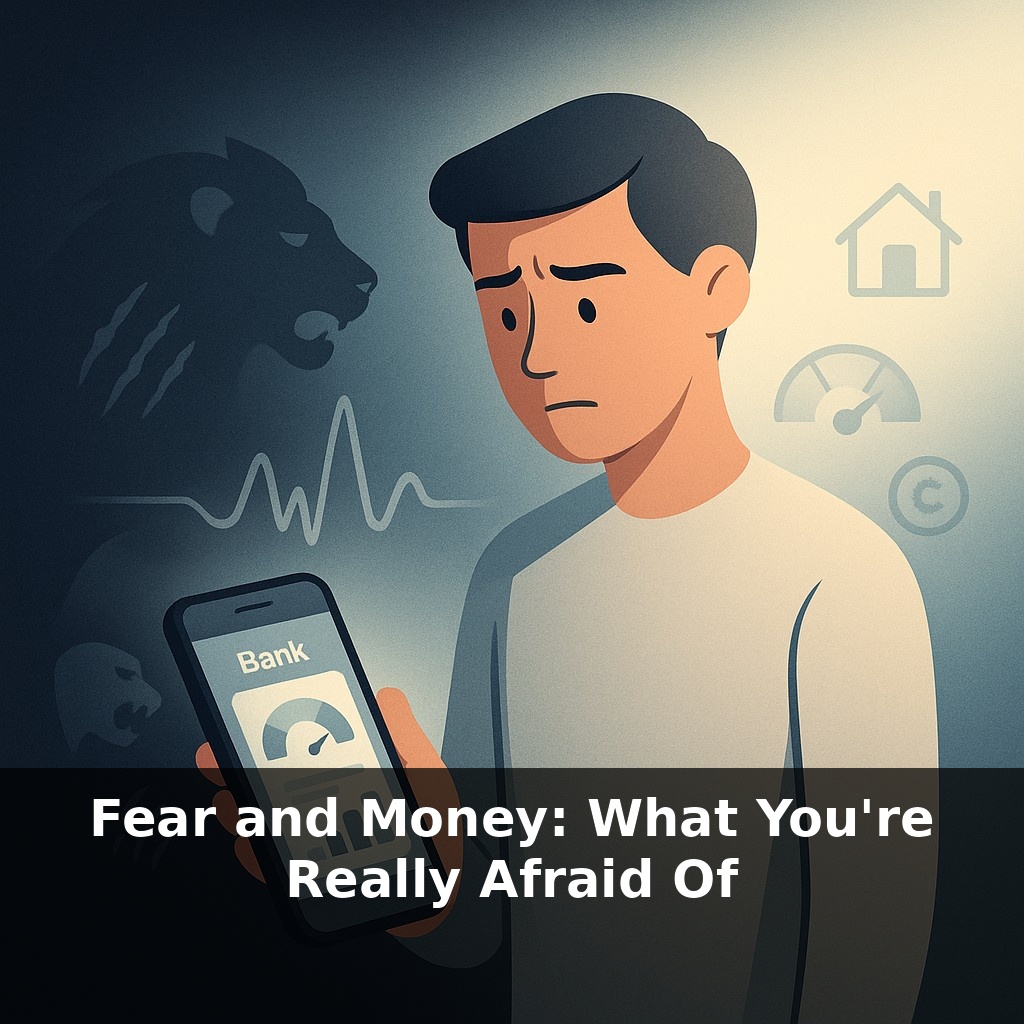
Our brains didn’t evolve for credit scores and 30-year mortgages; they evolved to scan for lions and empty food stores. When something touches survival, your nervous system doesn’t ask, “Is this rational?” It asks, “Are we safe?” That same circuitry now fires when rent is due, a paycheck is late, or headlines scream “recession.”
So the tension you feel around money isn’t just “being bad with finances.” It’s your threat-detection system misfiring in a modern setting. Add in family messages like “we don’t talk about money,” cultural stories about success and failure, and memories of past downturns, and you get a constant low-level alarm.
In this episode, we’ll unpack what that alarm is really reacting to—so you can respond with clear decisions instead of automatic panic, avoidance, or overreacting.
Part of what keeps this alarm stuck in the “on” position is that your brain doesn’t distinguish between real numbers and imagined disasters very well. A news headline, a friend’s layoff, or a childhood memory of bills piling up can all blend into a vague sense of “it could happen to me.” On top of that, your body joins in: tight chest, shallow breathing, racing thoughts. Those sensations then feel like proof that something is wrong financially, even if today’s situation is relatively stable, and you may react by overcorrecting—slashing all spending, saying yes to extra work, or ghosting your statements.
Fear around money often starts long before you ever earn a paycheck. Your brain quietly builds a “money file” from early experiences: the argument you overheard about bills, the panic when a parent lost a job, the way people in your neighborhood talked about “rich folks” or “people like us.” Those moments get stored not as neat memories, but as patterns: money = danger, humiliation, conflict, or abandonment.
Later, when you see a low balance or a big expense coming, your nervous system pulls from that file faster than you can consciously think. That’s where loss aversion kicks in. Psychologists have shown that losing $100 feels about twice as intense, emotionally, as gaining $100. Your brain is wired to overreact to potential loss, which means even small financial risks can feel enormous. It’s not the spreadsheet that terrifies you; it’s what your brain *associates* with losing—status, security, relationships, identity.
This is why people with very different incomes can share the same knot in their stomach. A high earner might dread slipping from their current lifestyle, being seen as “a failure,” or repeating a parent’s downfall. Someone living paycheck to paycheck may fear eviction, not being able to care for kids, or one medical bill blowing everything up. The numbers differ; the underlying fear—“I won’t be okay”—is strikingly similar.
Those fears often drive the very behaviors that keep you stuck. Avoidance: not opening bills, delaying tax filing, never checking benefits at work. Control overdrive: obsessively tracking every cent, refusing any discretionary joy because “you never know.” Or emotional spending: using purchases to briefly quiet the inner noise, then feeling shame that reinforces the story “I’m bad with money.”
Layer on the wider environment—headlines predicting recession, social feeds full of curated lifestyles, coworkers quietly comparing salaries—and your private worries start to feel like confirmation that you’re behind, at risk, not measuring up. The fear stops being about dollars and starts being about identity: “What does my money situation *say* about me?”
The turning point is recognizing that when money fear spikes, it’s usually pointing to something underneath: fear of losing control, of being judged, of repeating family history, or of having no safety net. Until you name that deeper fear, every financial decision will feel heavier than the math justifies.
Think about three different people scrolling past the same headline about a possible recession. One laughs it off and keeps planning a vacation. Another immediately opens ten tabs about “side hustles.” A third shuts the laptop and orders takeout they can’t really afford. The headline didn’t change—what’s different are the private stories their brains attach to it.
For one, money fear whispers, “You’ll be trapped,” so they chase any extra income. For another, it hisses, “You’re already failing,” so they numb out. For a third, it murmurs, “It always works out,” so they barely react.
You’ll see the same pattern at work when a bonus hits. Some people rush to upgrade their lifestyle; others stash every cent, uneasy until it’s in savings. One is trying to outrun a sense of lack, the other to fortify against it.
Financial anxiety here is less about the size of the event and more about the meaning: Is this proof I’m safe, in danger, or behind? Noticing that meaning is where change starts.
Your money fear today is training for the economy you’ll face tomorrow. As AI tools start reading stress in your voice or smartwatch data, they may suggest pausing before a risky trade, or nudge you to build a buffer *before* overtime dries up. Like a weather radar quietly scanning the sky, this tech could shift you from reacting to crises to steering around them. The more fluently you read your own fear signals now, the more power you’ll have to use those tools instead of being ruled by them.
Your challenge this week: Notice three specific moments when money fear shows up *before* you touch your accounts or make a purchase—maybe a headline, a comment at work, or seeing someone else’s lifestyle. For each moment, quickly jot down: 1) what happened, 2) the first sentence your brain shouted, 3) what you were *really* afraid might be true about you or your future. By week’s end, look at the list and circle the one deeper fear that keeps repeating.
When you start to see fear as data instead of destiny, money becomes less like a storm you’re stuck in and more like weather you can plan around. You might still carry an umbrella, but you’re not canceling the trip. Over time, each small, brave look at your numbers is like strengthening a muscle—quietly expanding what “safe enough” can mean for you.
Here’s your challenge this week: Pick ONE money fear you recognized in yourself from this episode (like “I’ll never have enough,” “I’m bad with money,” or “People will judge me if they know my finances”) and say it out loud, exactly as your brain offers it. Then, right underneath it, write a “lawyer-style rebuttal” using only facts from your real life (actual numbers in your accounts, past times you figured something out, people who’ve supported you, etc.). Finally, set a 10‑minute timer and read both the fear and the rebuttal out loud three times in a row, noticing how your body feels each round—no fixing, just observing.