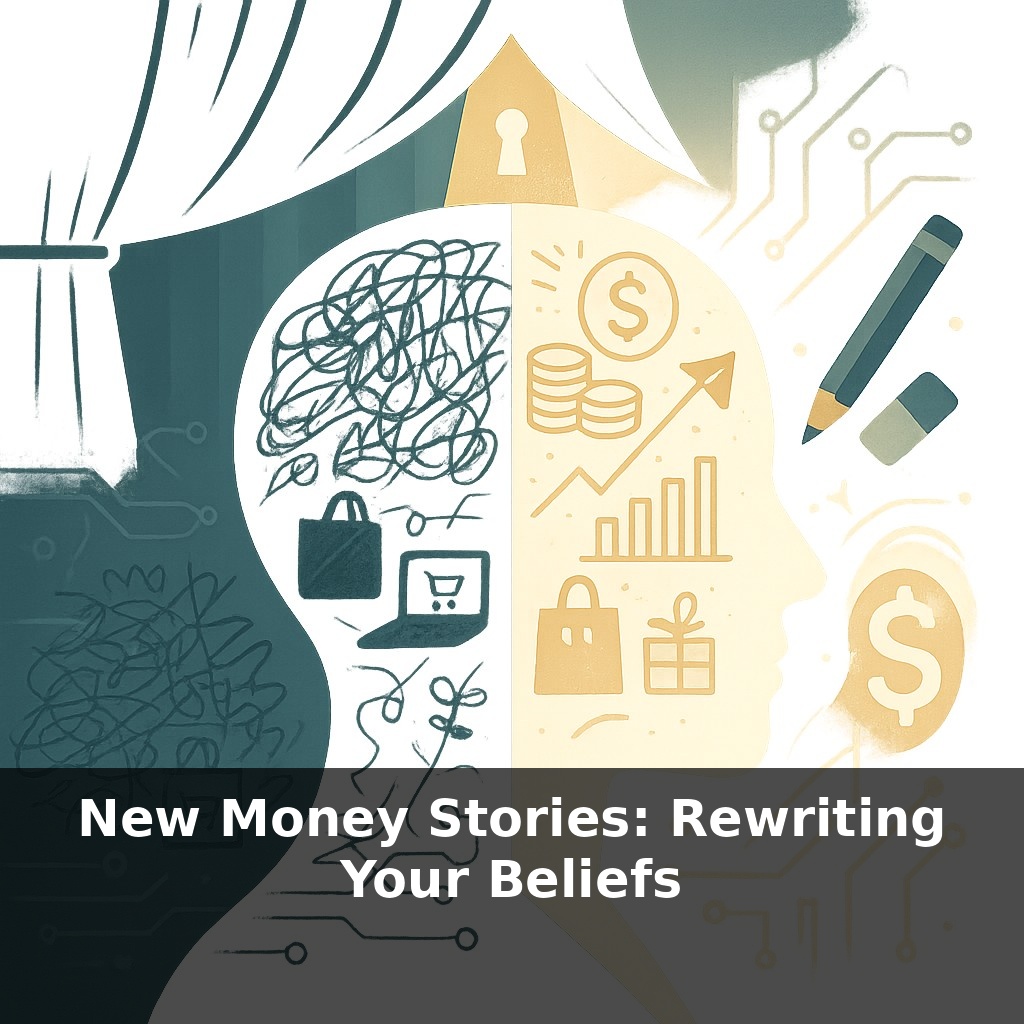
About half of what you do with money each month is driven by stories you don’t even know you’re telling yourself. A grocery run, a late‑night online order, a “just this once” splurge—each is a scene in that hidden script. Today, we’re going to peek behind the curtain.
“People with positive money beliefs save about 7% more of their income.” That’s not personality—it’s programming. And the good news is, programming can be changed.
Today, we’re talking about your “money story”: the quiet narrative that decides whether a raise becomes a cushion or just disappears, whether a bill triggers panic or a plan. This story comes from childhood messages, cultural norms, and past wins and mistakes—but it isn’t fixed.
Neuroscience shows that when you rethink what a “loss” means, your brain literally calms down and your planning centers light up. In other words, changing how you *talk* to yourself about money changes what your brain thinks is possible.
We’ll explore how to spot old lines like “I’m just bad with money” and begin drafting new ones that match who you’re becoming, not where you started.
Some parts of this story are loud—like the voice that says “I deserve this” as you tap your card. Others are quieter, buried in small choices: who you lend to, which bill you pay first, whether you open the banking app or avoid it. These tiny, repeated moves are where your money story shows up most clearly—and where it can be most efficiently edited. A single shifted line—“I’m someone who finishes what I start,” for example—can turn into paying off one card, then another, like setting a new rhythm on a metronome your behavior starts to follow.
A belief about money doesn’t usually show up as a sentence in your head; it shows up as a pattern in your calendar and bank statement.
Behavioral economists call these patterns “scripts” because they quietly tell you what to do next: get a bonus → upgrade your lifestyle, feel stressed → order takeout, feel bored → scroll and spend. The script fires so fast your conscious brain often arrives late to the scene, rationalizing what your automatic habits already decided.
Here’s the twist: those habits are *teachable*. Neuroplasticity means your brain keeps wiring and rewiring based on what you repeatedly think and do. So instead of trying to “be better with money” in a vague way, it helps to target very specific scenes where your old script loves to run.
Common scenes: - **Payday:** Do you see new income as safety, celebration, or relief from scarcity? Each leads to different choices. - **Bills and debt:** Do you attack them, automate them, or avoid them? - **Windfalls:** Tax refunds, gifts, extra commissions—do they disappear, get “earmarked,” or get invested? - **Social spending:** Do you match the group, under-spend from guilt, or overspend from fear of missing out?
Cognitive Behavioral Therapy breaks script-editing into manageable moves: 1. **Catch the cue.** The trigger moment: notification, invitation, bad day. 2. **Spot the automatic line.** “I’ll never get ahead anyway,” “I deserve this,” “It’s only $20.” 3. **Test it.** Is this *always* true? What evidence exists against it? 4. **Substitute a workable line.** Not a mantra about being a millionaire—just something slightly more accurate and useful: “Future me needs part of this,” “Relief is good; debt-free relief is better.”
Even simple structural changes multiply the effect. Automatic enrollment in retirement plans doesn’t just move money; it reinforces “I’m the kind of person who saves without thinking about it.” Your environment starts co-writing a better story: default transfers to savings, spending alerts, a wallet with just one card you *want* to use.
One helpful frame: treat every dollar as if it has a job description. When money comes in, you’re not asking, “What do I feel like doing?” but “What role does this dollar play—security, freedom, learning, connection?” That values-based lens turns random transactions into deliberate casting choices for the life you’re building.
Think of a few familiar “characters” in your financial life and how their stories shifted:
- **The always‑busy freelancer.** For years, every new client check “belonged” to urgent bills. After a short guided journaling practice, she renamed 10% of every payment “Quit-the-panic fund.” Same income, different label. Six months later, the balance was big enough that slow months stopped triggering scramble mode, and she finally priced her work higher.
- **The loyal helper.** He grew up covering for relatives, so every “Can you spot me?” text auto‑translated to “You’re a good person if you say yes.” Through a values-based budgeting exercise, he created a “generosity line” in his budget *with a cap*. Saying, “I’ve hit my giving limit this month, but I can help you plan,” kept his identity as generous while cutting his overdraft fees.
Rewriting isn’t about perfection. It’s about editing *one recurring scene* so your next decision tilts a few degrees closer to who you’re trying to become.
When people upgrade phones, they rarely keep the factory settings forever—and money narratives will be just as editable. Banks might feel less like sales counters and more like clinics, where a “financial checkup” includes scanning language you use about bills or goals. AI tools could flag patterns the way spell‑check catches typos, suggesting tiny rewrites before habits harden. Over time, families may treat money scripts like recipes: openly tested, tweaked, and passed on, not silently inherited.
Each new choice can be a marginal note in the draft, not a full rewrite. Maybe you rename one account “boring peace” or turn a late‑night scroll into a 2‑minute check on a goal instead. Over time, those edits add up like quiet practice sessions, until the way you earn, spend, and share starts to sound more like your own voice.
Before next week, ask yourself: “When I think about checking my bank account or looking at my credit card statement, what exact sentence pops into my head first—and where do I remember first learning that?” Then ask, “If I treated money like a relationship instead of a scorecard, what would I start saying ‘no’ to this week, and what tiny ‘yes’ would feel like respect toward my future self?” Finally, when you’re about to spend on something you usually buy on autopilot (coffee, food delivery, online shopping), pause and ask, “Is this choice coming from my old ‘scarcity / hustle / I’m bad with money’ story, or from the new story I actually want—and what would that new-story version of me do right now?”