You can change your money beliefs in a single afternoon… but your bank account might not notice for months. A new mindset feels powerful, until the old auto‑pay, auto‑scroll, auto‑swipe patterns quietly take over again. So why does your “new you” keep spending like the old one?
Sixty‑six days. That’s the median time it takes for a new behavior to stop feeling like effort and start running on autopilot. Not one breakthrough journal session. Not one inspiring podcast. Two solid months of tiny repetitions that quietly rewire what your “normal” looks like around money.
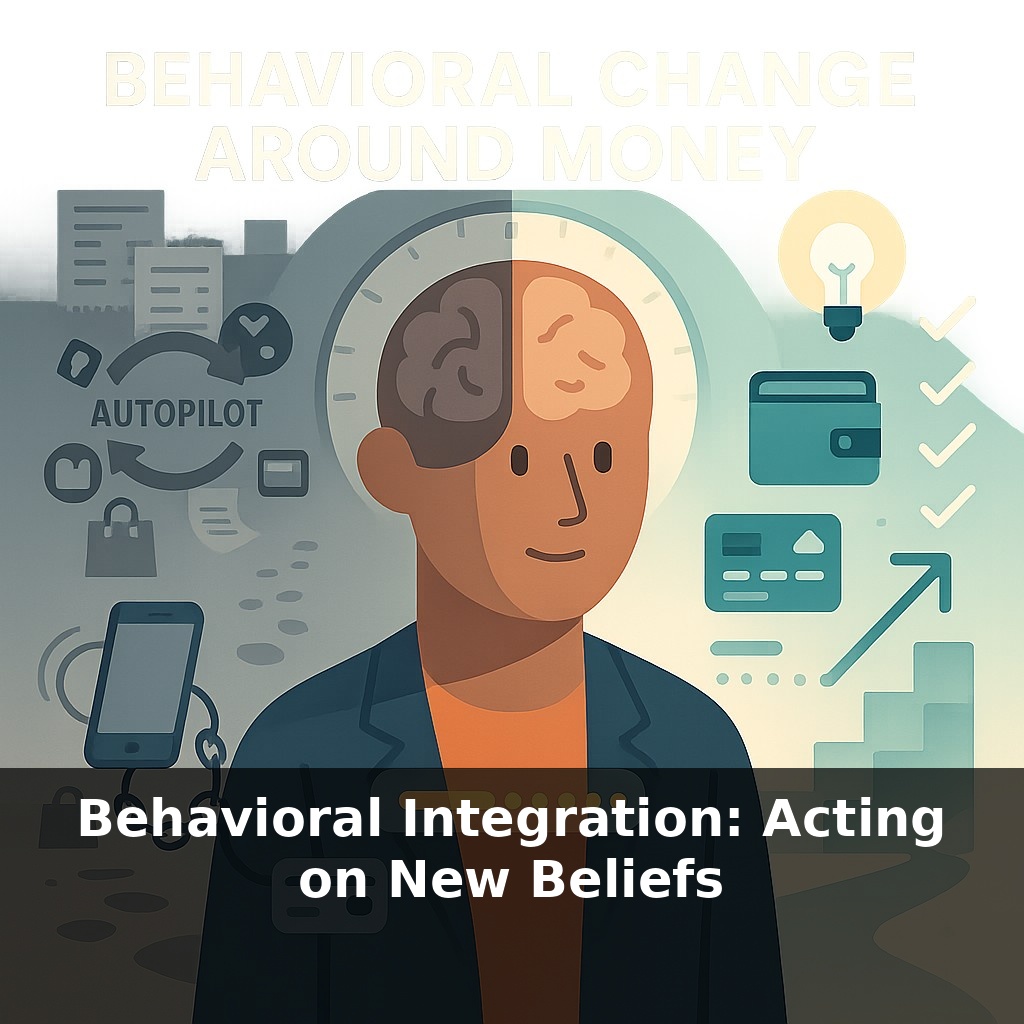
This is where most people stall: they upgrade what they believe, but never upgrade the cues, defaults, and micro‑actions that would let those beliefs actually drive daily choices. Meanwhile, their environment is perfectly designed for the old way of operating—one‑click buying, frictionless subscriptions, endless invitations to “pay later.”
Research shows that when people translate intentions into specific “if X, then I do Y” plans, follow‑through jumps dramatically. Auto‑enrollment systems harness this by making the better choice the path of least resistance. In this episode, we’ll borrow these tools so your new beliefs stop being theories—and start showing up in your transaction history.
Here’s the catch: your brain doesn’t care how inspiring your new belief sounds; it cares how often you act on it. Each tiny follow‑through is like another “vote” your nervous system records, gradually convincing it, “Oh, this is who we are now.” Neuroscience calls this habit circuitry; you feel it as that subtle shift when a choice stops being a debate and starts feeling obvious. To get there, you need three ingredients working together: clear triggers, low‑effort actions, and some kind of immediate payoff—emotional, visual, or tangible—so your brain decides this new pattern is worth keeping.
Most people try to “act different” around money in big, heroic bursts—no‑spend months, extreme budgets, total resets. The data points a different way: small, boring, ruthlessly consistent actions do most of the heavy lifting.
To make that practical, think in layers:
First, pick a single belief you want to embody financially. Not five. One. “I’m a saver” or “I’m someone who plans ahead with money” is enough. Then strip it down to what it would look like in a 30‑second move. For “I’m a saver,” that might be: move a tiny amount into savings every time you get paid, even if it’s $2. The amount matters less than the repetition; you’re proving identity, not chasing a number.
Next, attach that move to something that already happens without fail. Salary hits? Transfer. Venmo notification? Skim 5% into a “future me” folder. Coffee purchase? Round up and send the difference somewhere you can’t instantly pull it back. The goal is to let existing rhythms carry the new action so you don’t argue with yourself each time.
Then, strip away as much friction as possible. If you have to log in, remember a password, and do mental math, you’re planning to fail on tired days. Use automatic transfers, roundup features, or separate “spend” and “save” cards. A lot of successful savers quietly rig things so that doing nothing equals doing the right thing.
You also need quick wins your brain can feel now, not just “someday.” Apps that show confetti when you save, a visible progress bar toward a mini‑goal, or even a physical chart you color in after each small transfer all count. It’s not childish; it’s leveraging the brain’s bias for immediate feedback.
This is where defaults from real systems can inspire you. The U.K. didn’t persuade millions to love pensions; they shifted what happened automatically. You can mirror that by making your “lazy setting” slightly more generous to your future self—like letting your 401(k) contribution auto‑increase each year unless you opt out.
Over weeks, these tweaks start to blur into “just how I do money.” You’ll catch yourself hesitating before impulse buys, not because you’re white‑knuckling self‑control, but because that new belief has evidence now—and your daily actions quietly agree with it.
Lena decided her new belief was “I’m someone who respects my future self.” Instead of redesigning her whole budget, she picked one recurring moment: opening her food‑delivery app after work. She added a tiny speed bump—moving the app off her home screen and placing a sticky note on the fridge that read, “Tired = simple dinner + $10 to Future Lena.” Each time the urge hit, her new sequence kicked in: open fridge, toss pasta in a pot, move $10 to a short‑term “freedom fund.” No drama, no perfect tracking—just a repeatable script tied to a single situation.
Think of it like adjusting a recipe rather than inventing a new cuisine: she kept the “too tired to cook” reality, but swapped one ingredient—delivery—for “quick meal plus tiny transfer.” Over a few months, that one swap funded a weekend trip she’d been “meaning” to save for, giving her brain a concrete reason to favor the new pattern the next time her thumb drifted toward the delivery app.
As tools get smarter, the real power may shift from tracking money to training identity. Instead of apps just logging purchases, you could approve “money scripts” in advance—tiny, pre‑written responses your devices run when certain conditions hit, like a storm warning for your budget. Over time, your role might move from willpower-heavy decision-maker to careful architect: choosing which scripts to trust, which to retire, and how much control to delegate to algorithms.
Your challenge this week: pick one tiny “money script” and let it run. For seven days, change just one recurring move—like skimming $3 from every takeout order into a “play later” fund. By next week, notice not just the balance, but how your reflexes shift, the way a thermostat quietly changes a room without fanfare.