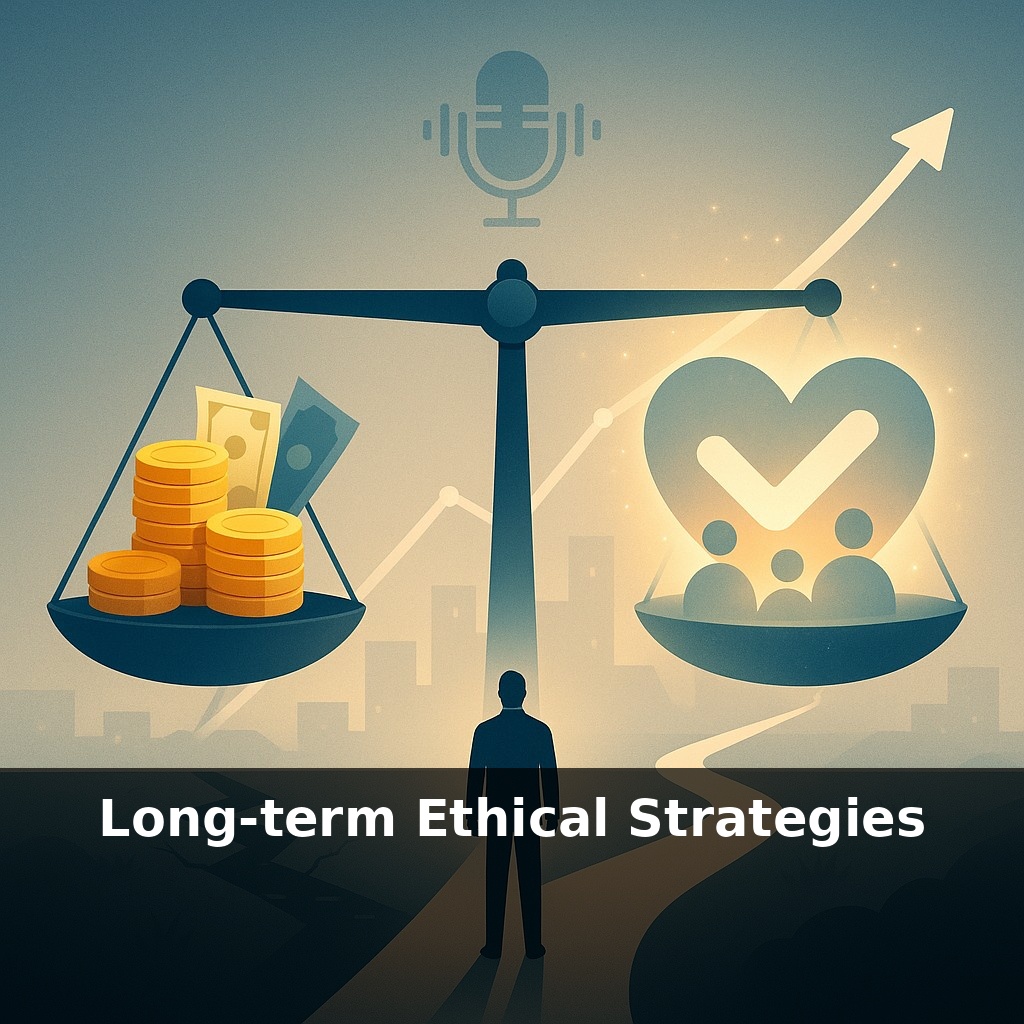
Ethical companies consistently beat their rivals on the stock market—yet most leaders still treat ethics like a side project. A CEO approves a risky shortcut, a manager stays silent, a junior employee looks away. The profits roll in… until one quiet decision blows everything up.
“Companies on Ethisphere’s ‘World’s Most Ethical Companies’ list beat their peers by about 7% over five years.” That edge doesn’t come from one heroic whistleblower or a single well-worded code of conduct. It comes from something quieter and harder to copy: ethics wired into how the organisation actually runs.
Think less about dramatic scandals and more about routine choices that never make headlines—who gets promoted, how products are priced, which suppliers are cut when margins tighten. In resilient organisations, those choices are shaped by structures, not moods: governance that can override a charismatic but reckless leader, incentives that don’t reward cutting corners, training that makes it easy to do the right thing when you’re tired and under pressure. The real power move isn’t promising to be ethical; it’s making it difficult not to be.
Ethics that endure don’t depend on a single leader’s integrity; they come from systems that keep working when no one’s watching. That’s what long-term strategies aim at: turning values into default settings. Think about the unglamorous levers most people ignore—how job descriptions are written, which metrics appear on dashboards, what gets fast-tracked through procurement, which projects quietly die in budgeting rounds. These are the pressure points where short-term gains usually win. Durable ethics rearrange those pressure points so that, under stress, the organisation still bends in the right direction.
“Employees in organisations with effective speak-up systems are about 50% less likely to even *see* misconduct.” That number should stop you. Not just fewer scandals reported—fewer bad acts happening in the first place. That’s the power of design: people behave differently when the path of least resistance leads away from trouble.
So how do organisations actually build that kind of path? They stop treating ethics as a belief system and start treating it as infrastructure.
Values become criteria in hiring scorecards and promotion panels, not just posters on the wall. A candidate who hits every revenue target but has a history of burning suppliers doesn’t “net out positive” anymore; the misalignment is a disqualifier. Over time, this quietly changes who holds power, which then reshapes what “normal” looks like on every team.
Budgeting changes too. Instead of asking only, “What delivers the highest ROI?” leaders add, “What risks are we buying?” and “Whose trust are we spending to get this margin?” Some companies build formal “red flag” line items into proposals—if you can’t answer them convincingly, the project stalls, even if the numbers sing.
Product and service design get similar treatment. Teams run “trust impact” reviews alongside technical and financial ones: Will this feature mislead users? Depend on dark patterns? Create hidden dependencies on vulnerable communities or ecosystems? The goal isn’t perfection—it’s surfacing trade-offs early enough that they can be redesigned rather than apologized for.
Supply chains move beyond one-time audits. Contracts hard-wire expectations about labour, safety, and data use, with real consequences when partners fall short. Patagonia’s ownership structure is an extreme example of this logic: by lodging control in a purpose trust, it made its environmental commitments part of the organisation’s “source code,” not an optional plugin future leaders can uninstall.
In software terms, the most ethical organisations don’t merely patch bugs after failures; they refactor the code so the same exploit can’t run again—no matter who logs in tomorrow.
A retailer that linked store-manager bonuses to long-term customer satisfaction scores—not just quarterly sales—saw returns fraud and aggressive upselling drop within a year. Nothing in the code of conduct changed; the scoreboard did. A bank added an “ethics impact note” to every major credit product proposal, forcing teams to spell out who might be harmed in a downturn. Deals slowed at first, then stabilized as product teams learned to design around foreseeable harms rather than defend them later.
One tech firm quietly shifted its engineering promotion criteria: you couldn’t reach senior levels without mentoring juniors on responsible development practices. The result wasn’t a glossy ethics campaign, but a bench of leaders who treated ethical trade-offs as a normal part of design reviews.
Think of it like re-architecting a stadium so home players naturally run the right routes: tunnel placement, sightlines, and even turf type nudge behavior long before the crowd notices the play.
Ethics is drifting toward something like a “second accounting system.” Boards won’t just ask, “Did we hit earnings?” but, “Can we prove these results were earned cleanly, end to end?” AI tools will flag patterns a human might excuse—like a heat map lighting up where pressure, opacity, and weak oversight intersect. As investors price in these signals, ethical fluency becomes less virtue signal, more professional survival skill for every decision‑maker.
Treat this less like polishing a mission statement and more like editing source code while the system is live. Each tweak to hiring, reviews, or vendor terms is a commit; logs will show whether you shipped integrity or technical debt. Your challenge this week: find one “silent default” in your workflow and rewrite it so the honest path is the easiest click.