Socratic Wisdom: The Art of Questioning
📝 Transcript
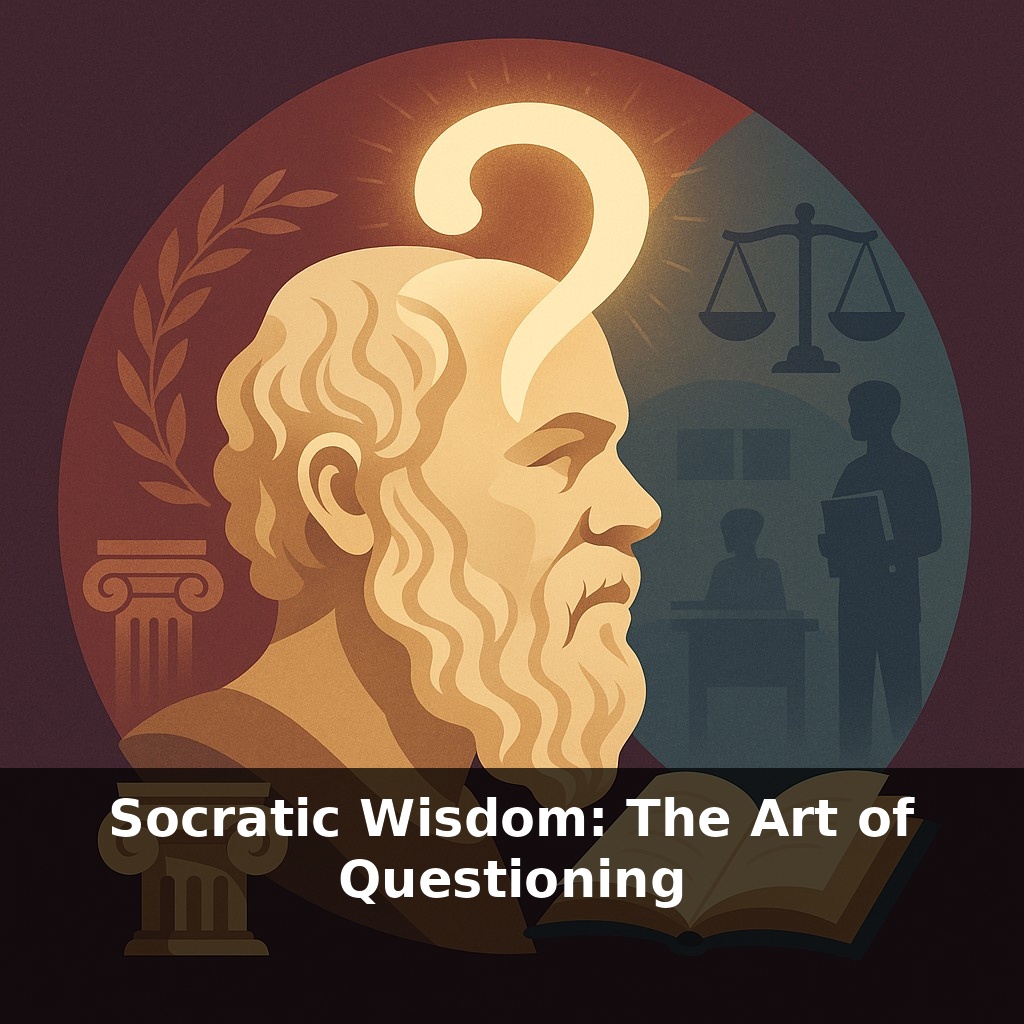
Socrates asked so many questions that in some of Plato’s dialogues, scholars estimate there’s roughly one question for every few lines of text. Now jump to a modern law classroom: a student stands, a case in hand, and the professor responds not with answers—but with more questions.
“Why do you think that?” sounds harmless, almost polite. Yet in the right hands, it’s one of the most disruptive tools in human history. Socrates used questions not to win debates, but to unsettle certainty—his own included. That stance, aporia, “I know that I know nothing,” isn’t an excuse for ignorance; it’s a discipline of refusing to settle for the first, most comfortable answer.
Today, this same discipline quietly structures high‑stakes environments. In CBT sessions, therapists lean on guided questions within minutes, not to give clients advice, but to help them see how a single belief can steer an entire week. In product design meetings, the best teams don’t ask, “Can we build this?” but “Should we build this—and for whom?” Each question acts like a spotlight, isolating one assumption on the crowded stage of our thinking and inviting it to justify its place.
In practice, Socratic questioning isn’t a mystical talent; it’s a repeatable discipline. Across fields, it shows up with different labels: in law as case dialogue, in engineering as root‑cause analysis, in management as the “5 Whys.” At its core is a commitment to stay with the question long after others reach for a slogan or a slide. A skilled questioner doesn’t just challenge others; they subject their own favorite ideas to the same pressure. Over time, this shifts conversations from trading opinions to jointly testing claims, like teammates reviewing game footage to understand what really happened and why.
At its best, this style of questioning follows a loose sequence. It often begins with clarification: “When you say ‘success,’ what exactly are we talking about—income, impact, freedom?” This isn’t nitpicking; it prevents people from arguing past each other using the same word for different ideas. From there, the focus shifts to reasons: “What led you to that conclusion? What evidence felt most convincing to you?” Rather than hunting for a clever objection, the questioner slows the rush from intuition to certainty.
Next comes a quiet but powerful move: testing examples and counter‑examples. “Can you think of a case that doesn’t fit your rule?” A manager insists, “Remote workers are always less engaged,” and someone asks, “Do we know any counter‑cases in our own teams?” Suddenly the conversation moves from slogans to data. In philosophy seminars, in code reviews, in newsroom editorial meetings, this step often reveals that a strong‑sounding claim rests on three anecdotes and a hunch.
A further line of inquiry probes implications: “If we took your view seriously and scaled it across the organization, what would change?” This is where soft assumptions collide with hard constraints—budgets, laws, deadlines, human limits. In appellate courts, judges press lawyers not just on what a ruling would decide now, but on what it would commit them to in future cases they haven’t imagined yet.
Finally, there is the meta‑level: “What question should we have asked first?” Teams that adopt this habit start redesigning their own agendas. A product squad arguing about features might realize they skipped the prior question: “What problem are we still unsure exists?”
Like refactoring legacy code in software engineering, this method doesn’t add new “features” to your beliefs; it cleans up the underlying structure, exposing brittle dependencies and dead logic. The point is not endless doubt, but earning the right to be confident—because your views have survived disciplined, collaborative pressure rather than flattering silence.
A practical way to see this in action is to watch how different fields “live” inside questions. In a newsroom, an editor might pause a draft headline and ask: “If this were false, how would we know?” That single question forces reporters to separate what they’ve witnessed, what they’ve inferred, and what they’re merely assuming. In software teams, code reviews that go beyond “Does it run?” to “Under what conditions would this fail?” often surface hidden edge cases long before users ever encounter them. Trial lawyers do something similar when they rehearse for court: colleagues take turns attacking each part of an argument, not to humiliate, but to locate the one premise that, if it collapses, takes the whole case with it. Like a coach replaying game footage frame by frame, the value isn’t in catching someone out—it’s in making thinking observable enough that it can actually be improved.
As automated systems cover more “answers,” rigorous questioning becomes a differentiator, like court judges setting precedents rather than police issuing tickets. Students trained to probe trade‑offs, hidden incentives, and missing voices will steer policy in data‑saturated democracies. In companies, promotion might hinge less on pitch decks and more on how leaders interrogate metrics, much like architects testing load on a bridge model before anyone dares to cross.
Treat questioning as a daily craft, not a rare performance. Let it shape how you read the news, negotiate with a partner, or plan your week—like a musician tuning before every song, not just at concerts. Your challenge this week: before accepting any strong opinion (especially your own), ask three sincere questions before you respond.
Unlock all episodes
Full access to 5 episodes and everything on OwlUp.
Subscribe — $1.99/monthLess than a coffee ☕ · Cancel anytime