Right now, tens of millions of people in the West quietly practice yoga or meditation each week—yet many still feel off‑kilter. You rush, you succeed, you scroll... and still sense something’s misaligned. How can “doing everything right” leave life feeling subtly out of tune?
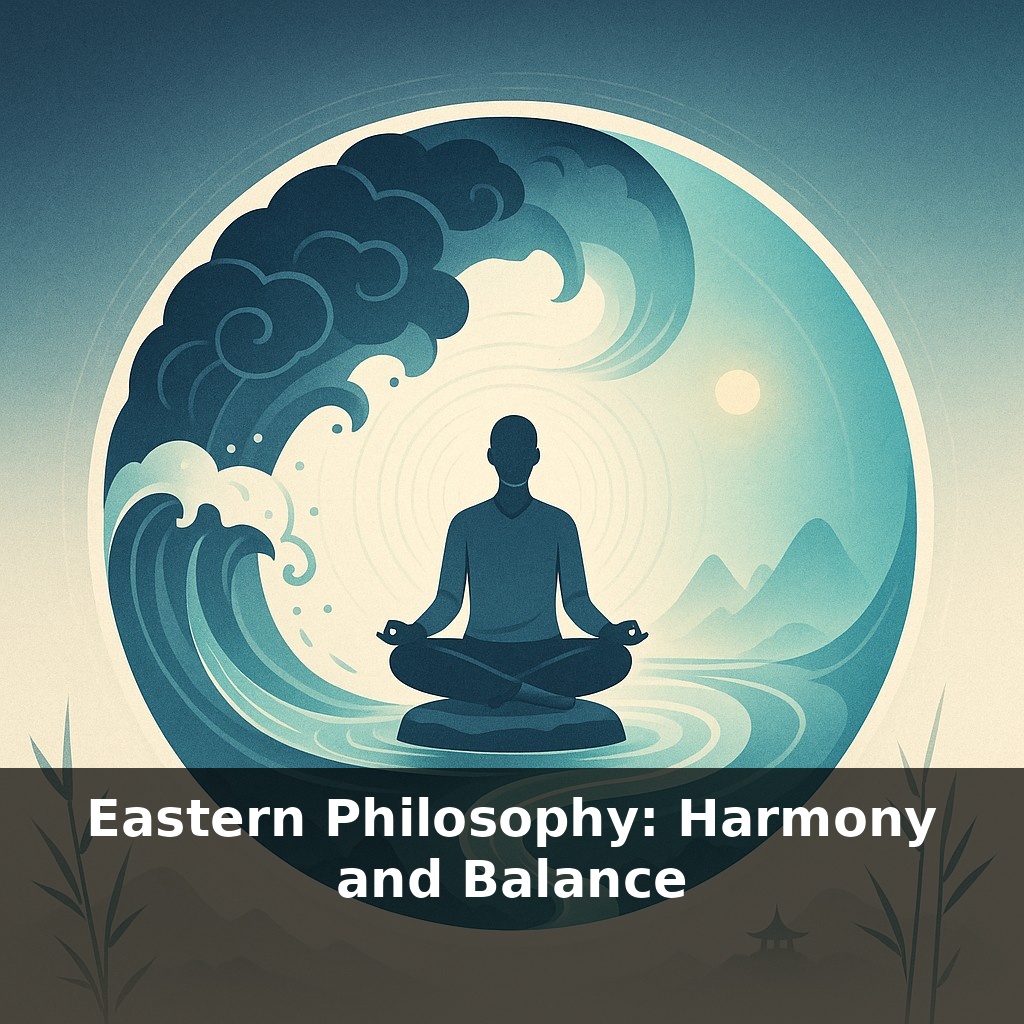
In Eastern traditions, harmony isn’t about smoothing life into a endlessly calm, “positive vibes only” experience. It’s closer to learning how to stay steady *while* the storm hits. Daoist writers talk about water that yields yet carves stone; Buddhist texts describe a mind that feels anger or fear fully, yet isn’t ruled by them; Confucian thinkers focus on relationships where disagreement isn’t a failure, but raw material for deeper respect.
Modern science quietly echoes this. MBSR studies don’t show people becoming blissed‑out; they show people staying present enough with anxiety or pain that it loses its grip. Tai chi trials don’t promise immortality; they show elders literally finding their footing again. Harmony, here, isn’t escape from difficulty. It’s training nervous systems, habits, and communities to bend without breaking when life inevitably pulls in opposite directions.
In Hindu thought, this balance shows up as dharma: not a rigid rulebook, but the shifting “right thing” for *this* person, *this* moment. Daoists call it aligning with the Dao, letting effort rise and fall like a tide instead of grinding forward nonstop. Confucian writers look at families, teams, and governments as living systems that need constant re‑tuning, not one‑time fixes. Today, you can see these patterns in places as different as Toyota’s production lines, trauma‑sensitive yoga studios, and climate activists arguing for “right relationship” with the land—not just new technology.
When Eastern thinkers talk about balance, they’re rarely talking about equal slices of time or energy. They’re asking a sharper question: *given everything pulling on you right now, what arrangement of forces lets life actually move?* That’s why so many texts describe balance as a pattern of adjustments, not a fixed pose you finally “hold.”
One way this shows up is in how they treat opposites. In many Western debates we pick a side—work vs. rest, self vs. others, ambition vs. contentment. In the *Bhagavad Gītā*, the problem isn’t action itself, but clinging to results; the “middle” isn’t half‑effort, it’s full effort with lighter attachment. Daoist writers don’t ask you to suppress assertiveness; they ask whether pushing now will jam the system more than stepping back. Balance becomes a skill in *timing* and *proportion*, not a moral scoreboard of how “moderate” you are.
Modern data points in the same direction. Mindfulness‑based therapies that reduce anxiety don’t make people less emotional; they help them notice and respond before reactions spiral. Studies of long‑term contemplative practitioners show improved attentional control and emotional flexibility, not numbness. The dial that moves is *adaptability*: how quickly you can shift from focused to relaxed, speaking up to listening, planning to improvising.
You can see this in boardrooms as much as in monasteries. Toyota’s production system, shaped partly by Zen‑inflected ideas like *kaizen*, depends on constant, small corrections: any worker can stop the line, surfaces problems early, and the “right” pace is always being recalibrated. In leadership programs that borrow from these traditions, executives practice noticing when their default—directing, rescuing, dominating, avoiding—no longer fits the room, then deliberately choosing a different stance.
And beyond human systems, environmental thinkers influenced by these philosophies talk less about “controlling” nature and more about restoring reciprocity: wetlands that absorb floods instead of higher levees alone; farming that alternates use and regeneration. The through‑line is the same: balance as an intelligent dance with constraint, where the goal isn’t perfection, but enough stability that growth and repair can keep happening.
In daily life, this kind of balance often looks very ordinary. A product manager in a fast‑moving tech company alternates between “sprint” days of deep focus and deliberately lighter days devoted to refactoring code, documentation, and one‑on‑ones. She isn’t chasing a perfect 50/50 split; she’s watching for when intensity stops adding value and starts creating bugs, burnout, and brittle team dynamics.
You can see a similar pattern in how some hospitals now structure shifts. Instead of stacking the most complex cases back‑to‑back, schedulers interleave demanding procedures with shorter, simpler ones. Error rates drop, and staff report feeling “tired but clear” rather than depleted.
Environmental projects mirror this too: a city might pair new construction with designated “breathing spaces” of urban forest, not for aesthetics alone but because mixed land use stabilizes temperature, absorbs water, and calms residents’ stress responses. Balance becomes less a personal virtue and more a design principle, built into routines, timetables, and landscapes.
Remote teams, AI prompts, and endless notifications act like shifting weather fronts on our attention. Eastern ideas suggest designing systems that “bend” with the storm: work sprints that ebb like tides, apps that slow their pace when stress markers spike, cities where green corridors are treated as civic lungs. Your calendar, device settings, even office architecture could become levers of balance, not just containers for overload. The frontier isn’t more productivity; it’s wiser rhythms.
Your challenge this week: treat your day like a lab. Pick *one* recurring tension—speed vs care in email, meetings vs deep work, saving vs spending. Each evening, note one tiny tweak you made toward better balance and what shifted. After seven days, keep the two tweaks that quietly made everything else feel a bit more breathable.