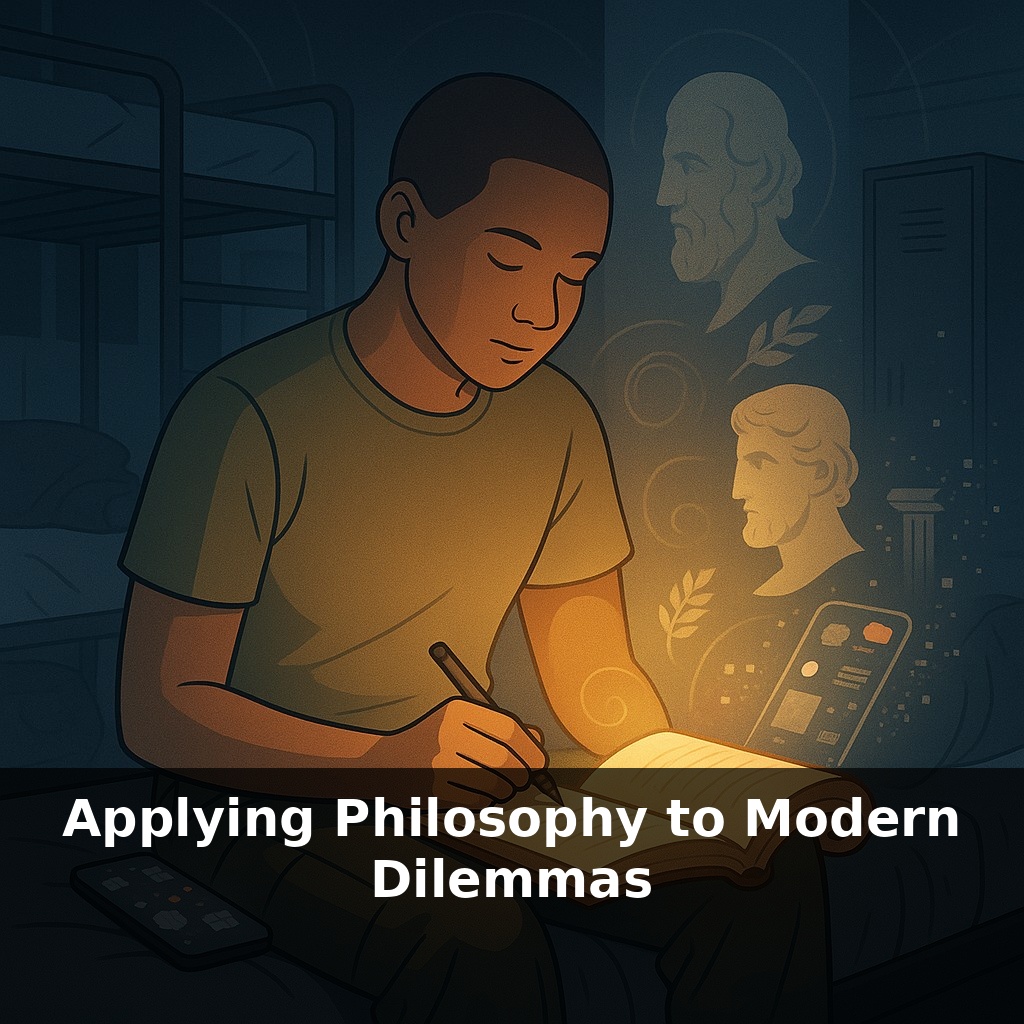
A Royal Marine sits in a noisy barracks, scrolling through bad news, heart racing—then calmly opens a worn notebook and starts writing about courage and control. In a world of climate dread and algorithmic feeds, ancient philosophy is quietly hacking modern stress.
A 2016 meta-analysis in JAMA Internal Medicine found that mindfulness programs—rooted in Buddhist practice, not productivity hacks—lower employee stress by up to 28%. That’s not just “feeling a bit better”; in many workplaces it means fewer sick days, fewer blow‑ups in meetings, and fewer 2 a.m. email spirals. Meanwhile, quietly, some of the world’s most data‑driven institutions are importing other old tools: a 2019 survey of Royal Marines reported that structured reflection sessions cut attrition, and tech giants publish leadership codes that sound suspiciously like virtue handbooks. We’re used to treating philosophy as decorative, like art on an office wall; these cases treat it more like ergonomics—small, systematic adjustments that change how the whole day feels. The twist is that each school shines on different modern problems.
Instead of asking “Which philosophy is right?”, it’s more useful to ask “Which tool fits this mess?”. Social‑media anxiety, for instance, isn’t just about distraction; it mixes status envy, moral outrage, and fear of missing out. Climate ethics blends personal guilt, corporate responsibility, and policy trade‑offs. AI decision‑making adds another layer: machines optimizing numbers while humans worry about fairness and meaning. Each of these knots pulls on different parts of us—habits, emotions, relationships, institutions—so no single framework will cleanly untangle them all.
Think of five “ethical toolkits” laid out on a table, each better at a different modern mess.
Stoicism shines when your feed, boss, or the news cycle feels like a runaway train. Its move isn’t just “stay calm”; it’s to zoom in on the one lever still in your hand: your next judgment, your next action. A common exercise in modern Stoic practice: before reacting to a provocative post or email, ask two questions—“What here is up to me?” and “What character do I want to show in my reply?” That micro‑pause is small, but repeated hundreds of times, it rewires how you move through digital life.
Aristotelian virtue ethics kicks in whenever you’re not just choosing *what* to do, but *who* to be at work or in public roles. Instead of “Is this allowed?”, you ask, “What would a genuinely honest, courageous, fair person do in this role, given these facts?” This lens is already baked into many performance reviews and leadership trainings; the twist is making it conscious, and extending it to issues like whistleblowing, data use, or hiring algorithms.
Confucian relational ethics is particularly sharp for social and workplace tensions. Its question isn’t “What do *I* want?” but “Given this relationship—manager, colleague, citizen—what does respectful, appropriate conduct look like here?” That matters for everything from remote‑work norms to how online communities moderate speech. It pushes you to see duties not as abstract rules but as patterns of care and deference that keep a social fabric from tearing.
Buddhist‑informed mindfulness is strongest where rumination and reactivity dominate—doomscrolling, outrage cycles, performance anxiety. Rather than arguing with every thought, you practice noticing the mental spike—jealousy, fear, self‑criticism—without immediately acting it out. Over time, this creates a tiny gap in which other frameworks can actually operate.
Utilitarianism comes into its own with large, quantifiable trade‑offs: climate policy, health budgets, content‑ranking systems. Its core discipline is to ask, “Who is affected, how much, and with what evidence?” and then to be willing to revise when the numbers or the harms change. Many AI ethics boards quietly use utilitarian-style impact scoring to decide which risks get priority.
Here’s your challenge this week: pick one recurring modern dilemma in your own life—maybe reacting online, deciding what to buy, or choosing which tasks to prioritize—and deliberately run it through at least *two* of these lenses before you act. Notice not just what decision you land on, but how each framework changes what you even see as the “real” problem.
You’re weighing a tempting job offer at a company with a shaky environmental record. Each toolkit shifts the scene like changing camera lenses.
Through a Stoic angle, you’d map what you can’t alter (the company’s past) versus what you can (the standards you’ll insist on if you accept). Virtue ethics asks which traits the role will strengthen in you after five years: integrity and practical wisdom, or rationalization and complacency?
A Confucian view zooms in on roles: future teammate, community member, perhaps caregiver. How would joining shape your responsibilities to each group? A mindfulness-based approach notices the thrill of a higher salary *and* the quiet unease, without rushing to smother either signal.
Utilitarian thinking presses you to estimate concrete impacts: Will your work help redirect the firm toward cleaner practices, or mainly fuel further harm? Like a coach reviewing game footage, you’re not just judging the next move, but how it fits into the whole season of your life and its effects on others.
If schools, clinics, and city councils quietly baked these toolkits into daily routines, ethics would feel less like crisis first-aid and more like brushing your teeth. HR could treat Stoic or Confucian drills like safety briefings: brief, regular, expected. Product teams might keep a short “philosophy checklist” beside their sprint board, the way pilots use pre‑flight lists. Over time, the odd part wouldn’t be using these lenses—it would be flying blind without them.
So the real experiment isn’t picking the “right” school; it’s noticing which one fits which knot in your day—like choosing between a raincoat, sunscreen, or running shoes before you step outside. Over time, your calendar, your inbox, even your group chats become a living lab where you’re quietly testing, combining, and updating your own working philosophy.
Start with this tiny habit: When you unlock your phone, pause for one breath and silently ask yourself, “What would a Stoic say about this notification?” Then, if it’s not urgent, gently place the phone face down for just 30 seconds before using it. This tiny pause practices Stoic detachment from constant stimuli, like the episode discussed, without forcing you to give up your phone.