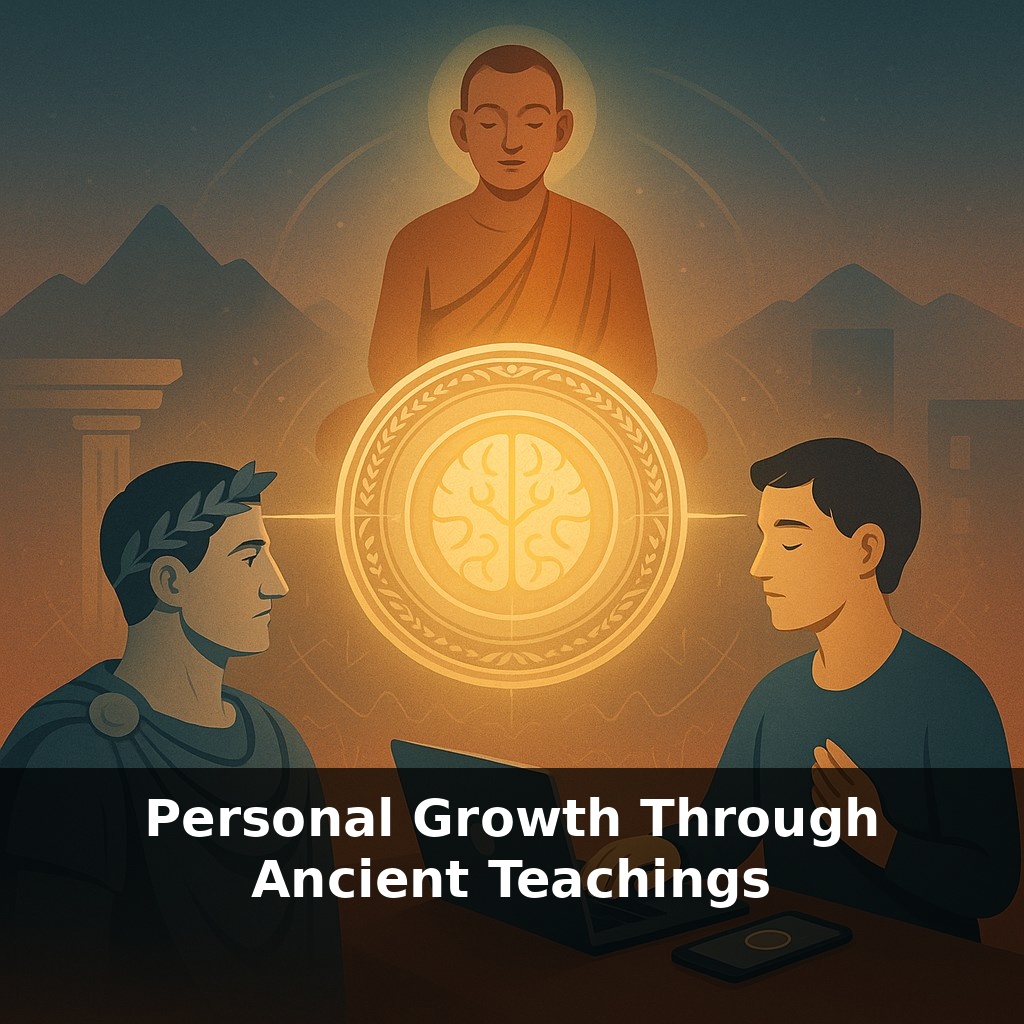
A Roman emperor, a monk in Nepal, and a stressed-out software engineer all train the same thing: attention. One does it with battlefield notes, one with a worn cushion, one with a breathing app. Here’s the twist: modern brain scans say the ancients were onto something.
A 2014 medical review found that a few weeks of mindfulness practice cut anxiety by about 20%—without changing anyone’s job, family, or bank account. That’s the quiet power of what ancient traditions cared about most: training how you meet each moment, not just what happens in your life.
Across cultures, the emphasis wasn’t on “hacking” productivity, but on reshaping who you become through repeated inner habits. Stoics tracked their reactions to setbacks the way athletes track split times. Confucians treated daily self-reflection like brushing your teeth: unglamorous, non‑negotiable maintenance. Yogic texts treated the breath as a steering wheel for the nervous system long before cardiology caught up.
In this episode, we’ll connect those old training plans to modern data—and turn them into small, concrete experiments you can actually run in your own week.
Modern psychology gives this old training a new name: neuroplasticity. Your brain quietly rewires itself based on what you repeat, just like a path across a field deepens every time people walk it. Stoic exercises, Buddhist sitting, Confucian rituals, and yogic discipline weren’t random spiritual chores; they were systematic ways to wear certain paths in the mind: patience instead of reactivity, clarity instead of rumination, steadiness instead of panic. Today, CBT worksheets, habit trackers, and therapy sessions echo the same logic—only now we can watch the wiring change on brain scans.
“After practicing pranayama for six weeks, my doctor reduced my blood pressure meds,” one study participant told researchers. That kind of concrete shift is where ancient ideas stop sounding poetic and start looking like practical engineering.
Each tradition we’re looking at offers a *training protocol* more than a belief system.
Stoic writers like Seneca used a three-step loop: spot the trigger, name the judgment, choose a response aligned with your values. Modern trials on “reappraisal” show that this simple move can dial down amygdala activity and reduce the intensity of anger or fear. You’re not pretending things are fine; you’re asking, “What story am I adding, and is it helping?”
Buddhist-influenced mindfulness protocols add a different angle: staying with an experience long enough to see it change. Cravings, shame, worry—all feel permanent when you’re inside them. When you watch them peak and fade, even for 30 seconds, the brain starts to tag them as “events” instead of “facts.” That shift matters: it breaks the reflex to obey every urge or mood that shows up.
Confucian self‑cultivation zooms out to the social field. It’s less “how do I feel?” and more “what kind of person am I rehearsing being in my roles?” Teacher, friend, partner, colleague. Rituals of courtesy and reliability train your nervous system to default to steadiness in relationships. Longitudinal research on prosocial behavior shows something similar: regularly choosing fair, cooperative actions predicts higher life satisfaction than chasing private wins.
The Yoga Sutras add a body‑first route. They treat physical posture, discipline, and breath regulation as gates to mental clarity and ethical behavior. Modern trials on yoga‑based programs in schools and prisons are finding reduced aggression and better impulse control—not because participants became more flexible, but because they got reps in pausing before acting.
Notice the pattern: none of this is about having the “right philosophy” in your head. It’s closer to athletics. You pick specific drills (evening review, compassion practice, respectful speech, steady breathing under stress) and repeat them until they show up automatically in real‑time pressure.
One way to test this: borrow *one* drill from each lineage and run it like a four‑week personal field study, tracking changes in how you handle a very specific recurring stressor.
A 2015 study found that people who wrote down their goals were 23% more likely to achieve them—but *how* they wrote mattered. Here’s where ancient drills get concrete.
Take a Stoic-style example: you’re stuck in traffic, late for a meeting. Instead of stewing, you run a tiny experiment: list three ways this delay could still serve your day (rehearse your opening line, call a friend, plan dinner). You’re not denying the frustration; you’re giving your mind a different script to rehearse under pressure.
Or a Confucian-flavored one: pick a single role—say, “teammate.” For one week, you choose one small, visible action each day that embodies “reliable teammate”: sending the summary email no one asked for, showing up on time, backing a colleague in a meeting. You’re quietly teaching your nervous system, “This is who we are here.”
Here’s the key: treat each practice like a mini sports drill. You’re not trying to “be enlightened”; you’re sharpening one move you can call on when life gets fast.
Stress might soon be treated more like dental health: brief, routine “mental hygiene” built into schools, workplaces, even commute time. Apps could guide micro-practices between emails; VR might rehearse hard conversations before they happen, like a flight simulator for character. As data accumulates across cultures, we may discover personal “practice profiles”—sets of exercises tuned to your temperament, history, and goals, rather than one-size-fits-all life advice.
Your challenge this week: pick one tiny behavior upgrade—like pausing before replying to a sharp email or softening your tone in the last conversation of the night—and treat it as a daily drill. Notice how small course corrections, like nudging a thermostat, gradually change the whole climate of your day. Track which tweaks shift your mood the most.