In high-stakes online poker, most pots never reach showdown. A raise, a pause, a fold—hand over. In one hand, you hold nothing, yet the math quietly says “fire.” In another, you’ve got strength, but probability whispers “wait.” Which voice do you trust when the chips are in motion?
At first glance, these folds might look like chaos, but they are anything but. Behind each quiet fold lies a highly structured system of frequencies, ratios, and thresholds that dictates when a bluff is wise. is profitable and when it’s lighting chips on fire.
This is where poker stops feeling like “gut” and starts looking a lot more like engineering. Every time you consider bluffing, there’s a hidden equation running: how big the pot is, how often they *must* fold for you to break even, how often they’re *supposed* to defend so they can’t be exploited. Solvers and AI have pushed this to an extreme, showing that the most “unreadable” players aren’t random at all—they’re ruthlessly consistent in how often they bluff in each spot, even while their actual bluffs are impossible to predict.
On TV, Chris Moneymaker’s river bluff didn’t just win a pot—it spiked ESPN’s WSOP viewership by nearly 50%. The audience wasn’t cheering for “good cards”; they were hooked on the tension of a bet that might be genius or disaster. That same tension lives in every real game you play. Modern pros don’t treat these spots as wild gambles; they treat them like timed attacks. They know how often people actually fold on each street, which board textures scare ranges, and which runouts explode in their favor—then they sync their nerve to those patterns and pull the trigger.
Call it the quiet side of aggression: you’re not just asking “Can I get away with this bluff?” but “How often *should* I be attacking here so nobody can safely ignore me?” That’s the logic buried inside minimum-defense frequency and balanced ranges. Your opponent doesn’t need to know the equations; their stack will “feel” them over time if you’re calibrated and they aren’t.
Start with a simple mental target: every time you bet, the risk–reward tradeoff gives you a required fold percentage. But that’s only the static snapshot. The real edge comes from *linking* that snapshot to how often your opponent will actually continue across all possible hands they could hold. If their continuing range is too tight, your bluffs print. If it’s too wide, you need to skew toward value. You’re tuning a dial, not flipping a coin.
This is where balanced bluff–value ratios come in. On a scary river card that improves your perceived range, you *want* some natural bluffs: missed straight draws, busted backdoor flushes, overcards that never connected. If you only ever shove the nuts there, attentive players eventually start paying you off less. If you blast every miss, they start snap-calling you light. The goal isn’t perfection; it’s to live in that blurry zone where they can’t tell which part of your range showed up.
Think of a top-tier soccer striker taking penalty kicks: same player, same distance, but the shot distribution—left, right, high, low—prevents the keeper from “solving” them. The striker isn’t guessing; they’ve built a pattern that stays unpredictable hand-to-hand yet stable over thousands of attempts.
Modern AI like Libratus doesn’t “feel” fear on the river; it simply respects its own mixture. In spots where humans historically under-bluffed, it leaned into pressure and printed EV by forcing folds at just above breakeven frequencies. Over 120,000 hands, that discipline added up to seven figures in chips.
The twist: most of your profitable bluffs won’t be headline moments. A half-pot stab on the turn when the board favors your range. A small river bet when missed draws are obvious. Quiet, repeatable lines where your story is just believable enough, just often enough, that folding becomes their habit—and their leak.
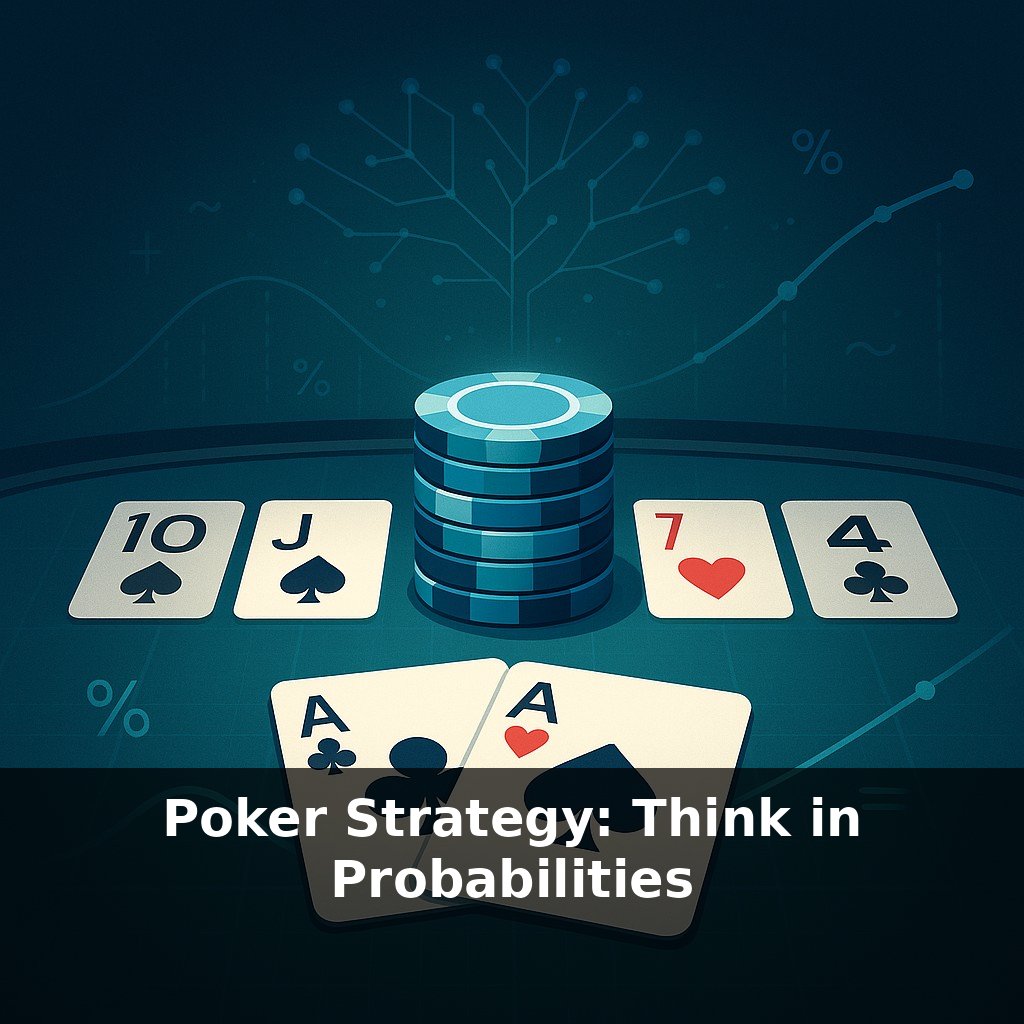
Your strongest bluffs usually come from “built‑in” candidates, not random whims. Say you 3-bet preflop with A♠Q♠, fire the flop on K♠7♣2♠, get called, then the river bricks off with a harmless 4♦ and you’ve missed your draw. That hand is a perfect future bluff: you blocked strong continues (aces, queens, nut flushes), represented pressure the whole way, and now arrive with nothing—but a very credible story. Compare that to floating the flop with 9♥3♣ and “deciding” to bluff later; the story is weaker, your blockers are worse, and your line is harder to sell.
A clean way to think about it: when you choose preflop and flop actions, you’re also quietly choosing your future bluff inventory. Bets with hands that can improve or credibly represent strength later give you ammunition on scary turns and rivers. Checks with hopeless trash keep you from over‑bluffing garbage. Over time, your range almost organizes itself.
Solvers won’t stay in poker forever. The same engines that tune river aggression are already shaping cyber-defense, bidding systems, even how companies haggle over mergers. Think of each decision as a move in a hidden tournament: your strategy updates as the “opponent” adapts. As assistance tools creep toward real time, regulators will treat them like performance‑enhancing tech—forcing new detection arms races, and pushing serious players to learn theory, not outsource it.
Over time, treating your deception like a craft shifts how you see risk outside poker too. In negotiations, job interviews, even product launches, timing your aggression becomes less about bravado and more about structure: when to apply pressure, when to retreat, and how to stay unreadable without drifting into chaos or predictability.
Before next week, ask yourself: Where in my life right now (negotiating a salary, pushing a project at work, or even playing cards with friends) am I acting like my “hand” is weaker than it really is—and what specific information do I actually have that makes my position stronger than I’m signaling? In one upcoming interaction, how could you consciously use probability—thinking in odds instead of certainties—to decide whether to “bluff” (speak more confidently, anchor higher, or push harder) and what concrete signals would tell you it’s time to fold instead of double down? When you recall a recent situation where you guessed wrong about someone else’s “hand” (their intentions, resources, or constraints), what did you miss in their behavior, timing, or word choice that you can start deliberately watching for in your very next conversation today?