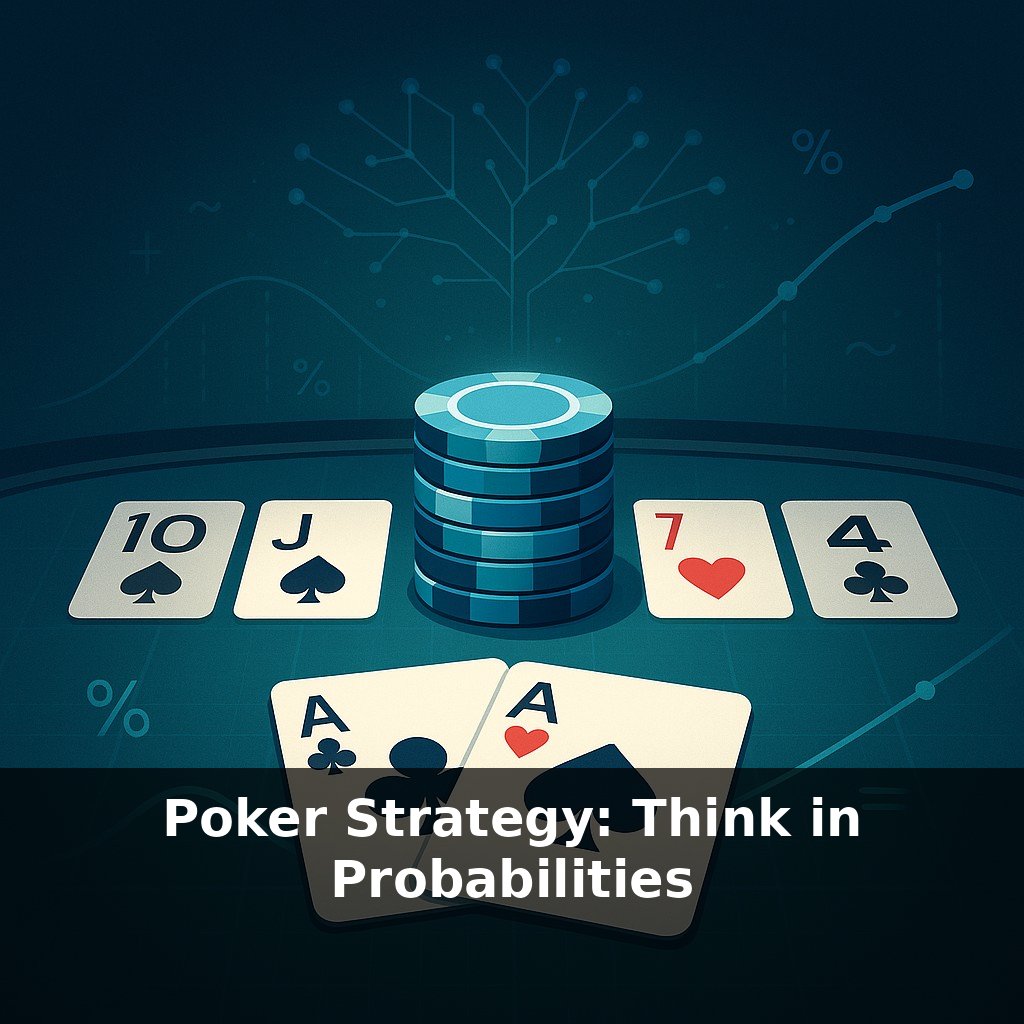
A player calls a river bet, *wins* the pot—and still made a losing decision. That’s the paradox at the heart of advanced poker. In this episode, we’ll step inside those hidden calculations that quietly separate long‑term winners from everyone else at the table.
A solver doesn’t care who “deserves” the pot; it only cares about price and probability. That’s exactly what you’re about to steal from modern poker tech: the ability to see every decision as a bet on a percentage. In this episode, we zoom in on two numbers that quietly govern almost every profitable spot you take: the price the pot is offering you right now, and the long‑run return that price creates over thousands of hands. This is where your intuition about “I feel like I’m ahead” gets replaced by, “I’m getting 3:1, need 25% equity, and my draw has more than that.” We’ll connect real frequencies—like common draw equities and the drag of rake—to concrete decisions, from calling turn barrels to firing river bluffs, so your choices start to resemble disciplined shot selection rather than hopeful heaves from half‑court.
Now we’re going to plug those ideas into real hands the way a good heads‑up display quietly does in the background. Instead of flashing VPIP or aggression numbers, you’ll be training your own “mental HUD” to attach a rough probability to every spot: how often your c‑bet gets through this pool, how frequently turn barrels are under‑bluffed, how likely a tight regular actually pays off your river value bet. Like a field general reading formations before the snap, you’ll start combining these frequencies with the price the pot is offering to forecast your EV in real time.
Start with the raw inputs your “mental HUD” can grab in real time: pot size, bet size, your approximate equity, and how often villain continues. Pot odds tell you the **threshold** you need; EV tells you how far above or below that threshold a line actually lands once you factor in *future* bets and *folds you generate*.
Take the classic flop flush draw with one overcard in a 3‑bet pot. You face a half‑pot c‑bet. You know from study that this combo has solid equity versus a typical tight range, and half‑pot means you’re not being asked to overpay. But the modern twist: your database (or population read) says this player under‑bluffs later streets. That pushes the EV of a *pure call* down, because when you miss, you’ll often have to fold to big, honest turn barrels. The line that looks fine by immediate pot odds can be worse once you factor in how future action actually plays out in your games.
That’s where **implied odds** and **reverse implied odds** live. Implied odds: how much more you realistically win on good runouts when you hit. Reverse implied odds: how much you lose on those same runouts when villain’s range is even stronger than yours. Your goal is to stop treating a draw as a binary “do I get there?” question and instead ask, “When I get there, how clean is it, and how much more money changes hands?”
Now flip the script to aggression. A river bluff doesn’t care about your equity; it cares about how often villain folds versus the price you’re giving *them*. If you jam pot and believe a competent opponent folds more than 50% of the time, the bluff prints over the long run, even though your hand has 0% equity when called. This is the same logic that made Moneymaker’s famous bluff sound: Farha’s **calling** decision had to weigh his showdown equity versus the pot odds, not the drama of the moment.
Think like a coach drawing up a play: the same “shot” (call, bet, shove) has different EVs against different defenses. Loose callers slash your bluff EV but boost your value‑bet EV; tight folders do the opposite. The more precisely you can attach frequencies to those tendencies, the more every decision becomes a calculated wager on the long‑term scoreboard, not a guess inside a single hand.
You’re on the turn with a gutshot and two overcards facing a 70% pot bet. The mental math says you’re not getting the right immediate price. But you notice: villain is a multi‑tabling reg who auto‑folds to river overbets, and stacks behind are deep. Now your line isn’t just “call or fold”; it’s “call turn with the plan to bomb river on scare cards.” The EV comes not from *hitting* often, but from how often your story makes them release.
Reverse it: you hold top pair, weak kicker on a paired board. Solver charts in your study notes say this hand can mix between betting and checking. Here, your mental HUD remembers: this player “station‑calls” any small river bet but massively over‑folds to jams. Suddenly, a thin value bet may be worse than checking or polarizing to a shove. Same hand, same board, drastically different EV because the frequencies behind their calls and folds changed.
Like a landscape photographer waiting for exact light, you’re not just snapping every shot; you’re selecting angles where the conditions multiply your edge.
AI tools will soon turn pot‑odds and EV into an always‑on overlay, like a racing line in a driving sim guiding every corner. That creates a new edge: not who can crunch numbers, but who can question the default line. In finance, negotiators and traders already borrow this mindset, weighing each offer like a river decision. Your challenge this week: treat three big non‑poker choices as bets; list the “pot,” your risk, and your estimated win frequency before you act.
Over time, this lens reshapes how you see risk. Spots stop feeling “scary” or “exciting” and start to look like puzzles: stack sizes, tendencies, future cards, all shifting the EV landscape. Like a jazz musician riffing off a fixed chord chart, you’re still improvising, but within a structure that quietly nudges you toward profit.
Before next week, ask yourself: Where in my last 3 poker sessions did I call in spots where the pot odds clearly didn’t justify a call—can I replay just one of those hands today, plug in the actual bet size and pot size, and see what the EV *really* was? Looking at the common spots I face (e.g., calling a river shove with a draw that missed, or defending the big blind vs a late-position open), how often do my hands actually win there, and does that match the minimum equity the pot odds say I need? If I picked just one recurring situation—say, calling a turn bet with a flush draw—what range of villain hands and equity estimate would I use *right now* to calculate the EV of calling versus folding, and does that suggest I should change how I play that spot this week?