A major consulting study found that some big tech projects fail so badly they nearly sink the entire company—often not because of bad code, but because no one saw the risks coming. Now drop into a project meeting where everything looks fine… until one quiet question changes the mood.
“Are we sure nothing big can still go wrong?” That one sentence can drain the color from a status meeting—because everyone realizes their beautiful plan, schedule, and budget from earlier episodes still has blind spots.
Now we move from planning what should happen to scanning for what might happen.
In this episode, we’ll treat risks like uninvited guests lurking just outside the venue: scope creep waiting at the door, a key vendor stuck in traffic, a regulatory change tapping on the window. The point isn’t to panic; it’s to know who might show up, how likely they are, and what you’ll do if they walk in.
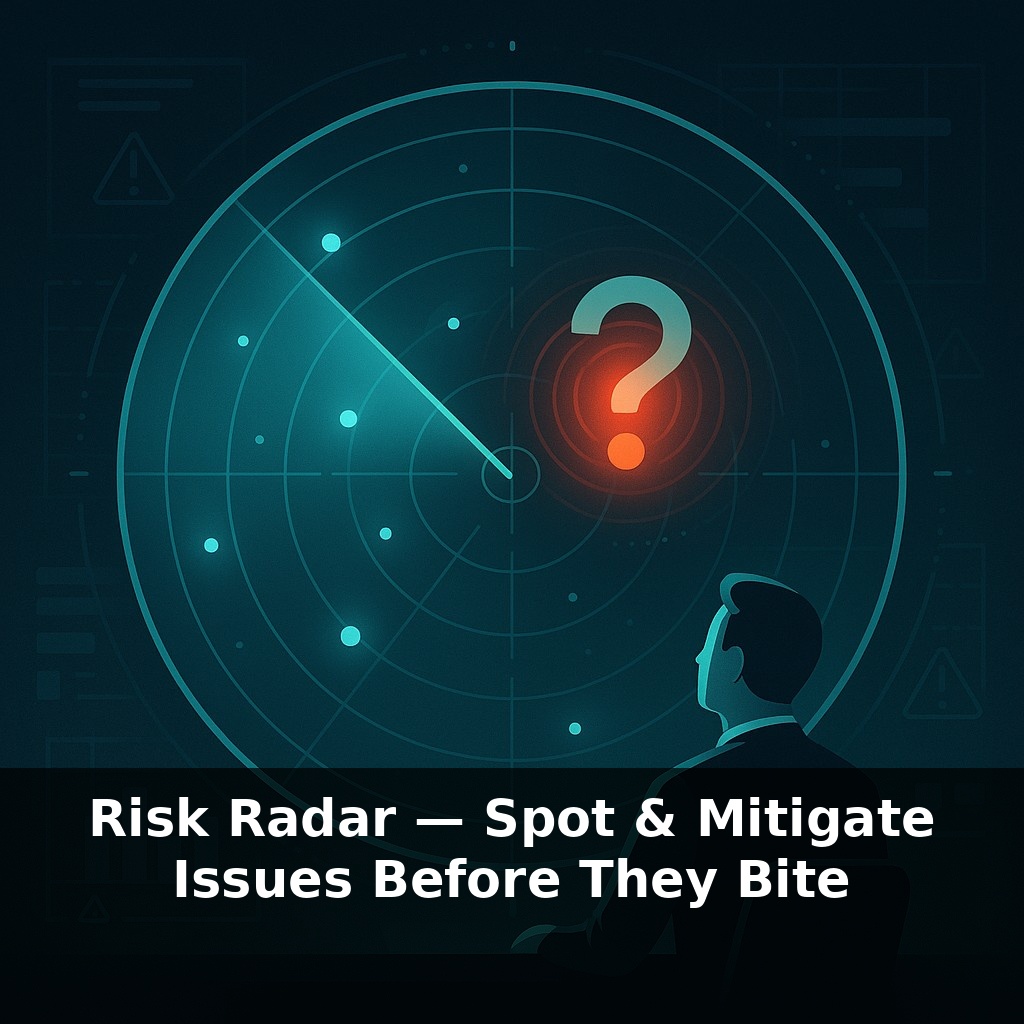
We’ll explore three habits of teams that rarely get blindsided: they keep a running “risk radar,” they rank issues by likelihood and impact instead of loudest voice, and they act early—when fixes are still cheap and quiet.
Now that we’ve acknowledged those lurking “uninvited guests,” the next step is to stop treating them as surprises and start treating them as data. Mature teams don’t wait for a crisis; they keep a simple, living list of uncertainties and update it as casually as they update a task board. Think of it like a shared group chat where future problems and lucky breaks both get a mention: a new regulation rumor, a star developer considering parental leave, a partner hinting at a pivot. None of these are emergencies yet—but captured together, patterns emerge and priorities become clearer.
Here’s how to turn that loose “future-problems group chat” into a working radar your team actually uses.
Start with a **lightweight capture rule**: if something could plausibly change your plan, schedule, or budget from earlier episodes, it deserves a line on the risk list. Not a debate, not a meeting—just a quick entry. Name it in plain language, add a short note on *why* it matters, then move on. The goal is fluency, not perfection: many small, rough entries beat one polished, late one.
Next, **separate noise from signal** without turning it into politics. Instead of arguing whose worry “feels” bigger, give each item two quick scores: how likely it is to happen, and how painful it would be if it did. Use simple scales (1–5, colors, or even “low / medium / high”). Then plot them on a basic grid and draw a bold line around the items in the upper-right corner. That’s your “talk about these every week” set.
Now add a third dimension: **time sensitivity**. Two risks with the same likelihood and impact may be very different if one needs action this month and the other can safely wait. A vendor bankruptcy rumor might be weeks away from mattering; a data-privacy rule change could require design decisions *today*. Tag each risk with a rough “when it bites” window (soon / later / much later) so you don’t waste cycles on distant hypotheticals while ignoring near-term hits.
From here, create **small, proportional responses**. Not every item needs a full-on mitigation plan. Some need just a flag (“watch this metric”), some need a one-time experiment, and a few deserve a backup plan you hope never to use. Treat these responses like tiny features: name an owner, define a specific action, and give it a realistic timeframe.
Finally, **bake review into your existing rhythm**. Add a five-minute “top 3 risks” slot to your standup or status meeting. At each review, you can promote, downgrade, or close items—because risks evolve. In practice, this makes your radar feel less like paperwork and more like an early-warning conversation the whole team owns.
At a fintech startup, the team added one line to their risk notes: “Key banking partner showing slower responses.” Nobody panicked, but they tagged it as “medium likelihood, high impact,” then added a tiny experiment: send a small pilot batch through an alternate provider. Weeks later, the primary partner announced a major system upgrade—and a three‑week outage. Because the backup route had already been tested, switching over was a Tuesday decision, not a full‑blown emergency program.
In a different company, a marketing lead logged “new privacy bill proposed” long before legal weighed in. They didn’t know if it would pass, but they marked a decision date: “Revisit as soon as draft language stabilizes.” When the law did move forward, they had a shortlist of lower‑risk tactics ready, instead of scrambling to rewrite an entire campaign.
Think of it like a city adjusting traffic lights based on live patterns: each tweak is small, but together they keep the rush‑hour jam from turning into gridlock.
When your risks are visible early, strategy options quietly multiply. Dependencies you once treated as fixed can become design choices; even regulations can turn into constraints you competitively **optimize** against. As telemetry and AI sharpen this radar, “gut feel” gives way to pattern‑based bets: you’ll see which combinations of triggers usually precede trouble. Culturally, this shifts status meetings from blame retrospectives to collaborative “forecast labs,” where speaking up is career‑safe—and often career‑making.
When your radar is working, surprises don’t disappear—but they get smaller and more negotiable. A delayed shipment becomes a chance to refine remote work; a supplier wobble nudges you to diversify. Your challenge this week: spot one “weak signal,” share it, and ask, “What tiny move now would give us options later?” Then actually make that move.