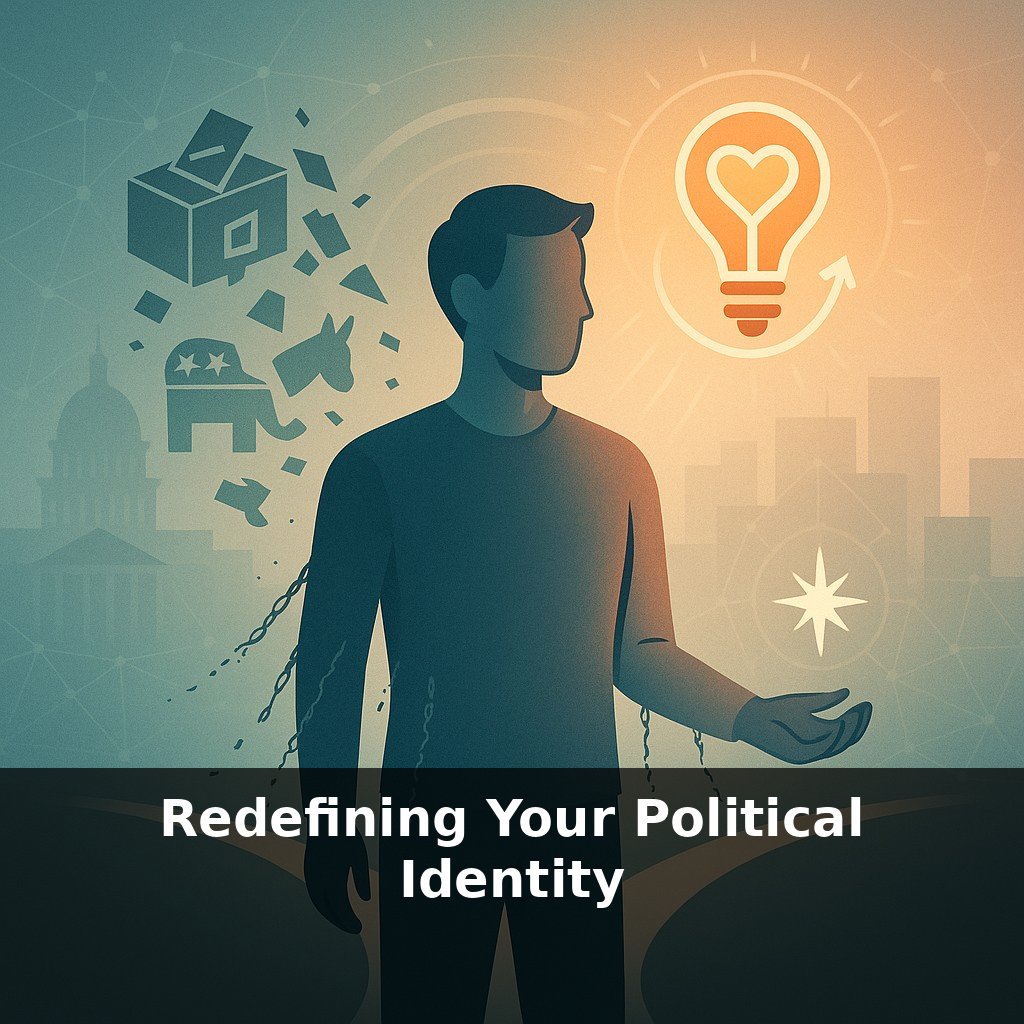
About two-thirds of eligible voters showed up in the last U.S. presidential election—yet many of those same people will say, “Politics isn’t really my thing.” How can so many of us act politically while still feeling disconnected from what we truly care about most?
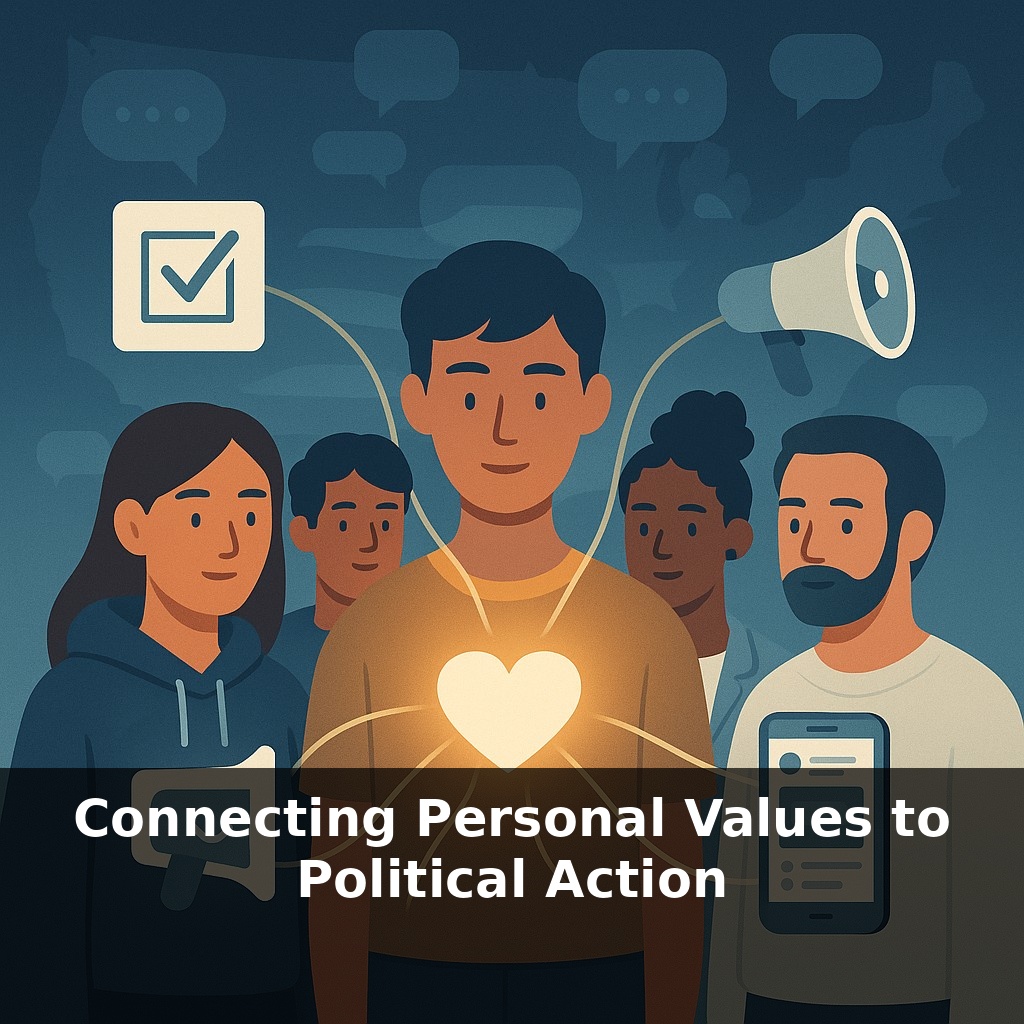
Sixty-eight percent of Gen Z in the U.S. has already used social media for some kind of political expression—posts, stories, duets, comments. Yet many of those same people wouldn’t call what they’re doing “politics”; they’re just standing up for fairness, safety, or a livable planet in the spaces they already inhabit. That gap between what we *say* we care about and what we *recognize* as political action is where a lot of energy gets lost. Research in social psychology shows that when your actions feel like a direct extension of your core values, you’re far more likely to stay engaged, even when issues get messy or progress feels slow. In this episode, we’ll zoom in on the quiet, often-overlooked bridge between “this matters to me” and “here’s exactly what I’ll do about it,” and how to build that bridge in a way that fits your actual life.
One reason that bridge often feels shaky is that our values are big and abstract—“justice,” “security,” “freedom”—while our daily choices are tiny and specific. That mismatch can make real options feel invisible. You might care deeply about housing access, for example, yet only see “vote every few years” as your lane, missing hyper-local routes like tenant boards or zoning hearings. Psychologists call this a problem of “action mapping”: most of us never learn how to translate a moral impulse into a menu of realistic political roles, scaled to our time, skills, and tolerance for conflict. That’s the gap we’ll work on closing next.
A useful next step is getting more specific about *which* parts of you are actually doing the “caring.” Broad labels like “I’m progressive” or “I’m conservative” usually bundle together many quieter motives: protecting loved ones, keeping promises, avoiding waste, honoring tradition, defending the vulnerable. When people stay involved over years, it’s usually because they’ve named those underlying motives clearly enough that a concrete decision—sign this, show up here, email that person—feels like keeping a promise to themselves, not just “being political.”
Psychologists who study this often distinguish between values you *endorse* because they sound good and values you *prioritize* when trade-offs appear. You might say you value environmental protection and job growth, for instance; the revealing moment is when a specific proposal seems to pit one against the other. In those moments, people who’ve already sorted their “must not violate” values from their “ideally, when possible” values report less paralysis and regret—and they’re more willing to take responsibility for the outcome instead of backing away.
You don’t need a lab to do that sorting. Pay attention to issues that make you feel not just sad or annoyed, but *personally* implicated—where inaction feels like looking away from something you’d rather not see. That “I can’t un-see this” sensation is a strong signal that an important value is on the line. Another clue: topics where you find yourself explaining the same point over and over, even to people who disagree. Repetition often reveals commitment.
Once those signals are on your radar, you can start experimenting with *roles* that fit them. Some people are natural amplifiers—sharing information, making complex things legible. Others are negotiators, conveners, watchdogs, builders, caregivers, quiet fixers inside institutions. Research on sustained activism finds that when your role matches your temperament and constraints, you’re more likely to keep going even when progress is slow, because the work itself feels like an authentic expression of who you are rather than an exhausting performance of who you think you’re supposed to be.
A practical way to test whether your choices line up with what matters most is to zoom in on single, ordinary decisions and trace their ripple effects outward. Say you care about fairness at work. You could quietly adjust your own behavior—sharing salary ranges with peers, declining to laugh along at exclusionary jokes—or you might volunteer to help redesign your team’s hiring process so it’s less biased. One route leans on interpersonal courage, the other on system tinkering. Both emerge from the same core concern, but they pull on different strengths.
Sports offers a helpful parallel: championship teams aren’t made of eleven star strikers all chasing the ball; they’re built from distinct positions, each with a clear job that serves the larger strategy. In civic life, the “defenders” might be those who monitor policy details, the “midfielders” those who translate between expert language and everyday concerns, the “forwards” those who thrive on visible advocacy and public pressure. Noticing which position feels natural can turn vague obligation into a focused, sustainable lane.
A 2040 version of your civic life might feel less like “following politics” and more like running a personalized dashboard. Live neighborhood data, AI assistants, and micro-surveys could nudge you toward choices that quietly align with your priorities: which energy plan you pick, which local bond you back, which workplace committee you join. The risk is outsourcing reflection to algorithms; the opportunity is using them as mirrors that keep asking, “Does this still feel like you?”
Treat this as ongoing prototyping, not a final verdict on who you are. As you test new forms of involvement, watch for moments that feel less like performance and more like muscle memory—small habits you’d miss if they disappeared. Those are clues you’re closing the gap between what matters to you and how you quietly shape the world around you.
Try this experiment: For the next 7 days, pick one core value you care about (like fairness, community, or security), and each day call or email one elected official about a specific related issue in the news (for example, your value of fairness → voting access bill in your state; community → local public school funding vote; security → climate resilience measure on the city agenda). Use the same 2–3 sentence script each time, but tweak one thing each day: your tone (more personal vs. more data-focused), your “hook” (start with a story vs. a statistic), or your ask (support vs. oppose, or ask for a meeting). Track who responds, how fast, and how you feel after each contact, then at the end of the week decide which combo of value + message style made you feel most effective and most aligned—and commit to using that style in all your political actions for the next month.