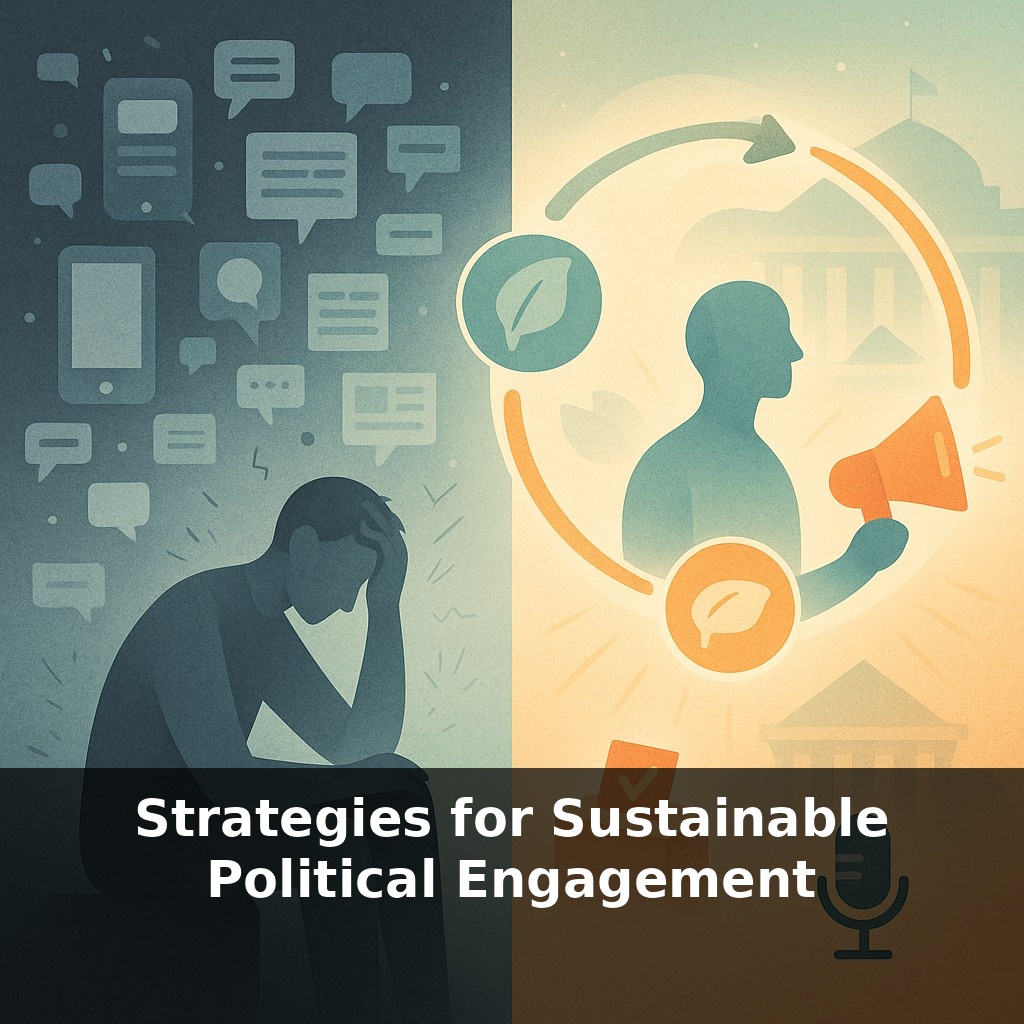
In recent elections, people who took one small political action each year were far more likely to vote every time. Now picture two friends: one doomscrolls and burns out, the other rotates between action, rest, and reflection. Same outrage, totally different impact. Why?
In one organizing program, simply adding regular debrief circles cut volunteer dropout by over 40%. Not more funding, not better slogans—just making space to process what happened and how people felt about it. That’s the level of design most of us never apply to our own political lives.
Most people treat their engagement like an emergency fire drill: all alarms, no floor plan. They react to every crisis, but rarely step back to ask, “What would it look like to be doing this five years from now—and still want to?”
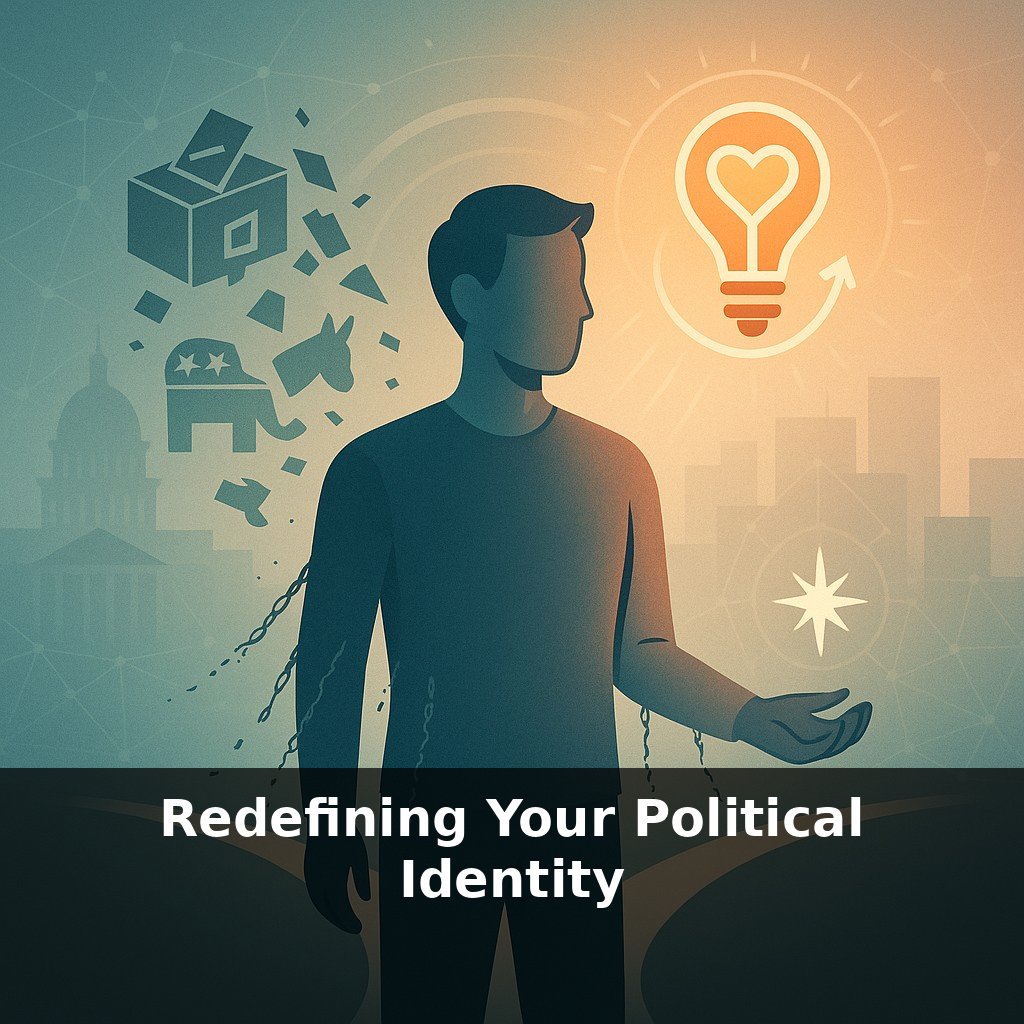
This episode is about treating your political identity as something you architect, not just something you “have.” Who are you in public life when the news cycle is quiet? What kinds of roles actually fit your temperament, time, and energy? And what practical structures—habits, communities, boundaries—will let you keep showing up without hollowing yourself out?
Some organizers describe this shift as moving from “campaign mode” to “movement mode.” Campaign mode is like sprinting between train stops: urgent, noisy, full of deadlines. Movement mode is more like planning the transit system itself: routes, maintenance, backup options when something breaks. Sustainable engagement lives in that second layer. It asks different questions: How will I learn from losses without quitting? Who are my “co-workers” in public life, even if we’ve never met? What rhythms let me turn urgency into a long-term skill, not a recurring injury?
A useful starting point is to separate **what you care about** from **how you plug in**. Many people fuse these: “Because I care *this much*, I must always be on.” Sustainable engagement treats intensity of values and intensity of activity as different dials. You can turn one up without breaking the other.
One practical way to do that is to think in **roles, not reactions**. Roles are recurring commitments with clear boundaries: “I’m the person who runs the monthly onboarding call,” or “I’m part of the data team two evenings a month.” Reactions are one-off responses to whatever flares up today. Roles let you predict your load, which is what makes pacing possible.
The research on retention backs this up: groups that keep people longer usually give them **specific lanes, training, and peers**. Lanes: you know where you’re driving and what success looks like. Training: you feel your skills growing, so staying involved is rewarding, not draining. Peers: there’s a small circle that would notice if you disappeared. That social visibility is protective; you’re not just pushing against institutions, you’re also showing up *for* particular people.
This is where the “values-driven, relational, strategically paced” triad matters. Values give direction; relationships give oxygen; pacing gives longevity. Drop any one for long enough and your engagement starts to wobble. All values and no relationships can turn rigid and joyless. All relationships and no strategy can feel busy but ineffectual. All strategy and no values quickly becomes transactional.
Notice that many high-intensity spaces quietly reward overextension—late-night meetings, instant replies, heroic last-minute saves. Yet the data on sleep and burnout shows those invisible expectations have real costs. Redesigning your political life sometimes means **refusing the hero narrative** and choosing to be a reliable contributor instead: fewer dramatic peaks, many more cumulative wins.
You can also diversify **formats** of engagement to match your bandwidth. Low-energy week? Maybe you attend a debrief, send three well-crafted emails, or support someone else’s project logistically. Higher-energy period? You take on a time-bound role with a clear exit point. Think of your involvement like a software system that needs scheduled maintenance windows—short planned downtimes that prevent catastrophic crashes later.
A helpful lens here is to treat your political life the way a good coach treats a season, not a single game. Elite teams don’t just “try harder”; they map out training blocks, game days, recovery days, and film review. You can do a civilian version of that. For example, pick one “skill season” every few months: maybe phone-banking this quarter, local budgeting next quarter. During that season, set a modest weekly rep target—say, one shift or one meeting—and one reflection touchpoint, like a 20‑minute Sunday review. Notice which tasks leave you drained vs. steadier; often, quieter backstage roles (research, data, logistics) fit better than front-line ones people assume are “real” activism. Borrow ideas from organizations that build in sustainability: a climate group that rotates facilitation every meeting, or a tenants’ union that schedules rest weeks after big pushes. The point isn’t lower stakes; it’s building a long game where your future self would actually choose to stay on the field.
Volunteers who lose more than six hours of sleep a week show 35% higher burnout scores—and that’s before the next crisis hits. As climate shocks and democratic stressors stack, politics will feel less like “occasionally urgent” and more like always-on background radiation. Sustainable engagement will likely borrow from athletics and tech: think season planning, load management, and dashboards flagging when your “civic CPU” is overheating before you crash. Over time, funders and parties may judge strategies not just by votes won, but by whether people could still look their neighbors in the eye afterward.
Treat this less like finding your “one true cause” and more like learning an instrument: you’ll sound rough, adjust, and slowly discover your range. The goal isn’t to be constantly “on,” but to build a political life that can flex with breakups, moves, kids, layoffs. Your challenge is to prototype a version of engagement your future self would actually thank you for.