You make hundreds of judgments before lunch—who to trust, what to buy, which email to ignore. Here’s the twist: researchers say many of those “gut calls” are predictably wrong. Not random. Not rare. Predictably wrong. The question is: which ones… and could you catch them in time?
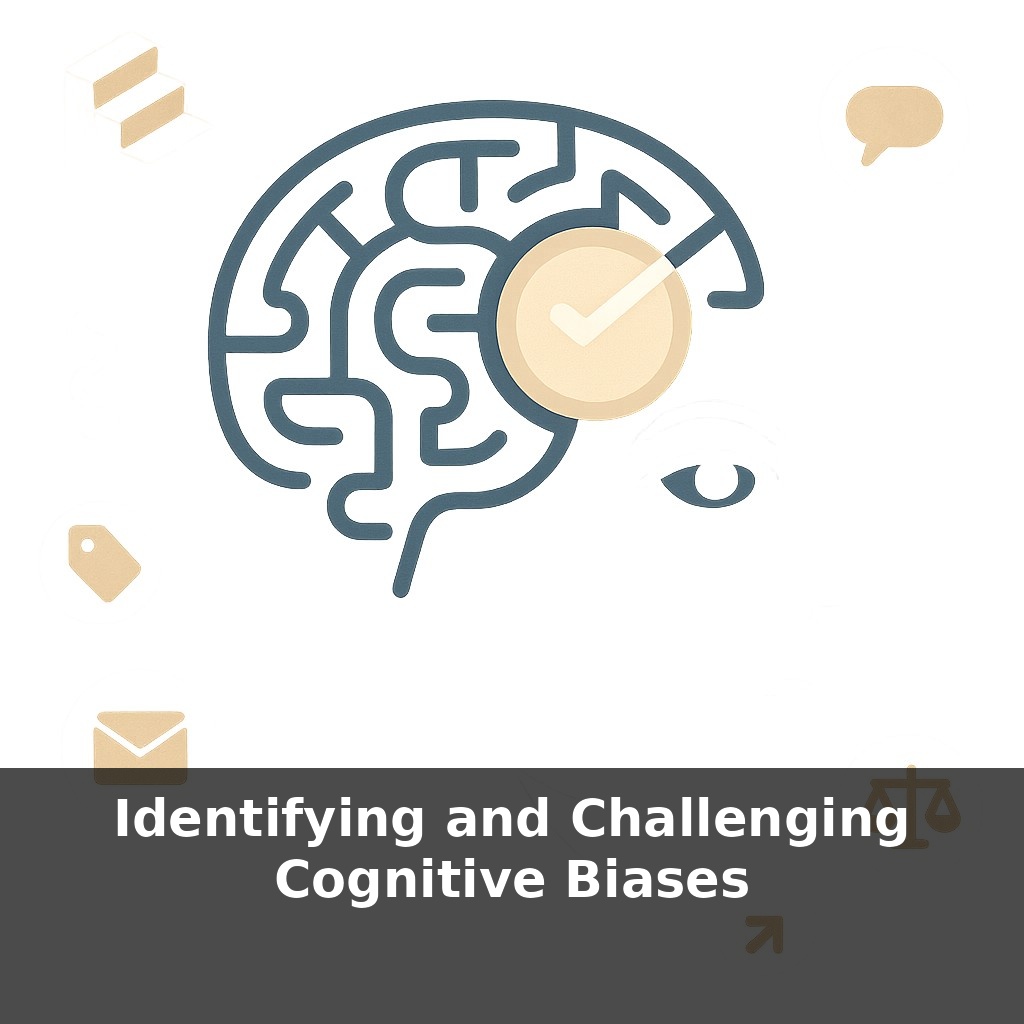
Psychologists now have a map of these mental blind spots—over 200 and counting. But the everyday damage often comes from a small, stubborn cluster: the pull of the first number you see when negotiating a salary, the way one vivid news story makes a rare risk feel common, the quiet pressure to agree with the group even when something feels off. What makes this fascinating isn’t just that our thinking bends; it’s that it bends in systematic, testable ways. In labs, researchers can nudge people’s estimates by nearly half with a single planted number. In boardrooms, teams using premortems have cut painful delays by a third. This isn’t abstract philosophy; it’s closer to mental engineering—tweaking how you notice, question, and revise your own certainty in real time.
The twist is that these distortions don’t only show up in staged experiments or corporate war rooms; they quietly steer ordinary choices: how you interpret a partner’s text, whether you trust a headline, how confident you feel hitting “send” on an important email. Philosophers once worried about abstract errors in logic; now we can watch concrete patterns of bias unfold in brain scanners and field trials. The frontier isn’t spotting flaws in the lab—it’s building habits that catch them in the wild, under pressure, when the stakes feel personal and the clock is ticking.
Think of this episode as moving from diagnosis to x‑ray. We know something is skewing judgments; now we’re going to watch a few of the main culprits in action.
Start with confirmation bias. When you already suspect your coworker is unreliable, you’ll notice every late reply and gloss over the times they quietly fix problems. Online, this bias can trap you in information loops: you click on one article that fits your politics, the algorithm feeds you ten more, and soon disagreement doesn’t just feel wrong, it feels absurd. The danger isn’t only bad beliefs; it’s overconfidence in partial evidence.
The availability heuristic shows up any time vividness masquerades as frequency. Hear about one dramatic plane crash and flying suddenly feels perilous, even if you intellectually know driving is riskier. In relationships, one blazing argument can overshadow months of small kindnesses when you quickly “sum up” how things are going. Your memory’s highlight reel is not an honest census.
Anchoring sneaks in through the first number or frame you encounter. An opening salary offer, a list price on a house, the “original” price next to a discount—all of these quietly drag your sense of “reasonable” toward them. Even experts do this; experienced real‑estate agents’ appraisals still shift when they see random listing prices.
Groupthink adds a social layer. In meetings, once a few confident voices converge, dissent starts to feel not just risky but almost irrational: “If everyone else thinks this is fine, maybe I’m overreacting.” History is littered with committees that nodded their way into disasters because speaking up felt costlier than staying silent.
Finally, optimism and overconfidence often wear the mask of ambition. We underestimate how long projects will take, overestimate how well we’ll stick to new habits, and discount the odds that we’re the exception, not the rule. The 10‑minute “quick task” that swallows your afternoon is a familiar, small‑scale symptom.
Your challenge this week: treat these five as suspects, not abstract concepts. For seven days, pick ONE domain—work decisions, money choices, or close relationships. Each time you notice a strong snap judgment, ask: “Which suspect fits best here?” Name it once, in the moment, then move on. At week’s end, review where each bias showed up most often. You’re not trying to fix anything yet—only to map where your thinking bends the most under real‑world pressure.
Consider a few “in the wild” scenes. You’re buying a used car: the seller casually mentions that similar models go for $12,000, then “kindly” offers you $10,500. Even if you’d planned to spend far less, that first figure quietly reshapes what feels like a bargain. Later, at work, a project meeting drifts toward an obviously risky deadline. No one objects, because the most senior person sounds certain; the room’s silence hardens into consensus. Months on, people barely recall having doubts. Or take optimism and overconfidence: you volunteer to lead a side project, convinced you can squeeze it in around everything else. Your calendar says no; your inner storyteller says yes—and wins. Across these scenes, the biases you’ve met don’t appear as villains, but as subtle tilts: a number lodged in your mind, a room’s mood, a private hunch about your future capacities. The experiment is learning to spot these tilts before they harden into commitments.
If we learn to question our own certainty, our institutions might evolve too. Boards could invite “professional dissenters” the way sports teams hire specialized coaches, paid to spot flawed tactics before the game starts. Hospitals might run regular “bias scrimmages,” replaying decisions to see where confidence outran evidence. And as AI tools mirror our shortcuts back to us, the most valuable skill may be treating both human and machine advice as hypotheses, not instructions.
The deeper move isn’t to erase bias, but to design around it. Architects don’t trust raw gravity; they add beams and stress tests. You can do the same with choices: routine “sanity passes” on big emails, a friend who’s invited to poke holes in your plans, a short pause before clicking “buy.” Each small safeguard is less about doubting yourself and more about upgrading how you think.
Try this experiment: for the next 24 hours, every time you catch yourself thinking “I’m sure about this” (especially in news, politics, or work decisions), pause and deliberately generate two alternative explanations that contradict your initial assumption. Then, pick one decision you need to make today (what stock to buy, which project to prioritize, or which article to trust) and briefly argue the *opposite* side out loud to yourself as if you fully believed it. Finally, act based on whichever side still feels stronger—but jot down your prediction of the outcome in a single sentence and set a reminder to check in 48 hours or 1 week later to see whether your original confidence was justified or biased.