About half of major change efforts quietly fall apart, not because the ideas are wrong—but because the old mental habits sneak back in. You wake up weeks later, thinking the way you used to, and can’t quite trace when it happened. That silent rewind is what we’re exploring today.
A bold but accurate rule of thumb from neuroscience: if you don’t actively keep a new way of thinking alive for at least two months, your brain will quietly file it under “nice idea, not worth the energy.” That filing decision is mostly automatic; it’s your biology trying to save fuel.
So the question stops being, “Did I understand this new perspective?” and becomes, “How am I going to keep this perspective neurologically *expensive* enough to matter, but not so effortful that I drop it?”
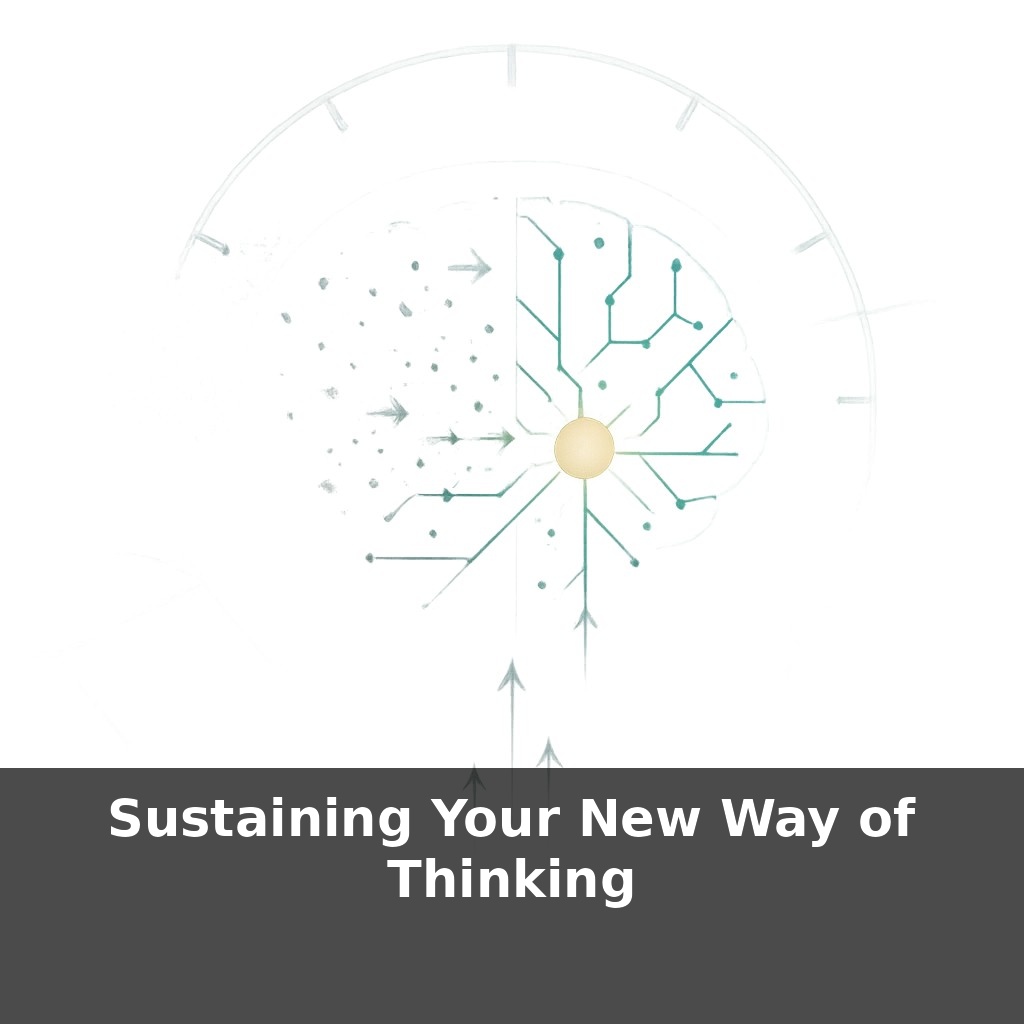
This is where deliberate upkeep comes in. Think less about heroic one-time breakthroughs, more about small, repeatable moves built into the grain of your days—like how a software update doesn’t just install once, but runs in the background, checks for bugs, and patches itself over time.
In this episode, we’ll look at how to design those “background processes” so your old defaults don’t reclaim the steering wheel.
The twist is that your brain doesn’t care whether a perspective is “true” or “deep.” It cares whether you *use* it often enough to justify the metabolic cost of keeping it online. That’s where design beats willpower. People who sustain new thinking don’t simply “try harder”; they rig the game in their favor. They set cues on calendars and devices, enlist coworkers as “thought partners,” and wrap new perspectives into existing routines—like pairing a new mental move with something as ordinary as opening your laptop or ending a meeting—so the upgrade keeps running without constant drama.
Here’s the catch most people miss: your brain doesn’t just build new circuits—it also runs a quiet bidding war over which ones get *priority access*. Attention, emotion, and repetition are like three investors deciding which “thinking style” gets funded.
This is why a single powerful insight in a workshop can feel life-changing on Friday and strangely distant by Wednesday. The neural bid went to something else: urgency at work, a minor crisis at home, or the comfort of a familiar interpretation. The perspective didn’t “fail”; it just got outcompeted.
To keep your new framework winning that auction, you need three kinds of practices working together:
1. **Self-reflection that’s scheduled, not spontaneous.** Reflection works best when it’s brief, concrete, and tied to real events. For example, a manager who’s learning to interpret feedback less defensively might spend three minutes after key meetings noting: “What story did I tell myself about that comment? What alternate story fits the same facts?” This isn’t journaling for catharsis; it’s targeted pattern-recognition. Over time, those micro-audits make the old narrative feel clunky and the new one feel smoother.
2. **Spaced repetition that respects the 48–72 hour window.** Concepts revisited every couple of days consolidate more deeply. That doesn’t mean rereading the same notes; it means re-*using* the idea in a slightly different way: applying it to an email conflict one day, a strategic decision the next, then a personal dilemma. Each new use-case strengthens a more flexible, generalizable circuit rather than a brittle, context-specific one.
3. **Environmental and social scaffolding.** Your surroundings already cue thousands of micro-responses. Subtle redesign can nudge your updated stance to the front. Leaders at one tech firm, for instance, added a standing agenda item called “Assumptions Check” to recurring meetings. That tiny structural tweak forced teams to articulate and revise underlying beliefs, not just surface decisions. Over months, people started doing “assumption checks” informally, even outside meetings—the structure had rewired the shared default.
Think of this like refactoring legacy code in a large software system: you don’t rip everything out at once. You identify critical paths, wrap them with new tests, gradually replace modules, and keep monitoring performance under real load. The point isn’t perfection; it’s steady bias toward the newer, more adaptive pattern, especially when things get busy or stressful.
A professional chess player doesn’t study openings once and then trust memory forever; they keep a small, rotating set of positions they revisit every few days, each time from a slightly different angle—“What if Black plays *this* instead?” Your new framework benefits from the same kind of deliberate “position reviews.”
Try treating specific situations as “test boards.” One executive I coached picked three recurring contexts: tough feedback, project delays, and Sunday-night anxiety. For each, they drafted a one-sentence “old script” and a one-sentence “updated script,” then put them where they’d actually see them: on the agenda template for feedback meetings, in the project tracker, and as a scheduled note that appears Sunday at 8 p.m.
Another client used colleagues as live “sparring partners,” asking one trusted peer to occasionally challenge them with, “How else could you read this?” Not in every conversation—just at agreed pressure points. Over a quarter, those micro-interruptions quietly shifted which interpretations felt “normal” under real pressure, not just in theory.
Here’s the twist most people miss: future tools won’t remove the need for upkeep—they’ll just expose how often you drift. An AI coach might flag, “You’ve slipped into your ‘catastrophe’ pattern 4 times today—want to rehearse an alternative?” Corporate dashboards could show leaders how their meetings impact collective focus the way fitness trackers show heart rate. Schools may grade not just what kids know, but how flexibly they revise beliefs—treating cognitive maintenance as a lifelong professional skill.
You won’t lock this shift in overnight, but you also don’t need perfection to make it real. Think of this phase less as “proving” the change and more as running long-term beta tests: small tweaks, quick reviews, quiet updates. Your challenge this week: pick ONE recurring situation and treat it as your live lab, adjusting only one variable at a time.