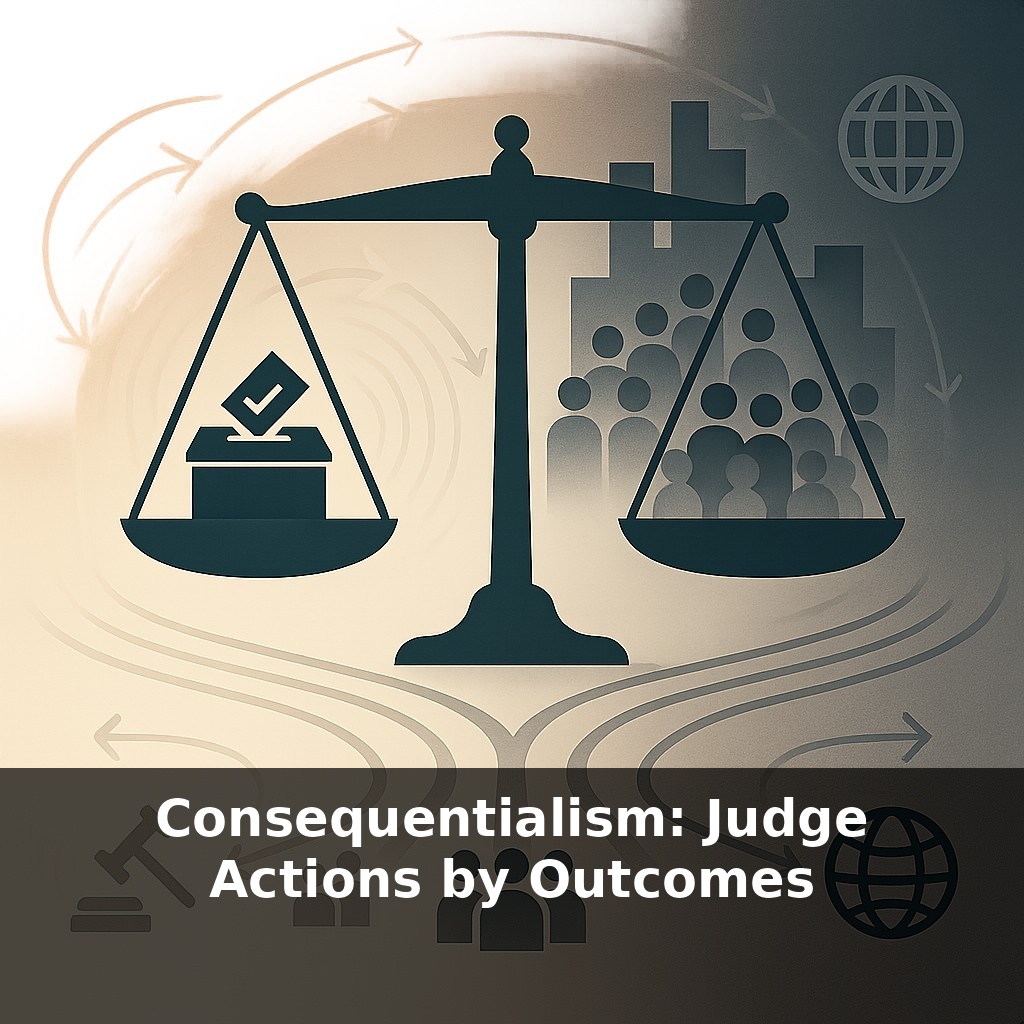
A single vote can change a law. A single policy can change thousands of lives. Yet we rarely ask a basic question: how do we decide which choices are actually better? In this episode, we dive into the radical idea that right and wrong live in what happens next.
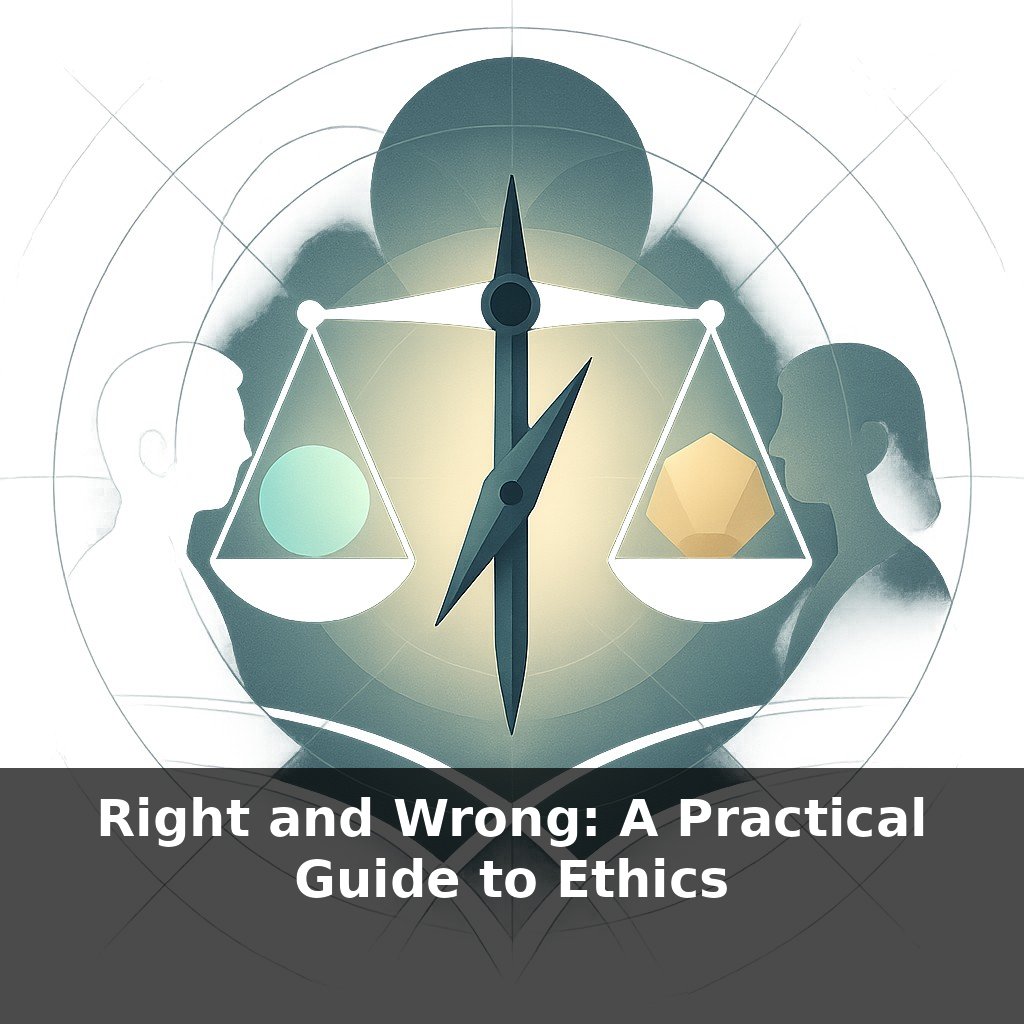
In philosophy, one family of theories answers our moral worries with a blunt rule: don’t focus on motives, traditions, or rules—focus on what your choices *do* to the world. This is consequentialism, and it claims that the only thing that ultimately matters, morally, is how things turn out.
That sounds straightforward until you look closer. Which consequences count—happiness, health, freedom, biodiversity, cultural survival? Whose outcomes matter—your family, your country, all humans, future generations, nonhuman animals? And how do we compare them when they collide, like a tight household budget pulled between rent, medicine, and education?
In this episode, we’ll trace how thinkers like Jeremy Bentham, John Stuart Mill, and Peter Singer tried to systematize these trade‑offs—and how their ideas quietly shape hospital priorities, climate policy, and even AI safety today.
Consequentialist thinking already shows up in places you might not label “moral philosophy” at all. Hospital ethics boards weigh which treatments save the most healthy years of life. Regulators like the UK’s NICE put price tags on extra years of decent health, deciding which drugs a public system will fund. Tech companies debate whether an algorithm that boosts engagement but spreads misinformation is worth deploying. And global health charities compare interventions—like malaria nets versus vaccines—the way a careful cook compares recipes: not by tradition, but by which reliably nourishes more people with the ingredients and time available.
When Jeremy Bentham tried to make outcome‑based ethics precise, he didn’t just say “more happiness is good.” He sketched a kind of moral spreadsheet. His “felicific calculus” listed seven dimensions for each experience: how intense it is, how long it lasts, how certain it is, how soon it arrives, how pure it is (how free of pain), how likely it is to lead to more of the same, and how widely it spreads across people. The ambition was clear: if we can measure what matters, we can compare options without hand‑waving.
Modern policy doesn’t follow Bentham’s exact formula, but the spirit survives. Health economists use QALYs—quality‑adjusted life years—to compare, say, a cancer drug that gives a few extra years at middling health with a vaccine that prevents shorter but more numerous illnesses. In 1999, the UK’s NICE effectively said: if a treatment costs more than roughly £20,000–£30,000 per extra healthy year, the resources are probably better spent elsewhere. That is consequentialism written into a budget line.
Outcome thinking also fuels moral criticism. A 2022 Lancet study estimated that more equitable COVID‑19 vaccine distribution could have averted 1.4 million deaths. On a consequentialist reading, this isn’t just a tragedy; it’s a quantifiable moral failure by governments and companies that could see the stakes in advance.
Peter Singer pushes this logic into everyday life. In “Famine, Affluence, and Morality,” he argues that if you can prevent something very bad from happening by giving up something morally trivial, you ought to do it—whether the child is drowning in front of you or at risk of malaria thousands of kilometres away. Decades later, his argument underpins movements like effective altruism, which treat charitable donations almost like an investment fund: not “did you give?” but “how many lives, how much suffering, did your dollars actually change?”
But consequentialism faces hard questions. How do you weigh freedom against health, or animal suffering against human comfort? How far into the future do consequences count? And how do you protect individuals from being sacrificed “for the greater good”? Variants like rule‑consequentialism respond by asking which general rules produce the best patterns of outcomes over time—rules like “don’t punish the innocent,” even when breaking them looks tempting in a single case.
You can see this outcome‑first mindset play out in surprisingly ordinary places. Think about a city council deciding whether to turn a downtown parking lot into a public park. The “feel‑good” answer might be green space; the outcome‑focused question is trickier: Does the park’s long‑term impact on air quality, mental health, and social connection outweigh lost parking revenue and tougher commutes for workers? Different councillors might even agree on the data yet disagree about which effects matter most.
Or take a social media platform weighing a new feature that boosts daily activity but also slightly raises the spread of harmful content. Engineers and ethicists end up in the same room, not to argue about company tradition, but to ask: are the gains in connection and expression worth the extra risk?
Your own life has smaller, quieter versions of this. Choosing an all‑consuming job, adopting a pet, or starting a family all involve forecasting ripple effects across years, relationships, and communities—even when your “spreadsheet” lives only in your head.
As forecasts sharpen, outcome‑focused ethics may seep into daily routines, not just expert panels. Your phone might nudge you toward sleep or exercise plans with the “best expected life impact,” the way finance apps already rank investments by projected returns. Workplaces could score meeting formats or commute policies by stress and creativity effects, normalizing “impact reports” for everyday habits. The open question: who chooses which outcomes count when the dashboards light up?
When you start noticing outcomes, even small ones, your day becomes a series of quiet experiments: tweak a habit, watch the ripple, update your beliefs. Like refining a recipe, you slowly learn which “ingredients” in your choices tend to nourish or harm. Your challenge this week: pick one recurring decision and track how its actual effects differ from what you expected.