A single decision in a boardroom, a hospital, or a tech lab can quietly change millions of lives. Yet the people making those calls often face no clear “right answer.” So how do they choose—profit or people, privacy or progress, one patient or the whole population?
Eighty‑five percent of global consumers say they’re ready to move their money to more ethical companies—but who decides what “ethical” means in the first place? In boardrooms, clinics, and code repositories, that question doesn’t stay theoretical for long. A pricing tweak can reshape access to medicine, a data‑sharing feature can expose millions, a clinical trial design can tilt whose lives get priority.
This is where applied ethics steps in: not as a loud moral referee, but more like a meticulous recipe tester in a busy kitchen—quietly adjusting ingredients so the final dish is safe, fair, and actually edible for everyone who has to “consume” its consequences. In business, medicine, and technology, that means turning big moral ideas into hiring policies, consent forms, audit logs, and kill‑switches. We’ll see how those quiet design choices can matter more than any public mission statement.
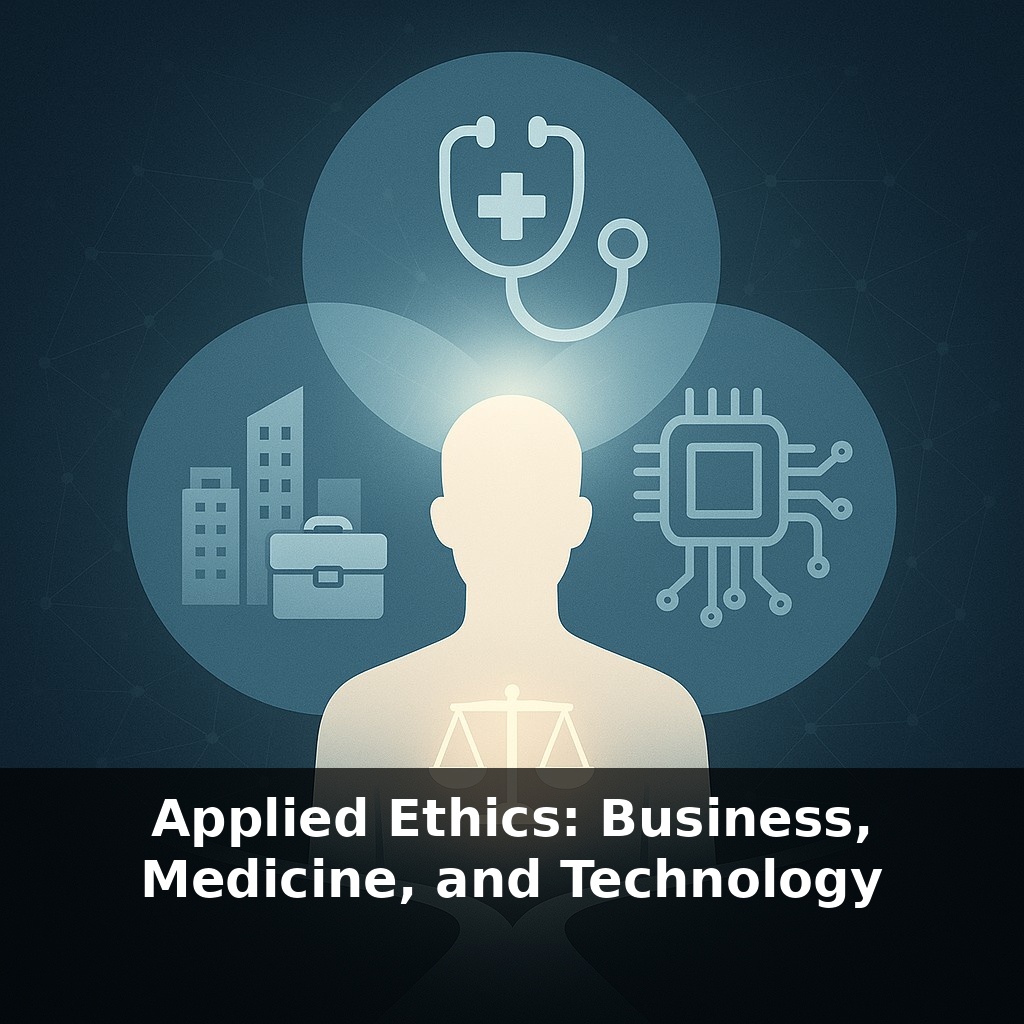
In practice, the pressure points differ by arena. In business, ethics shows up in how supply chains are vetted, how risk is disclosed to investors, how whistleblowers are treated when profits are on the line. In medicine, it shapes rules for using patient data, allocating scarce ICU beds, and deciding who gets into a trial when spots are limited. In technology, it’s baked into how algorithms are tested, what’s logged for audits, and how “off switches” are designed—more like circuit breakers in a power grid than slogans on a corporate website, quiet but decisive when something goes wrong.
In all three arenas—business, medicine, and tech—the same four big moral theories quietly sit “behind the curtain,” but they tug in different directions.
Utilitarian thinking asks: “What choice produces the best overall outcome?” In a company, that might justify phasing out a profitable but harmful product because long‑term social damage outweighs short‑term gains. In medicine, it’s behind triage rules that prioritize those most likely to benefit from treatment. In tech, it might support restricting a powerful AI tool if its potential for large‑scale harm is high, even when many benign uses exist.
Deontological approaches shift the focus: “What rules and rights must we never violate?” That’s why medical researchers can’t simply enroll people in trials without consent, even if it would generate life‑saving data. It’s why privacy laws limit what firms may do with customer data, regardless of how lucrative or “efficient” broader sharing might be.
Virtue ethics zooms in on character: What kind of people—and institutions—are we becoming? A hospital that quietly waives bills for patients in severe hardship signals compassion as a standing habit, not a one‑off favor. A tech team that routinely invites criticism from outside auditors cultivates intellectual humility rather than “move fast and break things” bravado.
Care ethics adds another lens: relationships and vulnerability. A business guided by care examines its supply chain for hidden suffering—children mining cobalt, underpaid garment workers—rather than only checking legal boxes. In medicine, it highlights listening to families, not just chart data, when making end‑of‑life decisions. In tech, it asks what constant surveillance does to the trust between platforms and users.
Real‑world guidelines rarely follow just one theory. A pharmaceutical code of conduct might blend utilitarian goals (maximize health impact), deontological limits (no deceptive marketing), virtue‑based ideals (integrity, courage to recall unsafe products), and care‑centered duties (special responsibility to patients with few alternatives). The hard part isn’t knowing these theories exist; it’s noticing which one is quietly calling the shots when policies are drafted—or ignored.
When business, medicine, and tech forget ethics, the results are strangely concrete. Johnson & Johnson’s 1982 Tylenol recall is a classic case: the company pulled 31 million bottles off shelves after tampering deaths, swallowing a US$100 million loss. From a narrow profit view, that looked irrational; from a broader lens, it protected trust so effectively that Tylenol regained roughly 30% of its market share within a year. Contrast that with Henrietta Lacks: her cells powered more than 75,000 studies, yet she never consented and her family saw none of the benefits. The science advanced; the person disappeared. Tech is now trying to avoid replaying that pattern at scale. The EU’s emerging AI rules, for instance, treat certain systems—like those deciding who gets a loan or a job—as “high‑risk” that must keep a human in the loop. It’s less about slowing innovation and more about insisting someone is answerable when an algorithm quietly redraws a life.
Your challenge this week: pick one company, hospital, or tech product you actually use, and investigate one concrete ethical safeguard it has—or obviously lacks. Don’t just think “is this good or bad?” Ask: Who is protected here? Who is trusted? Who is invisible? Then, notice whether your own behavior toward that organization shifts even a little once you’ve seen what’s under the hood.
Ethics will soon feel less like an optional “nice to have” and more like a regulatory operating system. As sustainability reports join financial statements, and as hospitals log not just outcomes but fairness metrics, ethics becomes auditable. Tech firms may face “stress tests” for bias and safety the way banks face stress tests for liquidity. Expect job ads asking not only for MBAs or MDs, but for people fluent in both code or care and the ethical scrutiny that now shadows them.
Ethics here is less a finish line than a training regime: policies are just the warm‑up, the real workout is how we revise them when reality hits back. As AI, pandemics, and climate shocks reshape business and medicine, the most trustworthy institutions may be those treating every product launch or protocol like a draft, not a verdict.
Start with this tiny habit: When you open an email or Slack message at work that asks you to move faster or “just get it done,” pause and silently ask yourself, “Who could be harmed by this if we’re wrong?” and name one concrete person or group (like “patients,” “warehouse staff,” or “end users”). Then, before you reply, add exactly one clarifying question that checks an ethical angle—something like, “How are we informing users about this change?” or “Who’s responsible if this fails in the clinic?”. This keeps ethics tied to real people and real consequences, without slowing you down more than a few seconds.