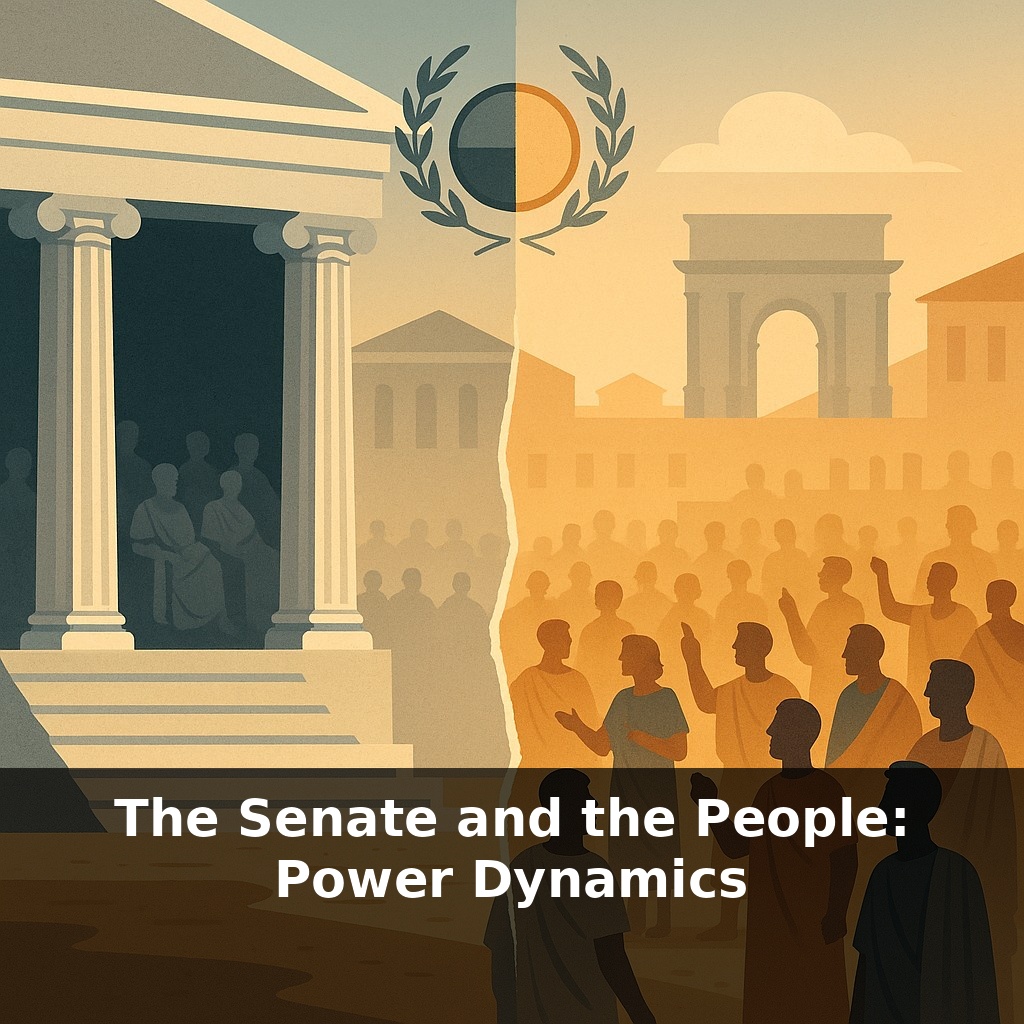
Only a tiny slice of Romans—maybe one in fifty—could regularly vote in the heart of the city. Yet every triumphal arch, every official plaque, screamed the same slogan: “The Senate and the People of Rome.” So who really ran this republic: the marble hall or the crowded street?
On paper, the Senate was only an advisory body—no laws, no armies, no formal command. Yet in practice, it steered wars, managed provincial governors, and controlled the Republic’s long‑term strategy. Meanwhile, the “people” spoke through assemblies that were noisy, occasional, and physically hard to attend, and through tribunes who could freeze decisions inside the city limits but not march alongside legions abroad. The result wasn’t a neat hierarchy, but a shifting balance: prestige, networks, and experience often outweighed headcounts. Think less “mob versus aristocrats” and more like two rival engineering teams sharing the same blueprint, constantly revising who gets to hold the pen. As crises mounted—wars, debts, land disputes—that shared blueprint began to tear at the seams, exposing how fragile this partnership really was.
Power in Rome ran on two invisible fuels: time and proximity. Decisions tilted toward whoever could stay in the city longest and gather the right faces in the right porticoes. Most citizens lived days away, working fields or serving in distant legions; politics in the Forum was a luxury of those free from daily survival. Elite families treated offices like relay batons, passing influence across generations and weaving dense patronage webs. Laws might be voted in public, but their drafting, amendment, and quiet burial often happened in back rooms where reputation counted more than rhetoric. Over centuries, that habit hardened into expectation—and then entitlement.
At the heart of this system sat an awkward fact: neither “side” could actually govern alone. Magistrates convened the assemblies, but those same officeholders had usually risen through careers funded, endorsed, and coached by leading senators. The crowd could roar approval or outrage, yet the menu of choices placed before them reflected earlier deals made in quieter spaces. Power hinged less on who “in theory” was supreme and more on who could frame the options at the decisive moment.
This is where Rome’s unwritten rules mattered. Custom said ex‑magistrates entered that advisory council almost automatically, so yesterday’s elected officials became today’s elder strategists. Custom also said you did not openly defy a solemn decree unless you were prepared to stake your career—or your life—on the gamble. These habits gave the council’s opinions the weight of law without technically being law. When someone broke the pattern, Roman politics jolted.
Plebeian office‑holders slowly learned to play this game rather than just protest it. Once poorer citizens gained access to higher magistracies, they carried their own allies into that advisory chamber. Over generations, wealthy “outsider” families blended into the old club, softening the line between patrician and plebeian while sharpening a different one: insiders versus everyone else. Legal victories for the many could thus, paradoxically, end up concentrating effective control in the hands of a broader, but still narrow, elite.
Crises exposed the seams. During wars or grain shortages, magistrates might bypass normal consultation, or the council might push extraordinary commands that stretched custom to breaking point. Temporary measures had a way of lingering, especially when ambitious leaders discovered how far they could lean on emergency precedent. The slogan pairing council and people stayed the same, but the practical ratio between them shifted with every exception tolerated in the name of survival—setting patterns that later generations treated as normal governance rather than emergency improvisation.
Influence in this system often showed up sideways. A provincial commander who returned with veterans loyal to him personally could lean on senators who feared those men’s presence just outside the city boundary. A wealthy contractor who supplied fleets or armies could quietly nudge which crisis appeared “urgent” enough to reach the top of the agenda. Even religious calendars mattered: if a key vote fell on an inauspicious day, it might be delayed long enough for factions to reshuffle alliances.
Think of it like a large software project where only certain engineers have commit rights to the main branch. Hundreds can comment on issues, propose features, or spot bugs, but a small circle decides what actually gets merged, when, and in what form. Over time, people stop arguing about the code’s basic architecture and instead fight over access to that commit group—or try to become indispensable to someone already inside it. The Roman Republic’s arguments over land, citizenship, and command worked in much the same layered way, with formal votes sitting atop quieter struggles over who controlled the final “merge.”
When norms blurred, Romans learned that “who interprets the rules” can matter more than what the rules say. Modern systems face similar tension as courts, regulators, and media platforms arbitrate disputes in real time. Algorithmic feeds, for instance, quietly rank which voices seem urgent, respectable, or fringe. Your constitution might be written, but its daily meaning is negotiated in those hidden filters—shaping which crises feel real enough to demand collective action.
In that light, SPQR reads less like a boast and more like a negotiated truce, renewed crisis by crisis. The real drama lay between text and practice: who could stretch custom without snapping it. Your own institutions work the same way; their “rules” are more like scaffolding around a shifting building, adjusted whenever pressure tests a weak joint.
Try this experiment: Pick one current issue the U.S. Senate is debating (like voting rights, budget negotiations, or a Supreme Court confirmation) and spend 20 minutes comparing how a Senator from a low-population state (e.g., Wyoming) and a high-population state (e.g., California) talk about it on their official websites or X feeds. Note specifically whose interests they *say* they’re representing—local voters, national party, donors, or “the American people”—and tally how often each group is mentioned. Then email or call the office of *your* Senator and ask one pointed question about how they balance state interests with national ones on that same issue, and note how their staff frames the answer. Over the next week, watch any headlines about that issue and see if their actual vote or public statements match the priorities they claimed to you.