 2min preview
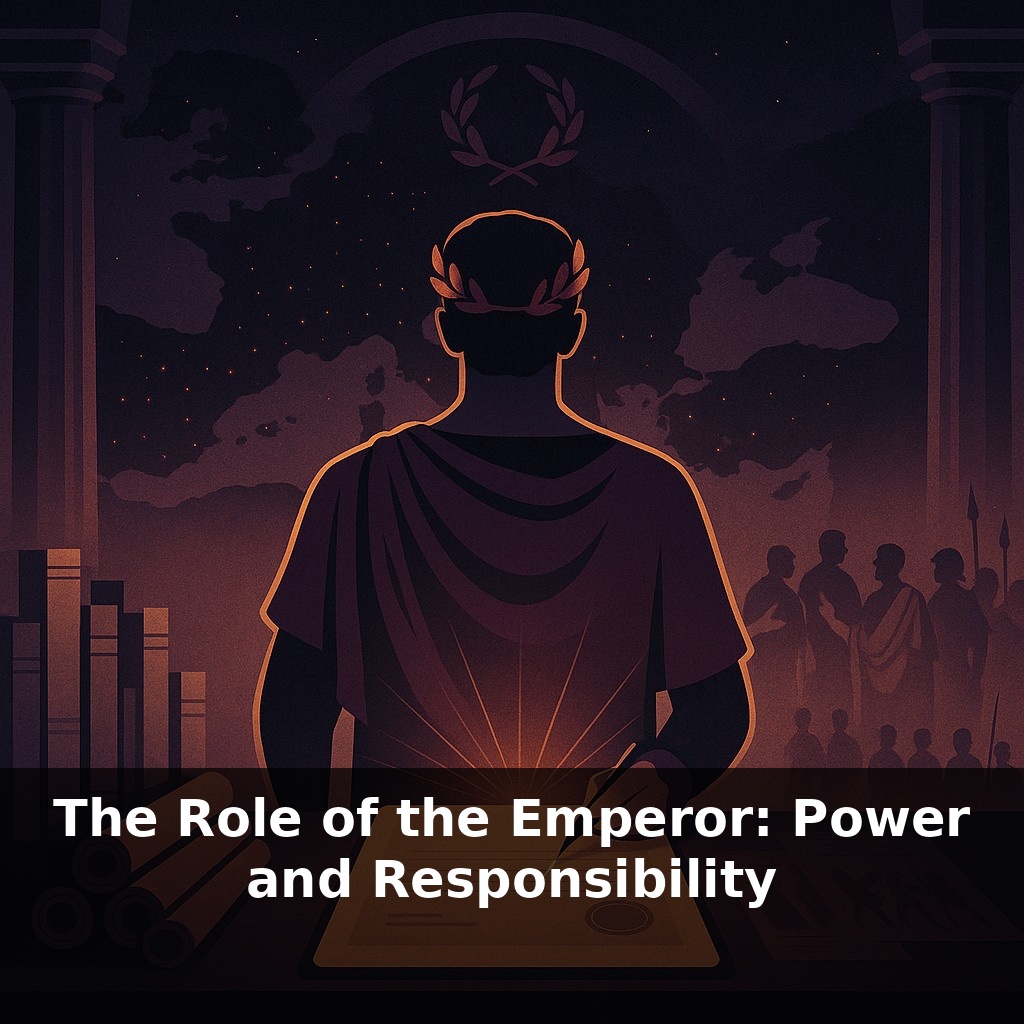
The Role of the Emperor: Power and Responsibility
📝 Transcript
An empire that stretched for thousands of miles was, at times, held together by a single sleepless man. One night he’s approving new laws; the next, he’s calming angry senators and bribing restless soldiers. The paradox: absolute power, but survival depends on everyone else.
By the 2nd century CE, a single signature from the emperor could outweigh centuries of precedent. His constitutiones principis weren’t just opinions; they became one of the main pipelines through which new law entered Roman life. Yet on paper, the old republican machinery still clattered on: magistrates held elections, the Senate met, traditional rituals continued. The emperor had to stand at the crossing point of all this, directing traffic without visibly tearing up the road.
Think of him less as a lonely ruler on a throne and more as the central node in an overburdened network, where legal decisions, religious expectations, military demands, and city politics all converged. One backlog, one ignored duty, and pressure built elsewhere—often in the legions or in the streets of Rome.
Subscribe to read the full transcript and listen to this episode
Subscribe to unlockSubscribe for $1.99/month to unlock the full episode.
From this course
Roman Political Structures: From Republic to Empire
8 episodesUnlock all episodes
Full access to 8 episodes and everything on OwlUp.
Subscribe — $1.99/monthLess than a coffee ☕ · Cancel anytime