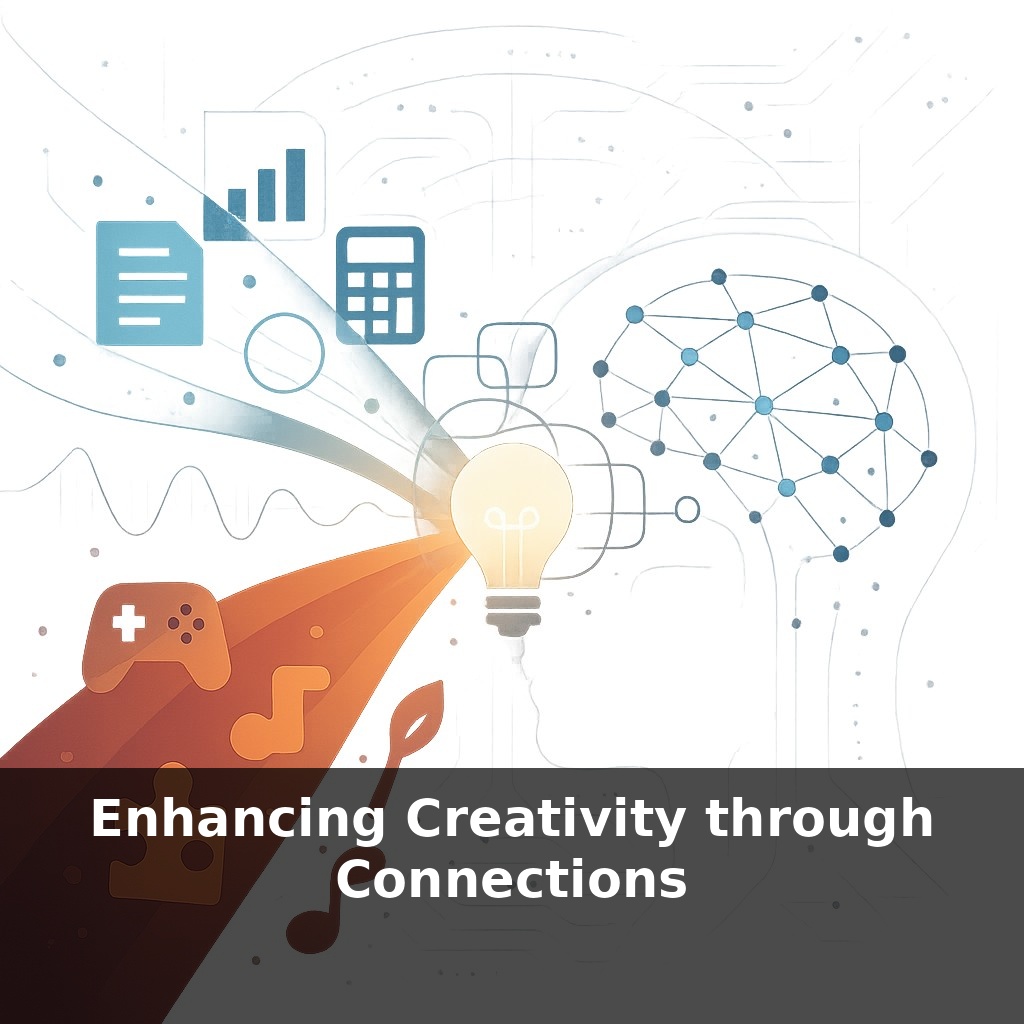
About half of breakthrough ideas don’t come from “thinking harder” – they come from colliding unrelated thoughts. You’re in a budget meeting and suddenly recall a childhood game. Or you’re stuck on code and a cooking video unlocks the fix. Those odd collisions? That’s your hidden engine.
About half of breakthrough ideas don’t come from “thinking harder” – they come from colliding unrelated thoughts. You’re in a budget meeting and suddenly recall a childhood game. Or you’re stuck on code and a cooking video unlocks the fix. Those odd collisions? That’s your hidden engine.
Now let’s make those collisions less random. Creativity research shows your brain is basically a connections machine: the more diverse the inputs, the more surprising the outputs. MRI scans even find that stronger links between “wandering” and “focus” networks in the brain line up with higher creative scores. Teams work the same way. When people from three or more disciplines tackle a problem together, they don’t just add perspectives – they multiply them, filing more patents and uncovering options no single expert saw.
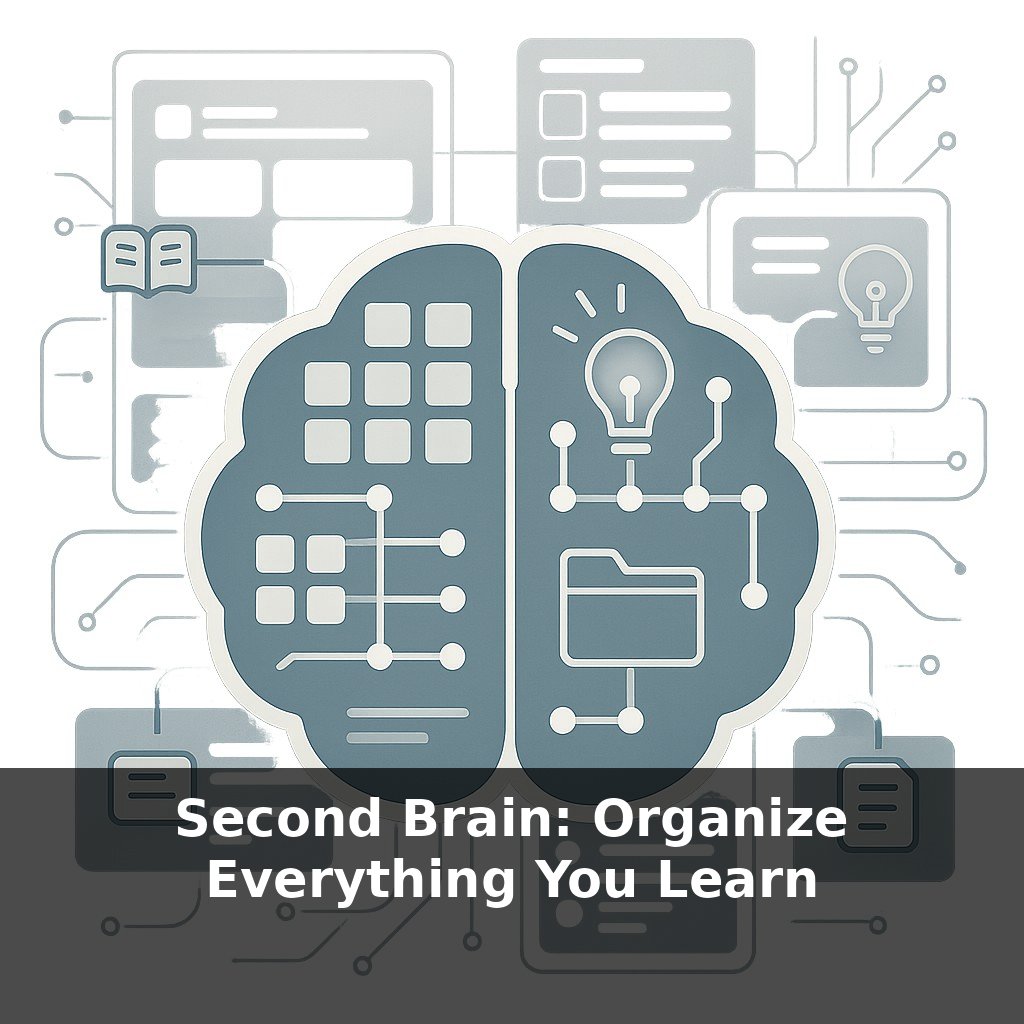
Your second brain can be wired to do this on purpose: not just storing information, but arranging it so unlikely things keep bumping into each other.
Most people treat their notes like a warehouse: label the boxes, stack them neatly, and hope you can find the right one later. But creative work needs something closer to a busy train station, where ideas keep arriving, departing, and occasionally colliding on the same platform. Research on “remote associations” shows that the farther apart two ideas start, the more original the insight when they finally meet. Your second brain can nudge this along by how you tag, link, and cluster things: not by topic alone, but by tension, questions, and odd similarities that don’t quite make sense—yet.
Most people wire their second brain to answer the question, “Where does this belong?” A more creative question is, “What unexpected thing could this connect to?” That subtle shift moves you from filing to engineering collisions.
Cognitive scientists call one route to this “analogical reasoning”: taking a structure from one domain and mapping it onto another. When you save a note about hospital triage next to one about customer support queues, you’re quietly training your system to notice shared patterns like prioritization under pressure or limited resources. Those patterns are what your mind recombines later into fresh solutions.
You can design for this by capturing *why* something is interesting, not just *what* it is. Instead of a note titled “Marketing strategy webinar,” you might add a line like: “Interesting for how they reuse old content in new formats.” That sentence becomes a bridge. Weeks later, when you’re planning an internal training, that same bridge might link to a note on software modularity, and suddenly you’re designing “reusable lessons” the way engineers design reusable components.
This is where concept maps and lightweight tags earn their keep. Not as rigid folders, but as scaffolding for links such as: “contradiction,” “applies elsewhere,” or “inverts a norm.” A note on a failed product launch tagged “inverts a norm” might later sit one click away from a note on a musician who built a career by releasing *unfinished* tracks. The connection isn’t obvious until you see them side by side, and that’s the point.
In practice, surprisingly small nudges can matter. One study had people practice linking distant words before problem-solving; their originality scores rose. You can mimic that by regularly asking your notes: “What’s the furthest thing from this that I’ve saved?” Then make a link and add a one-line rationale. Over time, your second brain starts to look less like a bookshelf and more like an artist’s studio—canvases, sketches, and half-formed ideas leaning against each other, ready to merge into something you couldn’t have scripted in advance.
A practical way to wire this into your second brain is to treat each project like a “hub” that welcomes strangers. Say you’re building a hiring process. Most people would only save job descriptions, interview questions, and HR policies. You could also drop in a note about how Pixar runs story meetings, a breakdown of how Airbnb designs host onboarding, and a thread on how open-source communities vet contributors.
Each of those lives in its own area, but you add a short link back to “Hiring revamp – unexpected models.” Now you’re not just collecting; you’re curating deliberate friction.
Or take a startup founder who tagged notes with verbs instead of topics: “negotiate,” “recover,” “onboard,” “hand off.” A story about a hospital night shift, a manual for airline crew changes, and a guide to Git branching all met under “hand off.” Months later, that cluster shaped how she redesigned customer transitions between teams.
Your challenge this week: whenever you capture something, ask, “Which ongoing project could this quietly disrupt?” Then link it there, even if the fit feels strange.
As AI starts proposing links you’d never think to pair, your role shifts from idea generator to idea curator. Tools will throw out wild combinations—finance memos next to street art, climate models beside gaming guild rules—and your judgment decides which are sparks and which are noise. Over time, people who can *edit* and *steer* these suggestion streams may become as valuable as traditional specialists, because they’ll know how to turn strange pairings into real-world change.
Treat your notes like a sketchbook, not a museum. Let half-finished thoughts sit beside polished ideas and odd scraps from daily life—overheard lines, screenshots, rough diagrams. As they accumulate, patterns emerge the way constellations appear from scattered stars. Your role isn’t to predict the masterpiece, but to keep adding dots so new shapes can appear.
Start with this tiny habit: When you open a new tab or app to start work, quietly say, “What does this remind me of?” and name just one surprising connection between what you’re about to do and something totally different (like a movie scene, a conversation you had, or an object on your desk). Don’t explain it, don’t analyze it—just name the connection out loud or in your head. If it feels fun, jot a three-word phrase that captures that mashup (like “spreadsheet + jazz club” or “email + hiking trail”) somewhere you can see. Over time, you’re training your brain to reach for creative connections automatically, without needing extra time or willpower.