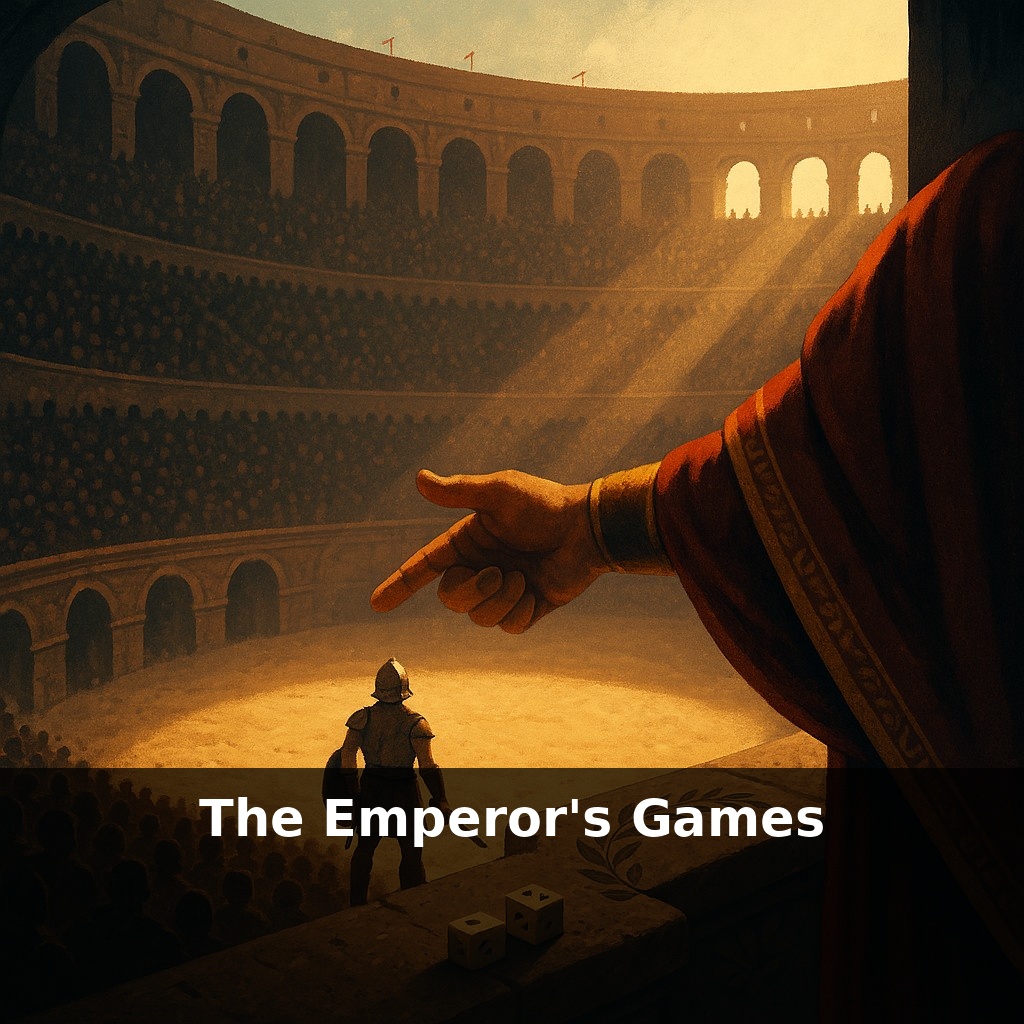
Fifty thousand Romans fall silent as one man waits for a signal that could spare him—or kill him. This wasn’t just entertainment; it was the emperor speaking without words. In this episode, we step inside those games to ask: whose power was really on display?
The quiet doesn’t last. Vendors shout, dice rattle, gossip climbs the stone tiers faster than any herald. For most people packed into the Colosseum, this isn’t a rare emergency; it’s their version of “going to the game on Sunday.” The arena is where work grudges, neighborhood rivalries, and political frustrations are carried in—and carefully managed.
Look closely and the crowd behaves less like a mob and more like a massive, finely tuned machine. Seating isn’t just about who sees best; it’s about who matters most. From the polished marble near the arena to the splintered planks at the top, every row tells you where you stand in Rome itself. The emperor doesn’t need to lecture anyone about rank or loyalty. One glance around the stadium, from your seat to his, does the job more efficiently than any law ever could.
Today’s spectacle has been months in the making. Behind the roar and dust sits a colossal machine of planning: architects calculating sightlines, engineers testing trapdoors, animal handlers coordinating shipments from Africa, Asia, and Europe. Whole forests vanish into scaffolding and awnings; fortunes are sunk into exotic beasts that might die in minutes. On the surface, it feels like any packed stadium before a championship game, but the score here isn’t measured in goals—it’s in gratitude. Every beast released, every gladiator matched, is a line item in the emperor’s public-relations budget, paid out in awe, fear, and applause.
The day’s program unfolds like a carefully scripted series rather than random mayhem. Early hours are for venationes: staged hunts where handlers drive panthers toward hidden doors, archers pop up from camouflaged pits, and the crowd learns to cheer not just violence, but choreography. Animals don’t arrive by magic. They’re the result of contracts reaching from North Africa to the Near East, with traders, sailors, and hunters all feeding an imperial supply chain whose end-point is this sand.
Later come the public executions, scheduled when the arena is most crowded. Officials time them between more thrilling acts, so no one can ignore the state’s message. Condemned criminals might be costumed as mythic villains—“Orpheus” mauled by bears, “Icarus” hurled from machinery—turning punishment into story. The lesson is simple: step outside the law, and you become a prop in somebody else’s script.
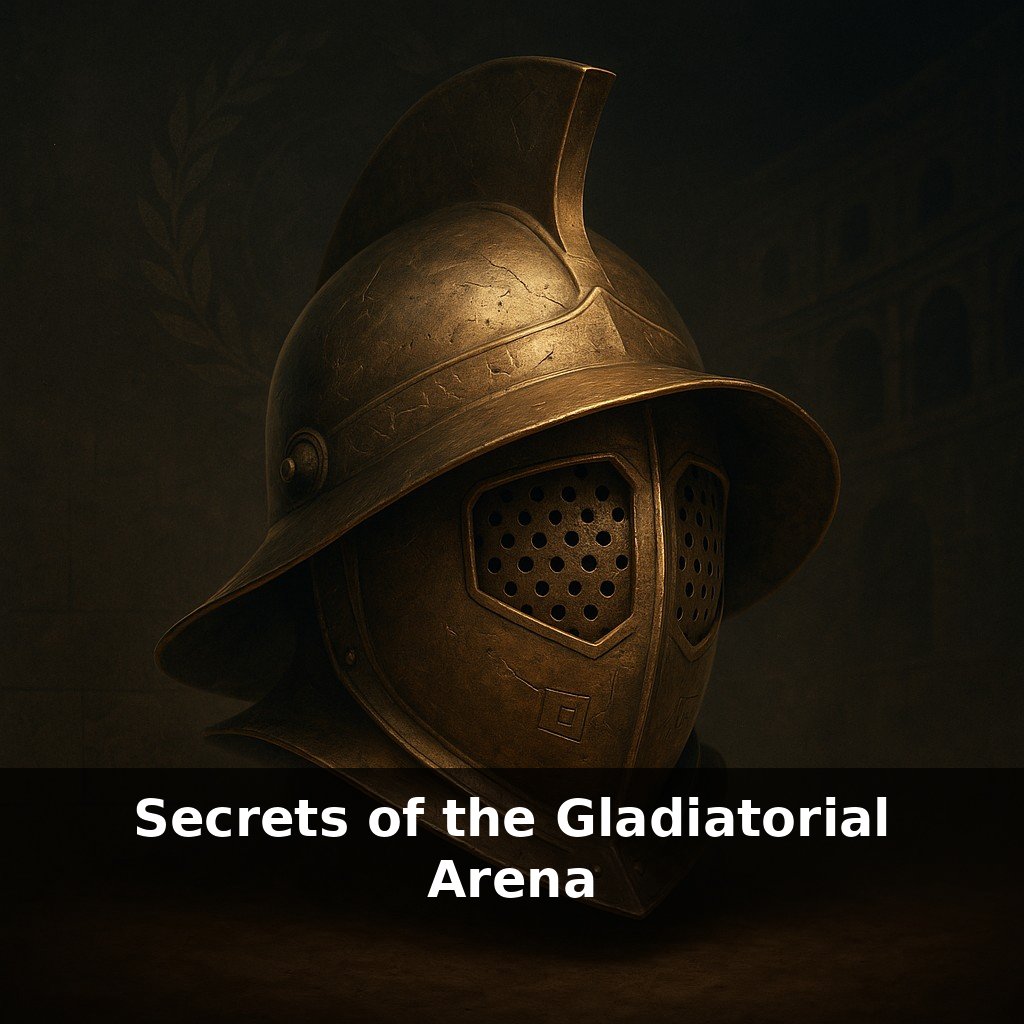
Only after the crowd has been warmed, shocked, and emotionally steered do the main attractions appear. Gladiators enter not as nameless victims, but as minor celebrities with brands: the murmillo with his heavy shield, the nimble retiarius with net and trident, the armored secutor built to chase him down. Their images appear on oil lamps, graffiti, even children’s toys. Some are slaves, but a surprising portion have signed away their legal status for a chance at prize money, fame, or just regular meals. The arena offers a brutal kind of social mobility: you can rise, but only by risking everything in front of everyone.
The emperor’s role here is closer to a live “content moderator” than passive spectator. His reactions to the fighters—who gets matched, who gets a rematch, who receives a wooden sword of freedom—are studied almost as closely as the bouts themselves. A clemency gesture can circulate through rumor, inscriptions, even coin designs, becoming part of his public image.
One carefully curated afternoon can thus do the work of dozens of decrees. Laws tell you what the emperor wants; games show you what he rewards. And in Rome, seeing it with your own eyes counts for more than reading it on any tablet.
Think of each event day as a rolling “update” to Rome’s political software. One month, an emperor floods the arena for a mock sea battle; weeks later, coins appear boasting of his naval prowess. Another sponsor parades rare animals not to shock the crowd, but to hint at fresh conquests on distant frontiers. The arena program doubles as a live infographic: want to know which province just fell in line, or which general the emperor favors? Watch whose statues are carried in, whose victories are reenacted, whose name the announcer lingers on.
Even the order of appearances sends coded signals. If a local magistrate’s games are followed next week by an imperial show that outclasses his in every way, Rome isn’t just being generous—it’s quietly reminding everyone who controls the biggest stage. In reverse, a noticeably scaled‑back program can feel like a warning: perhaps the treasury is strained, or the ruler is testing how little spectacle the people will tolerate before they start to grumble.
A future implications section (600 characters):
As archaeologists map lesser-known arenas and VR teams rebuild soundscapes, the “afterlife” of these events is shifting. Digital reconstructions can either question old myths or freeze them in high resolution. Think of a glitchy video game patch: fix one bug, introduce three new ones. As states and brands sponsor reconstructions, we’ll need to ask who’s scripting the past—and which modern loyalties are being rehearsed in ancient sand.
In the end, the arena feels less like a fossil and more like a rehearsal studio whose script keeps being rewritten. Each new find—a ticket stub, a scratched name, a fragment of armor—adds a fresh voice to the chorus. As we stitch those voices together, the games stop being a distant oddity and start to look like an early draft of our own mass spectacles.
Start with this tiny habit: When you catch yourself comparing your life to someone else’s “highlight reel” (like the Emperor comparing himself to other rulers), pause and whisper to yourself, “That’s just a game.” Then, take exactly 10 seconds to look around and name one “win” that isn’t on any scoreboard—like finishing your coffee while it was still hot or sending a kind message to a friend. Each time you do this, you’re quietly stepping out of the Emperor’s game and back into your own.