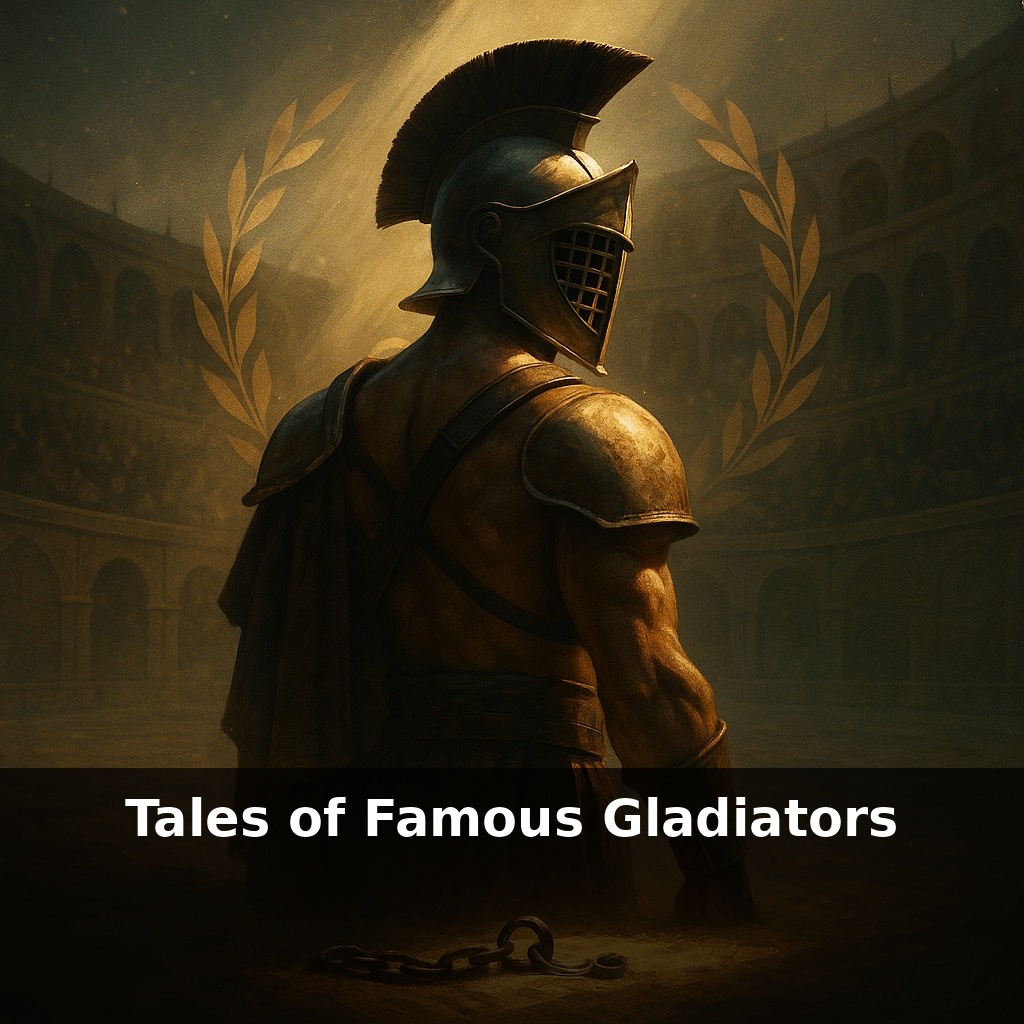
A man who should be a millionaire in today’s money steps into the arena—and might not survive ten minutes. In one lifetime, he’s a slave, a sports icon, and a political weapon. This episode, we’re stepping into the lives of Rome’s most famous, and most dangerous, celebrities.
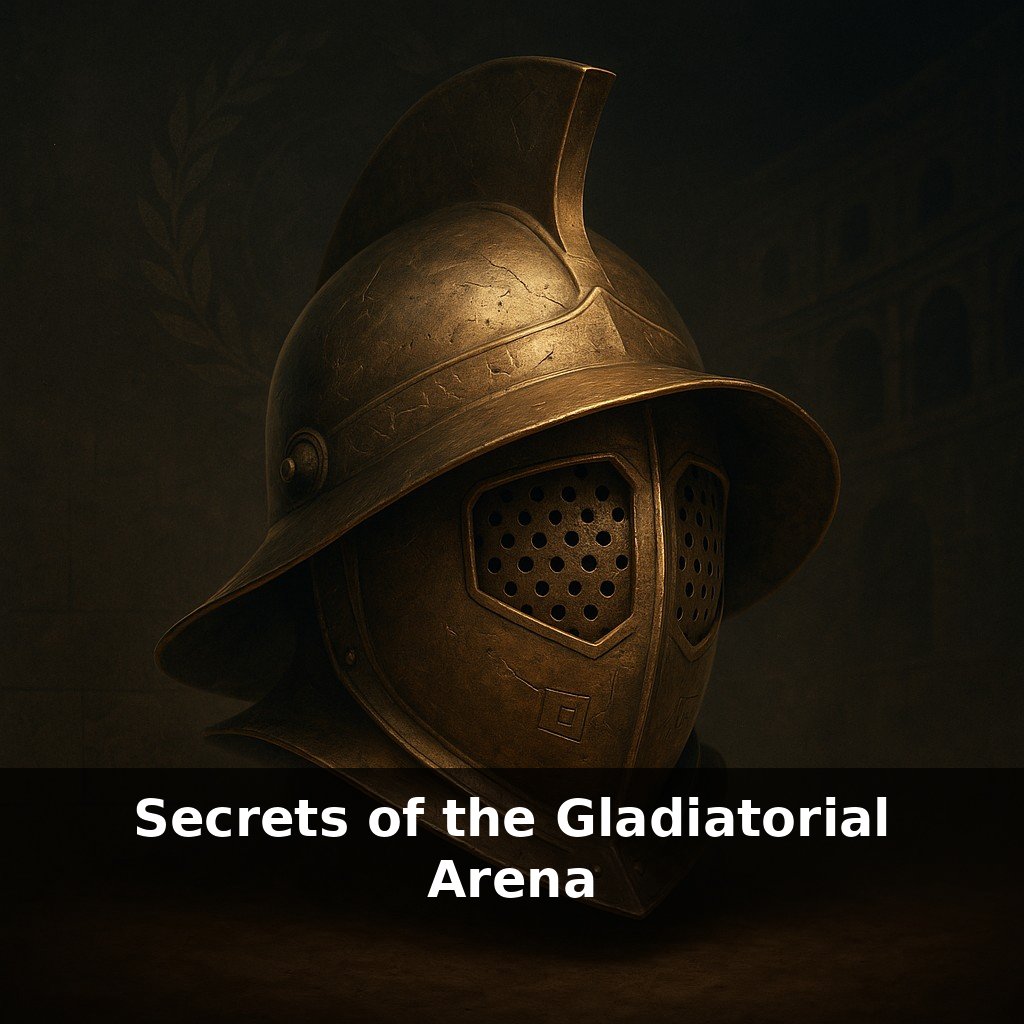
Some of Rome’s most famous gladiators were so valuable that their owners insured them like prized racehorses—and guarded their training secrets just as fiercely. In this episode, we’re going past the roar of the crowd to look at the contracts, rivalries, and backstage negotiations that shaped their careers. Flamma repeatedly refused freedom because his fight bonuses and prestige outshone life outside the arena. Spartacus, once just another recruit, became the face of the greatest slave uprising in Roman history. Commodus turned the arena into his personal stage, rewriting the rules whenever he entered. We’ll explore how trainers, sponsors, and even costume designers crafted marketable personas, how betting markets rose and fell on a single injury, and why some fighters became legends while others, just as skilled, vanished from the record.
Some of the most revealing clues about famous gladiators don’t come from dramatic battle stories, but from the quiet, stubborn details carved into stone: payout lists, epitaphs, and fan graffiti. In one corner of Pompeii, a scrawl praises a fighter’s “elegant technique” rather than his brutality, hinting that style could matter as much as blood. Elsewhere, a funerary inscription brags about a man’s win–loss record like a carefully curated résumé. These scraps let us track how a fighter’s brand evolved: which weapons they switched to, which cities bid for them, and how quickly rumor could inflate a name into a legend.
Flamma’s story is a good place to start, because it breaks almost every modern assumption about fame and freedom. We know from his tombstone that he fought at least 34 times, won more than half, and was offered formal release from the arena four separate times. He declined each one. For someone who began as a Syrian prisoner of war, that choice hints at the upper tier of the profession: appearance fees, tailored armor, personal doctors, and the kind of name recognition that followed him from city to city. In a society where most people never traveled far from home, Flamma was a touring headliner.
Then there’s the opposite trajectory: fighters who turned loss into legend. Some inscriptions proudly record men who died in their very first match—yet their owners still paid for elaborate monuments. That expense wasn’t sentimentality. An impressive tomb at the city gate worked like a permanent promotional billboard: “My school produces warriors worth remembering.” Even defeat, if dramatic enough, could sell tickets to the next games.
Spartacus sits uncomfortably between these worlds. Before his revolt, he was part of an elite training school at Capua, the kind that supplied fighters to well-connected politicians. His breakout wasn’t a heroic solo escape; it began as a botched attempt by dozens of men to grab kitchen knives and flee. Only after improvising weapons, outmaneuvering local forces, and attracting thousands of followers did his name swell into a symbol that Roman writers could not ignore. Later generations turned him into a moral figurehead—rebel, freedom fighter, or dangerous agitator—depending on who was telling the story.
At the far end of the spectrum is Commodus, whose arena appearances shattered the usual stakes. He fought heavily staged bouts, often against wounded or tethered opponents, and demanded huge payments from the public treasury as if he were a superstar performer. Where other fighters risked their bodies to rise within the system, he bent the entire system around his vanity. If a typical gladiator’s career was a negotiation between danger and reward, Commodus simply edited out the danger and kept the applause.
Some of these “stars” didn’t just fight; they were engineered as products. A murmillo might be rebranded with a new stage name, a distinctive crest, or a signature move that fans could sketch on tavern walls. Trainers watched crowd reactions and quietly adjusted: more agile duels in one city, slower, brutal clinches in another. Promoters noticed which pairings made spectators lean forward—veteran versus rising newcomer, local favorite versus exotic outsider—and booked rematches long before the first bout ended.
Financial records hint at performance-based pay scales: appearance fees, victory bonuses, even side money for agreeing to fight with handicap rules that made for better drama. Some men specialized in “festival circuits,” touring during religious holidays when purse money and betting pools ran highest. Others became hometown fixtures whom local elites sponsored like a visible, living donation to civic pride.
Your challenge this week: pick one modern public figure—an athlete, streamer, or influencer—and map out how their image is constructed. What choices feel organic, and which look like careful staging?
Future research may turn these arenas into data-rich laboratories. VR reconstructions can sync with wearables, tracking how your pulse reacts to simulated roar and risk. Bioarchaeologists are experimenting with isotopes, reading mobility and diet the way coders read server logs—looking for hidden patterns of migration, inequality, and stress. As new tech exposes the fine print of ancient violence, modern debates on esports, combat sports, and “spectacle ethics” gain a much longer, more unsettling timeline.
In the end, these fighters are less frozen heroes than shifting usernames in a massive, centuries‑long feed: boosted, buried, or remixed by whoever controls the scroll. As new graves, graffiti, and digital models surface, the “algorithm” of fame in the arena keeps updating, forcing us to ask whose victories we’ve muted in our own timelines.
Try this experiment: For the next 24 hours, treat your day like you’re training for the arena at the Ludus Magnus. Choose one “combat skill” from the episode—like a gladiator’s endurance, discipline with food, or focus before a fight—and design a mini-training session (for example: 10 rounds of a 1-minute intense task, 1-minute rest, just like gladiator drills). Before you start, write a single sentence naming the “opponent” you’re facing (fear of failure, procrastination, self-doubt), and after the session, record exactly how your energy, mood, and confidence changed on a 1–10 scale. If you feel a meaningful shift, schedule the same “gladiator drill” at least twice more this week and see if the numbers keep improving.