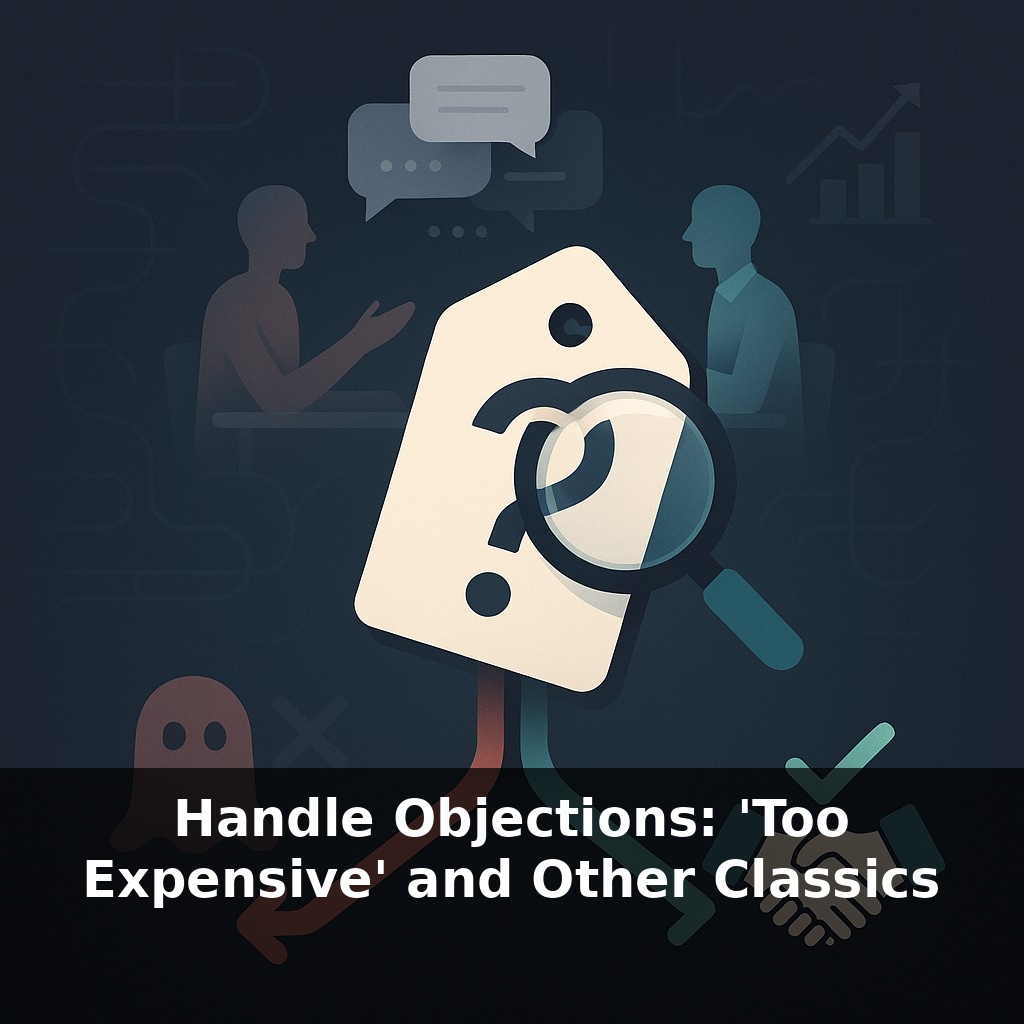
About half of lost deals get blamed on “budget”… but here’s the twist: in most of those calls, the prospect was ready to buy something. In one scenario, they say “too expensive” and ghost you. In another, they say the same words—and you end up co-designing a yes.
“Too expensive” is the line everyone hears, but almost nobody actually unpacks. Gong found that when reps hit a price objection and keep digging with four or more follow-up questions, close rates jump by 22%. Most reps do the opposite: they freeze, rush to discount, or retreat into a generic pitch. That turns a live deal into a quiet “no” with a polite excuse attached.
In this episode, we’re going to treat objections as useful data, not verdicts. Instead of arm‑wrestling over numbers, you’ll learn to slow the moment down and investigate what “expensive” really means for this specific buyer: a mismatched priority, a hidden approval process, a fear of being blamed if it flops.
Handled well, objections become the point where your deal stops being theoretical and starts getting real—and surprisingly often, that’s exactly what your buyer is hoping you’ll help them with.
The tricky part is that “too expensive” sounds final, but it can hide wildly different stories. Sometimes it’s code for “my boss will grill me on this,” other times it means “another team already claimed this pot of money,” or “I’ve been burned by a similar tool before.” If you treat every version the same way, you either over-defend your price or cave too fast. Think of each objection as a doorway into a slightly different room: political landmines, timing issues, competing projects, or personal risk that hasn’t been voiced yet—and your job is to find which room you’re actually in.
Here’s the move most sellers miss: when someone says “too expensive,” your first goal is not to defend the number. It’s to find out which *kind* of “expensive” you’re dealing with.
Start with curiosity, not combat. Instead of replying, “Let me explain why it’s worth it,” try something like:
- “Totally fair—when you say ‘expensive,’ what are you comparing it to?” - “Got it. Is this more about the total cost, the timing, or how it will look internally?” - “Help me understand—if this came in at a number that felt right, what would be different?”
These questions pull the objection apart. You’re listening for at least four possible buckets:
1. **Value gap** – They don’t yet see outcomes that justify the cost. Signal: “We’re not sure we’d use all of this,” or “I can’t justify this to my team.”
2. **Budget mechanics** – There’s money, but it’s locked in categories or owned by another group. Signal: “This isn’t in our line item,” or “Marketing already spent their funds.”
3. **Priority conflict** – Your project is competing with others they’ve already committed to. Signal: “We’ve got three big initiatives already this quarter.”
4. **Personal risk** – They’re worried about being wrong, not just paying more. Signal: “We tried something like this before,” or a sudden focus on worst‑case scenarios.
Once you know which bucket you’re in, you can collaborate instead of argue.
- Value gap? Anchor in concrete outcomes, not features: “If we help you retire X manual hours or prevent Y churn, how does that change the picture?” - Budget mechanics? Explore structure: “Who else benefits from this result? Would it make sense to involve them in the cost conversation?” - Priority conflict? Reposition: “If this works, which existing project becomes easier or cheaper?” - Personal risk? De‑risk the step: pilots, opt‑outs, smaller scopes.
Handled this way, “too expensive” becomes less like a brick wall and more like a weather report: a description of current conditions you can plan around—if you’re willing to study the clouds instead of yelling at the rain.
A head of RevOps at a mid‑market SaaS company heard “too expensive” from their VP of Sales prospect and resisted the urge to defend pricing. Instead, she asked, “What would make this feel appropriately priced, even if the number stayed the same?” The VP admitted his real fear: his reps were already juggling five tools, and he’d be blamed if one more didn’t get adopted. Now the issue wasn’t dollars, it was risk. Together they designed a 60‑day rollout to just one region, with clear adoption thresholds before expanding. Same price, new path to yes.
In another case, a founder selling to a COO heard: “I can’t justify this right now.” Rather than pushing harder, he asked, “Who else would need to nod before you felt comfortable?” That surfaced Finance and HR as hidden players. A quick working session reframed the project as a shared win—reduced overtime for HR, cleaner reporting for Finance—opening access to a different pot of money and a multi‑department pilot that never would’ve appeared on a straight price debate.
As tools evolve, “too expensive” will be flagged earlier and with more nuance. AI will notice patterns—who stalls, which metrics they obsess over—and surface likely concerns before anyone voices them. You’ll walk into calls already holding a rough value sketch, like an architect arriving with several draft blueprints instead of a blank page. The winners won’t be those with the lowest quote, but those who flex terms, risk‑sharing, and scope in real time without losing margin or trust.
Your challenge this week: when someone pushes back on cost, pause and treat it like a trailhead, not a dead end. Ask one more curious question than feels comfortable, then sketch options together—like testing brushstrokes before painting the whole canvas. Over time, you’ll spot patterns and shape offers that feel tailored, not templated.