 2min preview
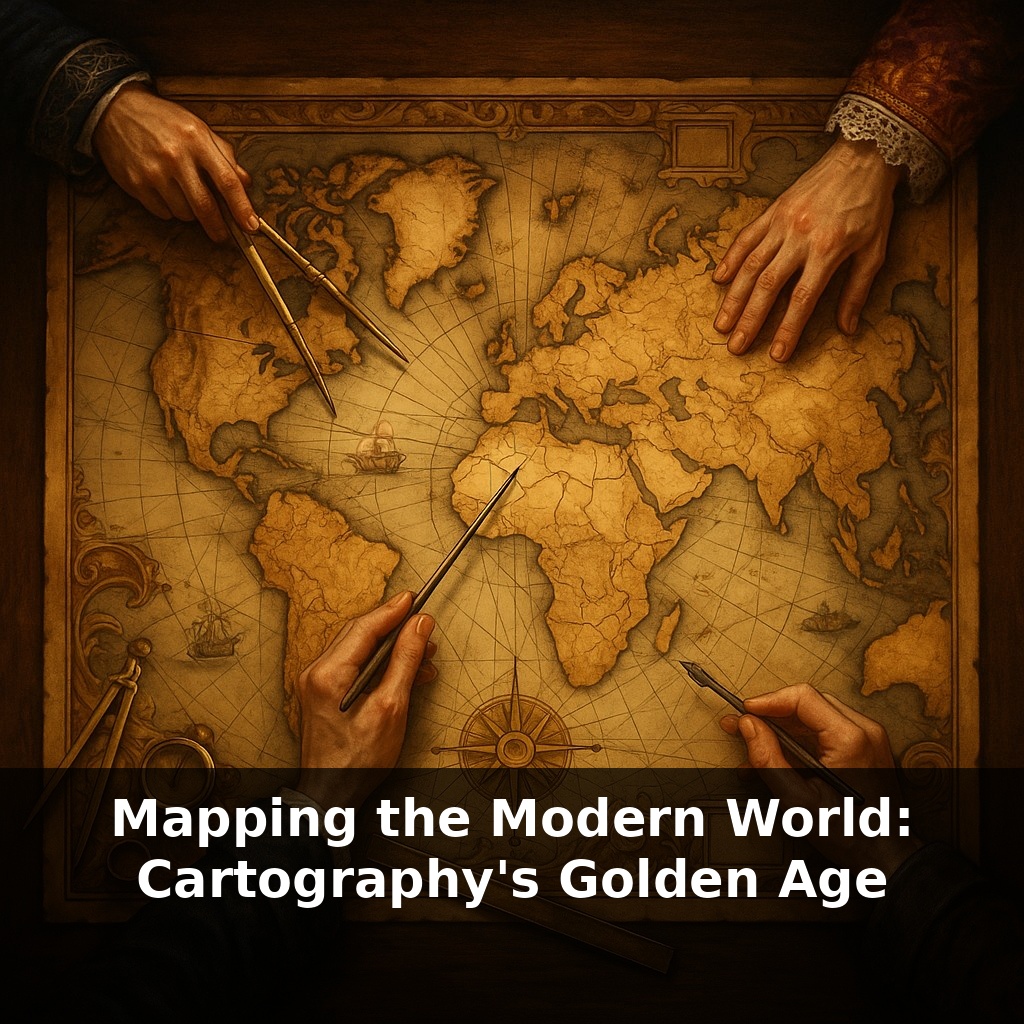
Mapping the Modern World: Cartography's Golden Age
📝 Transcript
A single map once cost a skilled worker a full year’s wages—yet rulers gladly paid. In one royal chamber, advisors lean over a freshly printed atlas, arguing not about art or science, but where, precisely, their empire now begins…and where someone else’s must end.
Those lavish sheets weren’t just decorations on a study wall; they were decision-making machines. Between 1450 and 1700, European rulers, merchants, and navigators began relying on these images the way modern executives stare at dashboards: to choose routes, risks, and rivals. The shift was abrupt. For centuries, many diagrams of the world had been more like stained-glass windows—symbolic, theological, and unconcerned with strict measurement. Suddenly, numbers and angles mattered.
Printing presses spat out standardized coastlines. Newly recovered ancient texts whispered of coordinate grids and systematic observation. Instruments at sea turned stars into data points. And as voyages pushed farther, each coastline sketched onto paper became both a scientific claim and a political bet, fixing profits and conflicts into ink that could be copied, shipped, and trusted.
Subscribe to read the full transcript and listen to this episode
Subscribe to unlockSubscribe for $1.99/month to unlock the full episode.
From this course
Shaping the Modern World: Stories of Discovery
8 episodesUnlock all episodes
Full access to 8 episodes and everything on OwlUp.
Subscribe — $1.99/monthLess than a coffee ☕ · Cancel anytime