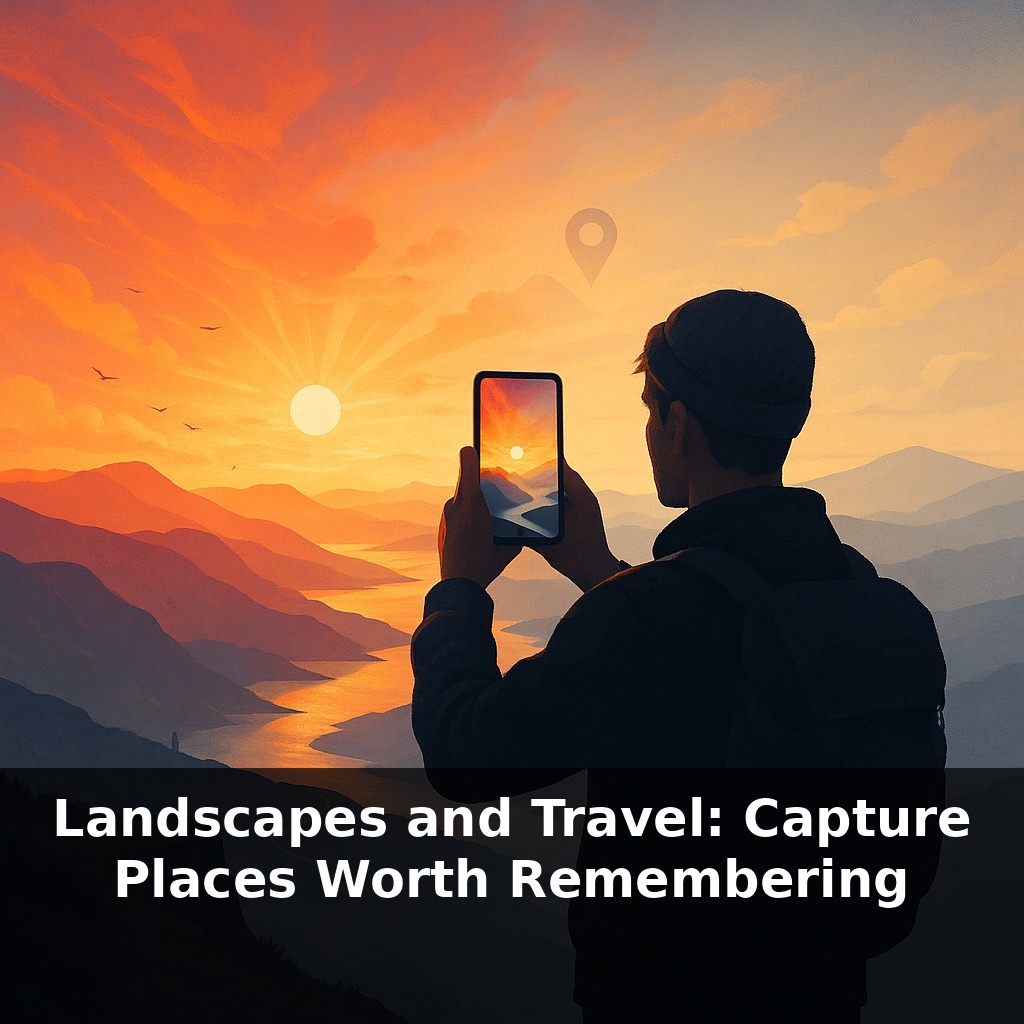
A single sunrise photo can reach more people than a lifetime of in‑person stories. You’re standing at a cliff edge, phone in hand, sky catching fire—yet your shot looks flat and forgettable. The mystery we’ll explore: why some places photograph as magic, and others as meh.
In 2022, National Geographic’s Instagram passed 255 million followers—largely on the strength of landscapes and travel stories. That should tell you something: we don’t just scroll past places; we collect them, measure ourselves against them, and sometimes even choose our next trip because of them.
So why do some of your own travel shots feel disposable while others you can’t bring yourself to delete? The answer usually isn’t “better camera.” It’s three quieter ingredients working together: how you handle light, how you arrange the scene, and how respectfully you include (or exclude) the people and culture in front of you.
Think of your phone less like a postcard machine and more like a tiny field notebook. Instead of asking, “How do I show everything?” start asking, “What here is worth remembering—and how do I show only that?”
Tourists often sprint from viewpoint to viewpoint, snapping everything; the best travel photos usually come from the person who lingers. With a phone, you don’t have extra lenses or a tripod in your daypack, so your real “gear” is time and attention. Subtle shifts—a few steps higher on a staircase, waiting for a cloud to move, changing where the brightest area sits in your frame—can completely rewrite a scene. Just as a chef tastes and adjusts before serving, your job is to notice what the place is giving you: lines, colors, movement, mood. Then decide what to keep, what to leave out, and when to press the shutter.
Scroll any travel hashtag and most shots blur together: same blue water, same horizon, same “wish you were here.” Yet the memorable images almost always share three quiet decisions: where the light falls, how deep the scene feels, and what story the background is whispering.
Start with depth. Phones default to making everything look flat because their lenses are so wide. To fight that, deliberately give the viewer a foreground, middle ground, and background. Hold a coffee cup at the edge of a café balcony while the city spills out below. Frame a mountain through a hostel window, letting the curtains blur at the edges. Kneel so wildflowers or cobblestones fill the bottom of the frame and lead the eye into the distance. You’re not just “including more”; you’re creating layers that pull people in.
Next, pay attention to edges and distractions. The easiest way to upgrade a scene is to patrol the borders of your screen: stray trash can, bright sign, half‑cut tourist in a neon jacket? Either reframe, hide them behind something, or wait a beat. Tiny intrusions at the edge tug the eye away from what you care about most. If you can’t move much, zoom slightly—on many phones, a small crop can simplify chaos without ruining quality.
Color is another underrated lever. Warm and cool tones tell different emotional stories. A beach at noon might be all hard whites and blues; tilt the phone down until a strip of sand fills more of the frame and suddenly the scene softens. If a street market feels overwhelming, look for a repeating color—red lanterns, yellow taxis—and build your composition around that rhythm. Later, a gentle nudge of saturation or contrast can reinforce what you already noticed rather than invent something fake.
Finally, think in moments, not monuments. The waterfall isn’t interesting because it’s tall; it’s interesting because of the mist catching light, the hiker pausing at the base, the rainbow that appears for two minutes when the sun shifts. Instead of firing off ten identical frames, ask, “What could happen here in the next 30 seconds that would change this picture?” Then hold your shot and wait for it to unfold.
Stand on a cliff path in high wind, phone wobbling. This is where small technical choices suddenly matter. That shaking hand? In low light it can blur everything, which is why serious shooters still love tripods: they let you use slower shutter speeds without smearing detail. You might not carry one, but you can steal the principle—brace your phone on a wall, press your elbows into your ribs, or use a timer so your tap doesn’t jolt the shot.
Light at midday feels harsh? A polarizing filter on “big cameras” can deepen skies and tame glare on water; on a phone, you can mimic the effect by slightly changing your angle to the sun, or by tapping to expose for the bright sky instead of the dark foreground.
Think of it like cooking a stew: each small decision—how long you wait, where you stand, what you steady against—quietly changes the final flavor. A casual snap records that you were there; a considered one remembers why it mattered.
National Geographic’s Instagram didn’t pass 255 million followers just by posting pretty sunsets; those images also tap into curiosity, science, and memory. As tools evolve, your travel photos can do more than decorate a feed—they can become tiny time capsules and data points. Treat each frame like a weather log: note tides, foliage, even smog. Years from now, the same viewpoint might show receding glaciers or denser skylines, turning your camera roll into a quiet record of a changing planet.
Your challenge this week: treat each new place like a short story, not a checklist. For one location a day, take only three photos: one wide scene, one detail (texture, pattern, or color), and one human moment—even if it’s just a shadow or footprint. Later, line them up as a triptych and notice how the trio feels more like a memory than a postcard.