A single DM got Buffer its first paying users—no ads, no funnel, just one thoughtful message at a time. In this episode, we’ll drop into that moment: you, staring at a blank inbox, and the exact kind of message that can turn a stranger into your very first customer.
Most founders don’t lose because their idea is bad; they lose because nobody ever reads, let alone answers, their first outreach. Tweets get likes, posts get views—replies stay silent. And when you’re holding a fresh MVP from last episode, that silence suddenly feels very loud.
So this time, we zoom into the smallest possible unit of sales: one person, one message, one clear next step.
Instead of pushing every feature you built, you’ll learn to spot a specific struggle in someone’s profile or recent post, then respond as if you were already mid-conversation. Think less “announcement,” more “quick, relevant interruption.”
Your first customer is rarely the smartest person in your network; it’s the person who feels most seen by your words. In this episode, we’ll turn your vague “hey, let me know if you’re interested” into a short, concrete script that earns an actual yes.
You’ve already sketched your idea, tested it in quick interviews, priced it, and hacked together an MVP. Now comes the moment most people quietly dodge: actually talking to someone who might buy. This isn’t about “being salesy”; it’s about turning all that research into one precise note that lands at the right time. Think of your past steps as prepping a canvas—you learned the shapes and colors. Now, your context-powered outreach is the first confident brushstroke that appears in public. We’ll use what people already show you on LinkedIn, Twitter, or Instagram to guide what you say, when you say it, and how small your first ask should be.
Most people stall here because they overcomplicate what a “good message” should look like. They try to compress a website, a pitch deck, and a resume into 400 words… and end up sounding like everyone else crowding the inbox.
The data points you heard earlier all point to a simpler truth: your message works when it feels like it could only have been sent to *this* person, *today*, for a clear reason.
To do that, we’ll use a four-part structure that quietly bakes in all the trust, clarity, and momentum you need:
1) **Rapport trigger** This is a one-line bridge from their world to yours. It should reference something *visible right now*: a recent post, a line from their bio, a project they’re celebrating, or even a mutual connection. The goal isn’t flattery; it’s to prove you’re not copy-pasting.
2) **Observation about their pain or goal** Here you show you’ve been paying attention. Translate what you see into a specific tension they’re likely feeling: “You’re posting daily but still under X followers,” “You’re hiring for Y, which usually means Z is broken,” “You mentioned struggling with…” The more concrete, the better. This is where your research from earlier episodes quietly pays off.
3) **Concise value proposition** One or two sentences that tie your offer directly to that tension. Avoid features and adjectives. Focus on outcomes and how fast or easy they are to test. Think: “I help [people like you] get from [current state] to [desired state] in [timeframe] using [simple mechanism].”
4) **Low-friction CTA** You’re not asking them to overhaul their stack or sign a yearly contract. You’re giving them a tiny next step with a clear payoff: a 10-minute call to review something specific, a quick screen recording, a short trial with a defined end. This is your “coffee, not marriage proposal” moment.
A practical way to keep your message under 120 words and still hit all four parts is to write each section as a single sentence first. Only then smooth transitions or add one clarifying phrase. If a word doesn’t make it more personal or more concrete, cut it.
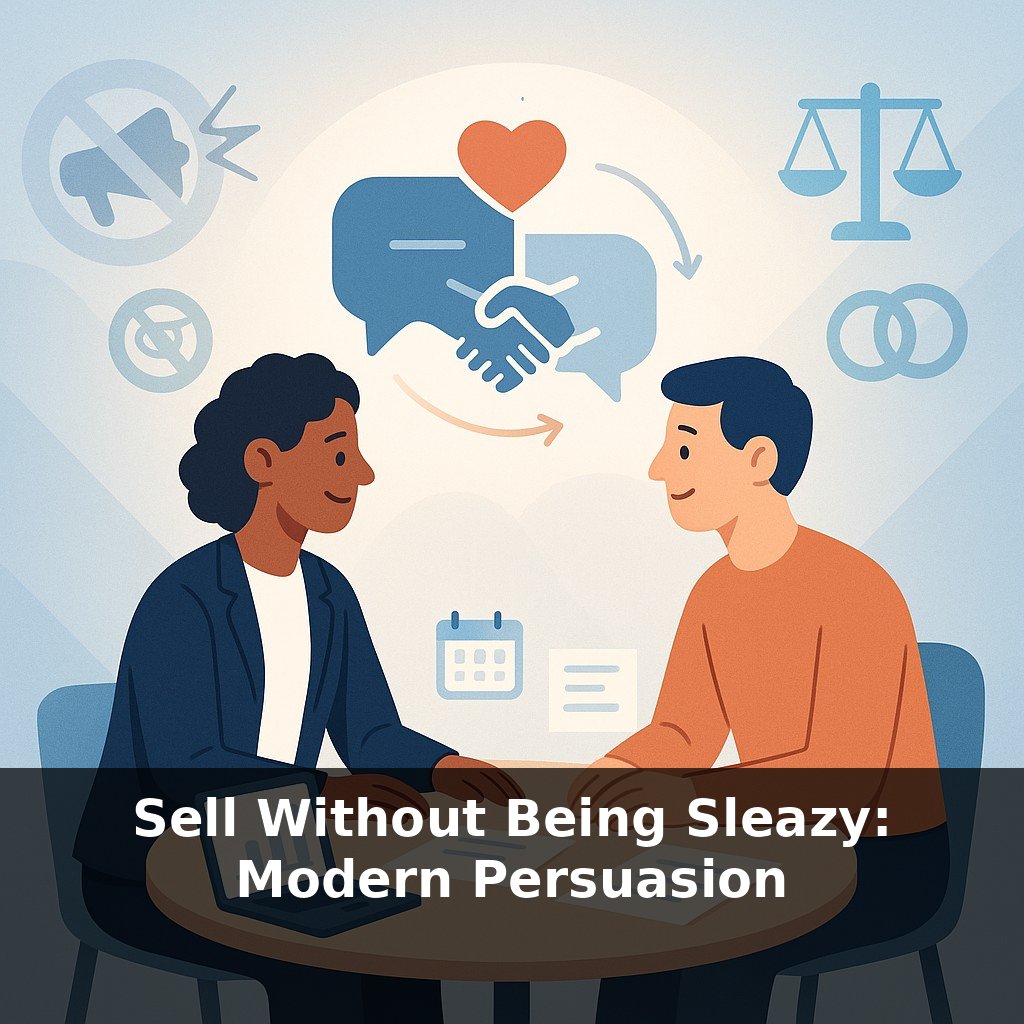
Notice what we’re not relying on: credibility logos, ad spend, clever slogans. Platforms like LinkedIn, Twitter, and Instagram already hand you context. Your job is to turn that context into one clear, respectful nudge that makes replying feel easier than ignoring you.
Watch what happens when you flip your perspective: instead of “how do I convince them?” ask “how do I make *replying* the easiest decision in their inbox today?” That tiny mental shift changes every word you write. Suddenly you’re scanning their posts for unfinished threads, open loops, and half-solved problems you can help close. A founder sharing a messy dashboard? That’s a hook. A creator celebrating 900 subscribers and hinting at burnout? Another opening.
Think of yourself less as a persuader and more as an editor stepping into their story mid-paragraph. Your line doesn’t need to impress; it needs to move things forward one beat. This is why ultra-specific questions work so well: “Curious—are you more stuck on finding ideas or on editing your videos fast enough?” forces a one-word answer, and a one-word answer almost always turns into a conversation.
The next shift is moving from “reach out once” to designing a tiny system you can repeat. Treat each message like a lab result: you’re testing angles, tones, and CTAs, not your worth as a founder. One script might work brilliantly with solo designers and flop with gym owners. Another might land replies but no calls. That’s useful data. As AI tools start drafting openers for everyone, your edge is noticing patterns faster—who replies, what they latch onto, and which doors those replies quietly open.
Your challenge this week: send 15 highly specific DMs or emails using the 4-part structure, but change *one* element every 5 messages—switch platforms, tweak your observation, or test a different CTA. Track which combo gets the fastest replies. Treat it like tuning an instrument: you’re listening for the moment the conversation “rings” back.