A single word at the start of a hard conversation can sway whether it ends in tears or closeness. Research shows that beginning with “I feel…” instead of “You always…” can dramatically cut the chance of a blow‑up. Today we’re stepping right into that decisive first sentence.
Forty percent. That’s how much less likely a tense talk is to explode when it begins with an “I” instead of a “You.” But the real shift isn’t just the first word—it’s what happens inside you before you speak. In this episode, we move from “getting the opening line right” to discovering the voice behind it: your actual feelings, needs, and meanings.
You might know you’re upset, but can you tell whether it’s anger, hurt, fear, or disappointment? Research shows that the more precisely you can name your inner experience, the calmer your nervous system becomes and the easier it is for your partner’s brain to stay out of “threat mode.” That’s where real dialogue can start.
So we’ll explore how to notice what’s really going on inside, turn it into clear words, and share it in a way your partner can actually hear—without you having to raise your volume just to feel visible.
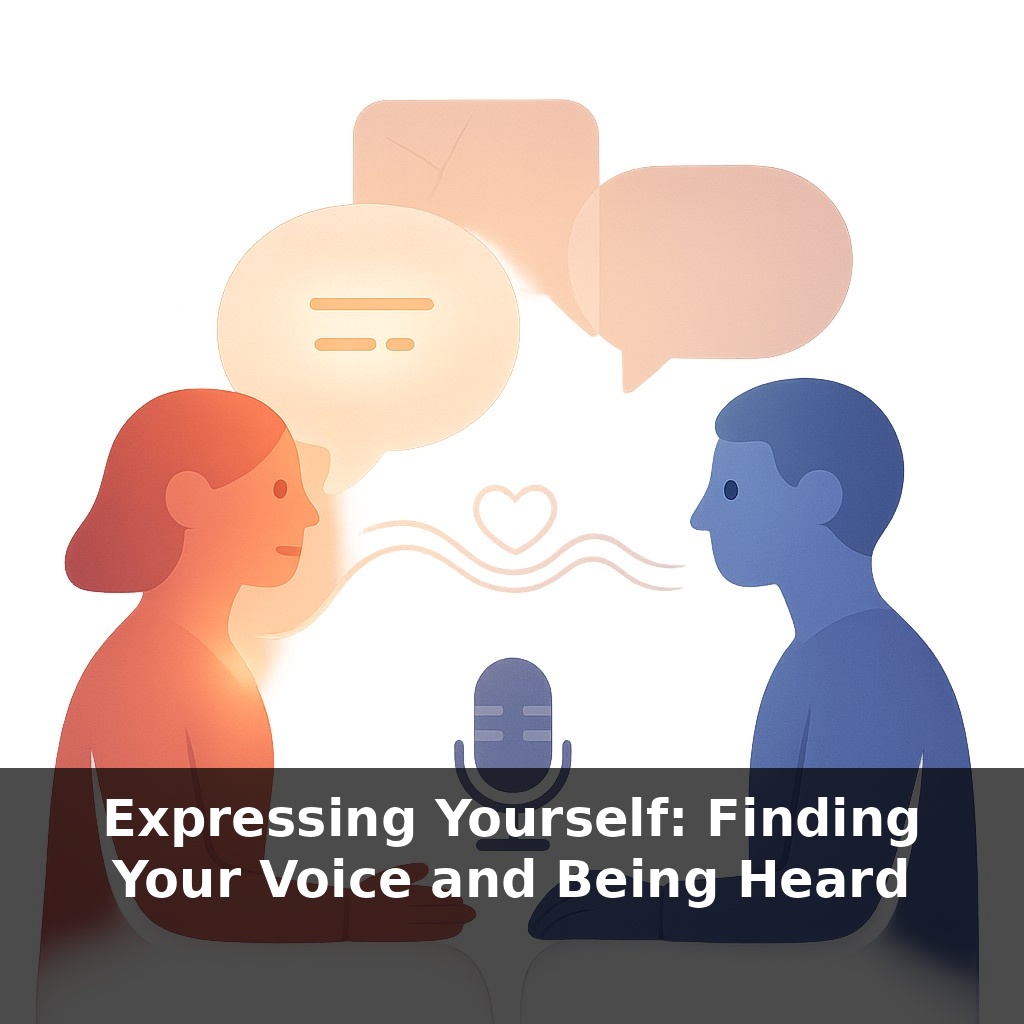
You’ve already seen how the first sentence can steer a hard talk—and how naming what’s happening inside you calms the system enough for real dialogue. Now we zoom out: your “voice” in the relationship isn’t just what you say during conflicts; it’s the pattern of how you show up day after day. Some people go loud and fiery, others go quiet and foggy, like a screen dimming to save power. Both are often trying to solve the same problem: “Will what I say actually matter here?” In this episode, we’ll focus on building a way of speaking that feels authentic to you and trustworthy to your partner.
Finding your voice starts before any words come out. Think of it as three linked moves: tuning in, translating, and transmitting.
First, tuning in: your internal “radar” for what actually matters to you in this moment. Many people notice the top layer (“I’m annoyed the dishes aren’t done”) but not the layer underneath (“I’m scared I’m carrying this load alone” or “I’m longing to feel considered”). When those deeper layers stay blurry, you either go on repeat about surface details or go silent because “it’s not worth it.” Neither helps your partner understand why this moment lands so hard.
A simple question can sharpen that radar: “What am I wishing were different right now?” Not in abstract life terms, but in this specific scene. That shifts you from complaints about your partner’s character to concrete, present‑tense longings. Neuroscience studies on emotion labeling suggest that this kind of precision doesn’t just organize your thoughts; it literally changes your brain’s stress response, making your voice steadier and your message clearer.
Next, translating: turning raw feelings and needs into language your partner can digest. This is where many people accidentally switch into courtroom mode—stacking evidence, generalizing, forecasting doom. Instead, think in small, time‑stamped snapshots: “Earlier today, when X happened, I told myself Y, and I felt Z.” Specificity makes it easier for your partner to stay with you instead of bracing for an attack.
Finally, transmitting: choosing how much power and vulnerability to send through your words. Some of us learned to protect ourselves with sharp edges; others learned to disappear. Both are understandable adaptations. The work now is experimenting with a different dial setting: firm about your reality, gentle about theirs. In NVC and EFT research, this blend reliably lowers defensiveness and raises empathy—not because it’s “nice,” but because it signals, “I’m sharing my world, not erasing yours.”
Over time, these three moves form a consistent signal: “My inner world is speakable here.” That signal is how your voice becomes not just audible, but influential, in your relationship.
Think about moments that seem minor on the surface but leave a bigger imprint. Your partner checks their phone while you’re talking; you keep telling the story, but inside, something tightens. Tuning in might reveal: “I’m not just irritated by the phone; I’m afraid I’m low on their priority list.” Translating turns that into: “When I’m sharing and the phone comes out, a part of me feels unimportant.” Transmitting adds the courage to say it out loud before it hardens into resentment.
Or take a “good” moment. They bring you a coffee just how you like it. Instead of “Thanks,” you pause: “What landed for me is that you remembered the details. That makes me feel really cared for.” Now you’re not only reacting; you’re teaching your partner what matters.
Like reviewing bank statements, these small “emotional receipts” help you see where connection is accumulating—and where there are quiet overdrafts—so your voice shapes the relationship in real time.
As you practice clearer self‑expression, you’re also quietly training your future. Partners who keep sharing specific inner worlds tend to make decisions more smoothly—about money, parenting, even aging—because they already know each other’s deeper “why,” not just surface preferences. Like adjusting a shared GPS, each honest update keeps the route current; otherwise you’re both following an old map and blaming each other for wrong turns that come from outdated directions, not bad intentions.
Your voice doesn’t have to be dramatic to matter; it just has to be honest and consistent. Think of each small truth you share—“this stung,” “this delighted me”—as a breadcrumb you drop on the path between you. Over time, those crumbs outline a trail your partner can actually follow, so neither of you has to guess where the other heart is headed.
Before next week, ask yourself: 1) “In the next conversation where I usually stay quiet (with my boss, partner, or friends), what is one honest sentence I’ve been wanting to say out loud but usually swallow—and how could I phrase it so it’s both clear and kind?” 2) “When I notice myself shrinking my voice (changing my tone, rushing, apologizing for talking), what does that moment reveal about what I’m afraid might happen if I’m fully myself?” 3) “If I recorded a 60‑second voice note today about something I genuinely care about, what would I talk about, and how does it feel in my body to hear my own unfiltered voice played back?”