“In long‑term studies of couples, researchers could often predict who would stay together just by watching how one partner responded when the other was upset. Not by the solution they offered—but by how accurately they understood what the other was feeling.”
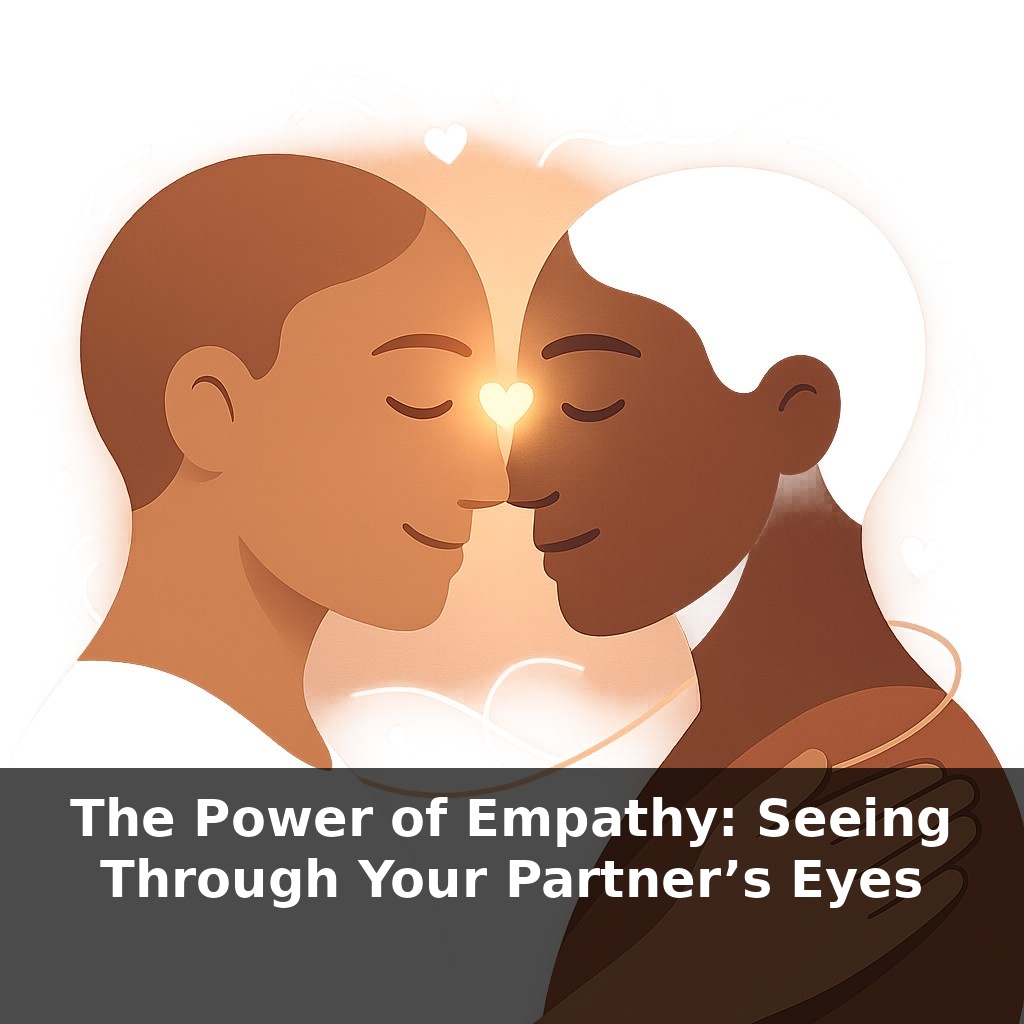
Empathy is where everything you’ve learned so far about listening and speaking starts to work together. In research labs, it’s not the couples with the fewest problems who thrive—it’s the ones who can most accurately guess what’s happening inside each other. Psychologists call this “empathetic accuracy,” and partners who score high on it report dramatically higher satisfaction and resilience, even when life is messy.
Here’s the encouraging part: this isn’t a mysterious gift some people are born with. Studies show that both affective empathy (feeling with your partner) and cognitive empathy (seeing from their side) are skills that improve with deliberate practice—through how you ask questions, how you listen, and even how you manage your own stress.
In this episode, we’ll explore practical ways to sharpen that inner “emotional radar” so you can better read, and respond to, your partner’s world.
Think of this episode as moving from “spotting the weather” in your partner to learning the climate patterns of your relationship. Instead of only noticing storms—arguments, hurt, withdrawal—you’ll start noticing the subtle pressure changes that happen hours or days before. Lab studies show that these tiny shifts often appear in tone, pacing, and word choice long before anyone names a feeling. When you train yourself to catch those early signals, you can check in sooner, repair faster, and prevent minor misunderstandings from hardening into long‑term resentment.
When researchers watch couples talk in the lab, one of the most powerful skills they look for is simple but rare: the ability to slow down your own story long enough to get genuinely curious about your partner’s. Not to collect evidence for your side, but to run a kind of gentle “internal interview”: What might this feel like for them? What are they hoping I’ll understand?
This is where empathy shifts from something you occasionally feel to something you can *do* on purpose.
A helpful starting point is to separate three internal channels:
- **What I notice**: their words, tone, posture, pace. - **What I imagine**: my best guess about what that experience is like for them. - **What I check**: what I actually *ask* to see if my guess lands.
Most couples skip straight from the first to the second, then treat their guess as fact. Training the third channel—checking—is where relationships change.
Research on “empathetic accuracy” shows that people guess better when they *ask more and assume less*. That means using questions that stay close to experience instead of jumping to motives or solutions. For example:
- “When that meeting ran late, what was the hardest part for you?” - “On a scale from 1–10, how overwhelmed are you right now?” - “What part of what I said stung the most?”
Notice how each question invites a clearer view into their world without defending yours.
Your own nervous system matters here too. When you’re flooded—heart racing, jaw tight—your brain is wired to protect, not to understand. In studies where couples practiced a 60–90 second pause to breathe and relax their bodies *before* responding, they were significantly more accurate in reading each other. A quick reset (feet on the floor, slower exhale, loosening your shoulders) makes room for perspective‑taking instead of reflexive rebuttal.
Another underused tool is *summarizing the unsaid*. Rather than repeating only the content (“You’re mad about the dishes”), try tentatively naming the layer underneath: “I’m hearing that it’s less about the sink and more about feeling alone in the workload. Am I getting that right?” The “Am I getting that right?” keeps it humble and open to correction, which actually increases trust.
Over time, these small moves build a track record: “When I share my inner world, you try to see it accurately.” That track record is what lets couples tackle bigger topics—money, sex, family—without tearing the bond that holds them together.
Think back to a recent moment when you and your partner weren’t fully on the same page—not a blow‑up, just a subtle “off.” One way to practice what we’ve been exploring is to replay that scene like a slow‑motion video and zoom in on tiny, concrete details you might have missed the first time.
For instance, say you walked in the door scrolling your phone, tossed out a quick “hey,” and headed to the kitchen. Your partner answered with a flat “hey” back, eyes lingering on you a second longer than usual, then went quiet. Instead of labeling that as “grumpy” or “cold,” treat it like a puzzle:
- What changed in their face or posture at each beat? - What might have just happened *before* you entered—an email, a text, a long day? - If you had paused for 10 extra seconds and asked one curious question, what might you have learned?
As an experiment, you can even ask them now: “When I came home that day, what was going on inside for you?” Then compare your mental replay with their actual experience.
Oxytocin spikes of nearly 50% have been observed after just 20 minutes of mutual perspective‑sharing, and that kind of biological shift doesn’t stay neatly inside a single conversation. Over time, it can shape habits, routines, even life decisions together. Think of it like slowly increasing the “credit limit” in a shared emotional account—each accurate guess, each checked assumption, gives you more room to make mistakes, repair faster, and take on bigger challenges as a team instead of as quiet competitors.
Your challenge this week: In one real conflict or tense moment, pause and mentally swap roles with your partner for exactly 2 minutes. No talking yet—just silently ask, “If I were them, what would this moment feel like in my body? What would I be most afraid I’m not being heard about?” After the 2 minutes, share your guess *before* your argument. Then ask, “What did I miss?” and listen only to refine your picture.
Think of this as tending a shared garden: every time you slow down, check your guesses, and let your partner edit your version of their story, you plant something small but alive. Over months, those tiny seedlings become shade you both stand under when life heats up—less about preventing storms, more about knowing you won’t face them alone.
Before next week, ask yourself: 1) “The next time my partner is upset, what’s one curious question I can ask (like ‘What felt hardest about that?’) instead of jumping in with solutions or defenses?” 2) “When we disagree, how might the situation look if I replayed it as if I were the ‘camera over their shoulder’—what would I see, hear, and feel from their point of view?” 3) “In our very next conversation, what’s one specific moment I can pause, slow my breathing, and say out loud, ‘Help me understand what this is like for you right now’—and then really listen until they’re finished?”