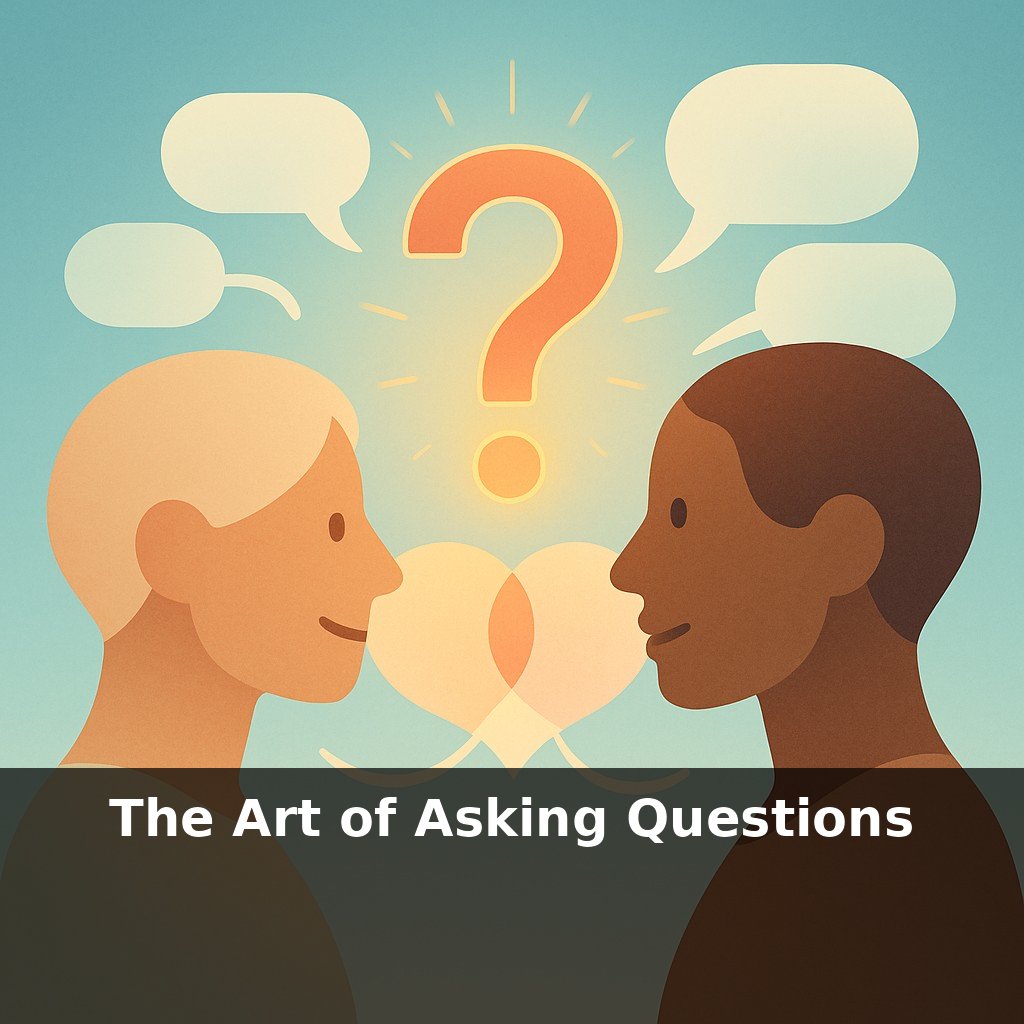
About one in five people walks away from a first date or job interview thinking, “We just didn’t click.” Strangely, both sides often feel that way—while barely remembering a single question they asked. In this episode, we’ll turn that quiet awkwardness into real connection.
Most people think “being interesting” is what keeps conversations alive. Yet in one MIT study, the people rated as most likable weren’t the best talkers—they were the ones who asked more follow-up questions. Not more clever jokes. Not more personal stories. Just better questions, asked at the right moment.
In this episode, we’ll go beyond “So, how was your day?” and into questions that actually change what people share with you. You’ll see why a single open question can triple how much someone talks, how a simple “5 Whys” chain can uncover what they really need from you, and how one or two well-placed follow-ups can turn a dry exchange into something they’ll remember hours later.
By the end, you’ll have a small toolkit: three question types, two framing tricks, and one sequencing pattern you can use in your next important conversation.
In close relationships, the quality of your questions often matters more than the quantity of your time together. In one HBR review, leaders who shifted just 15–20 % of their statements into questions saw measurable gains in trust and idea-sharing. The same principle applies at home: couples who regularly ask about each other’s inner world (not logistics) are 62 % more likely to describe their relationship as “very satisfied.” In this episode, we’ll apply structured, purpose-driven questioning to everyday moments—texting, debriefing a tough day, planning weekends—so that routine check-ins turn into chances to really know each other.
Here’s the quiet advantage of meaningful questions in close relationships: they don’t just get you more words, they change *which parts* of a person’s mind and heart you gain access to.
Cognitive research shows that when you ask, “Did you have a good day?” you mostly trigger a yes/no scan—people check for major highs or lows and stop. But when you ask, “What was the most energizing 10 minutes of your day?” you force the brain to search for a *specific* episode, plus the feelings and interpretations around it. One small tweak in wording can unlock 3–4 times more detail, and often a completely different topic than you expected.
To make this practical, aim for three layers in important conversations:
1) **Surface layer (facts and events).** Use precise, time-bound prompts: - “Walk me through the first 15 minutes after you got that email.” - “What were the top two things on your mind during that meeting?” You’re anchoring the memory so their brain pulls up vivid scenes instead of vague headlines.
2) **Meaning layer (interpretations).** Once you have events, shift to sense-making: - “What part of that felt most unfair to you?” - “When that happened, what did you tell yourself it meant about you—or them?” These questions move the focus from *what happened* to *why it matters*, which is where emotional truth usually lives.
3) **Future layer (needs and preferences).** Close the loop by looking forward 1–7 days, not “someday”: - “If the same situation pops up this week, what’s one thing you’d want to do differently?” - “How could I be genuinely useful *next time* something like this hits?” Concrete time windows make it easier for people to state real needs instead of abstract wishes.
Framing also matters. Swapping judgment-loaded words for neutral ones can determine whether someone shuts down or opens up. Compare:
- “Why did you overreact like that?” vs. - “What do you think made it feel so intense in that moment?”
Same topic, but the second keeps assumptions light and invites collaboration. Across dozens of lab studies, these small wording shifts reliably increase how much people disclose—sometimes by 30–40 %—without you talking more at all.
In long-term relationships, practicing this three-layer approach just 2–3 times a week can build a backlog of shared stories, meanings, and plans. That backlog becomes a buffer: when stress spikes, you don’t have to guess what each other needs; you’ve already asked, and they’ve already told you.
On a Sunday night walk, instead of, “How was your weekend?” try: “If you had to replay just 15 minutes from this weekend, which moment would you pick—and why?” In one study of couples, partners who used similarly specific questions (mentioning a time slice or number) uncovered about 35–50 % more concrete details than those who stuck with generic check-ins.
You can also tune questions toward different “channels”:
- **Feeling-focused:** “On a 0–10 scale, how drained did that family dinner leave you? What pushed it to that number?” - **Story-focused:** “What’s the first scene that pops into your mind when you think about today?” - **Preference-focused:** “If we had 90 minutes next Saturday with zero obligations, how would you *actually* want to use it?”
Think of these as three dials. Before you ask, pick the dial that fits the moment, then add one number or timeframe. That tiny bit of structure can multiply the depth of what you hear—without making the conversation feel like an interview.
Meaningful questions don’t just deepen one conversation; they compound over time. In one 3‑month study, couples who scheduled two 20‑minute “question sessions” per week reported 18 % higher relationship satisfaction and 23 % fewer recurring arguments. Try building a reusable “question bank”: 5 prompts for stress, 5 for decisions, 5 for celebrations. Rotate 1–2 per day. Over 90 days, that’s 90–180 high‑yield moments—far more efficient than hoping important topics appear on their own.
When in doubt, test your questions against outcomes, not theories. Over your next 10 deeper talks, track three numbers: how many minutes they speak before you do, how many specific examples they share (aim for 3+), and whether they volunteer one concrete next step. Questions that reliably hit 2 of 3 are worth keeping—and reusing.
Start with this tiny habit: When you’re about to ask someone “How are you?” (or any autopilot question), pause and add just three specific words: “about [their world]?” For example, say “How’s your week going **at the new job?**” or “What’s been on your mind **about that project?**” Every time you catch yourself starting a generic question, simply tack on a small, concrete detail from their life that you already know. Over time, that tiny tweak trains your brain to ask more grounded, meaningful questions without feeling like extra work.