 2min preview
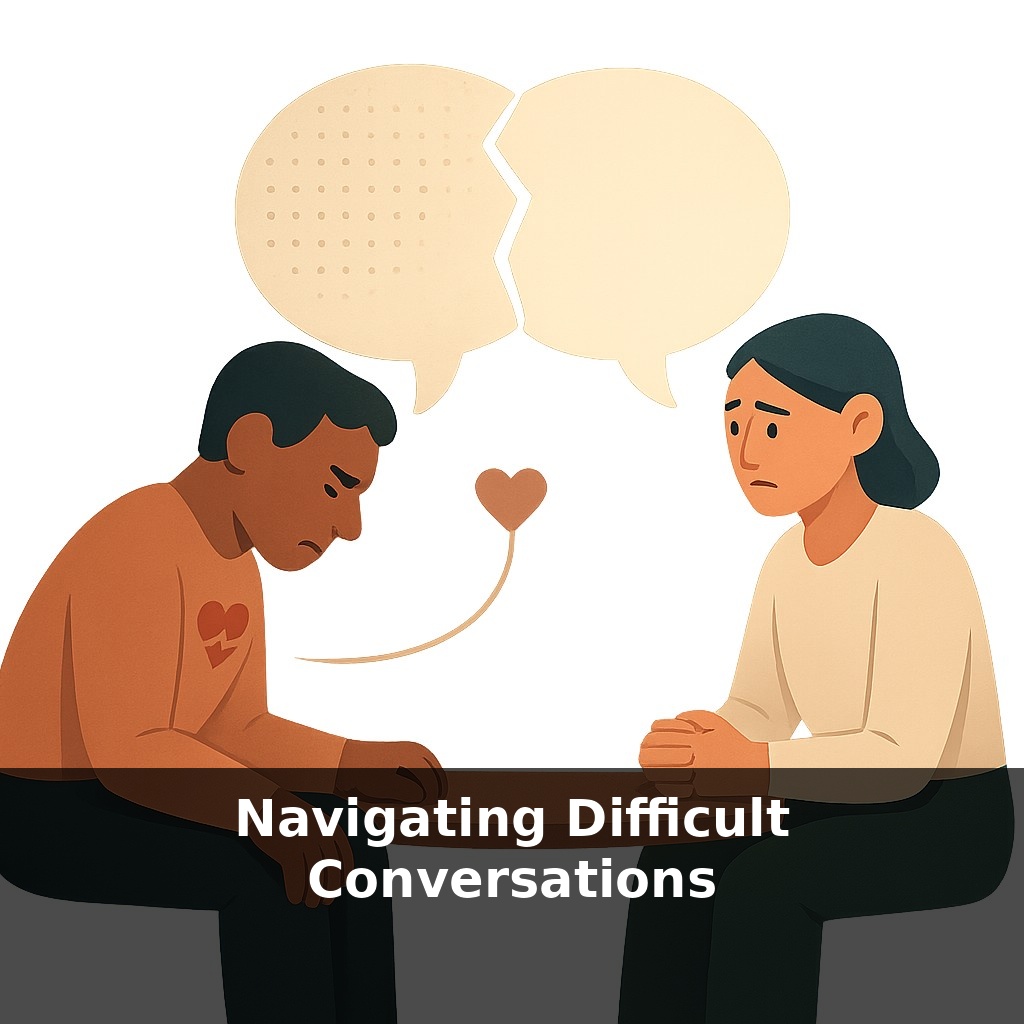
Navigating Difficult Conversations
📝 Transcript
Roughly seven out of ten people dodge the very conversations that could save their relationships and careers. You’re in a meeting, your heart’s racing, your jaw’s tight—yet you say, “It’s fine.” Why do we stay silent exactly when speaking up matters most?
Seventy percent of us will walk past a brewing problem, feel the tension, and still decide, “Not today.” We tell ourselves we’re being “professional” or “keeping the peace,” but our bodies often tell a different story: elevated heart rate, shallow breathing, the sudden urge to check email instead of address what’s right in front of us. That’s not weakness; it’s biology. Your brain is wired to treat social risk—disagreement, disapproval, possible rejection—almost like physical danger. The twist is that this ancient wiring is now operating inside modern systems: performance reviews, project debriefs, feedback loops. Left unchecked, it quietly shapes who gets promoted, whose ideas are heard, and how safe it feels to be honest. In this episode, we’ll zoom in on that internal tug-of-war and explore what changes when you approach tense moments with a deliberate structure instead of raw instinct.
So what actually changes when you use structure instead of winging it? Research from negotiation, organizational behavior, and neuroscience points to something deceptively simple: the *order* in which you do things radically alters how your brain and the other person’s brain respond. Lead with blame or conclusions, and people armor up. Lead with observations, curiosity, and shared goals, and their threat response eases just enough for real dialogue. Frameworks like the “Three Conversations,” STATE skills, and Non-Violent Communication aren’t scripts; they’re more like scaffolding that lets you climb a tense moment without falling into old reflexes.
Subscribe to read the full transcript and listen to this episode
Subscribe to unlockSubscribe for $1.99/month to unlock the full episode.
From this course
The Art of Assertive Communication
5 episodesUnlock all episodes
Full access to 5 episodes and everything on OwlUp.
Subscribe — $1.99/monthLess than a coffee ☕ · Cancel anytime