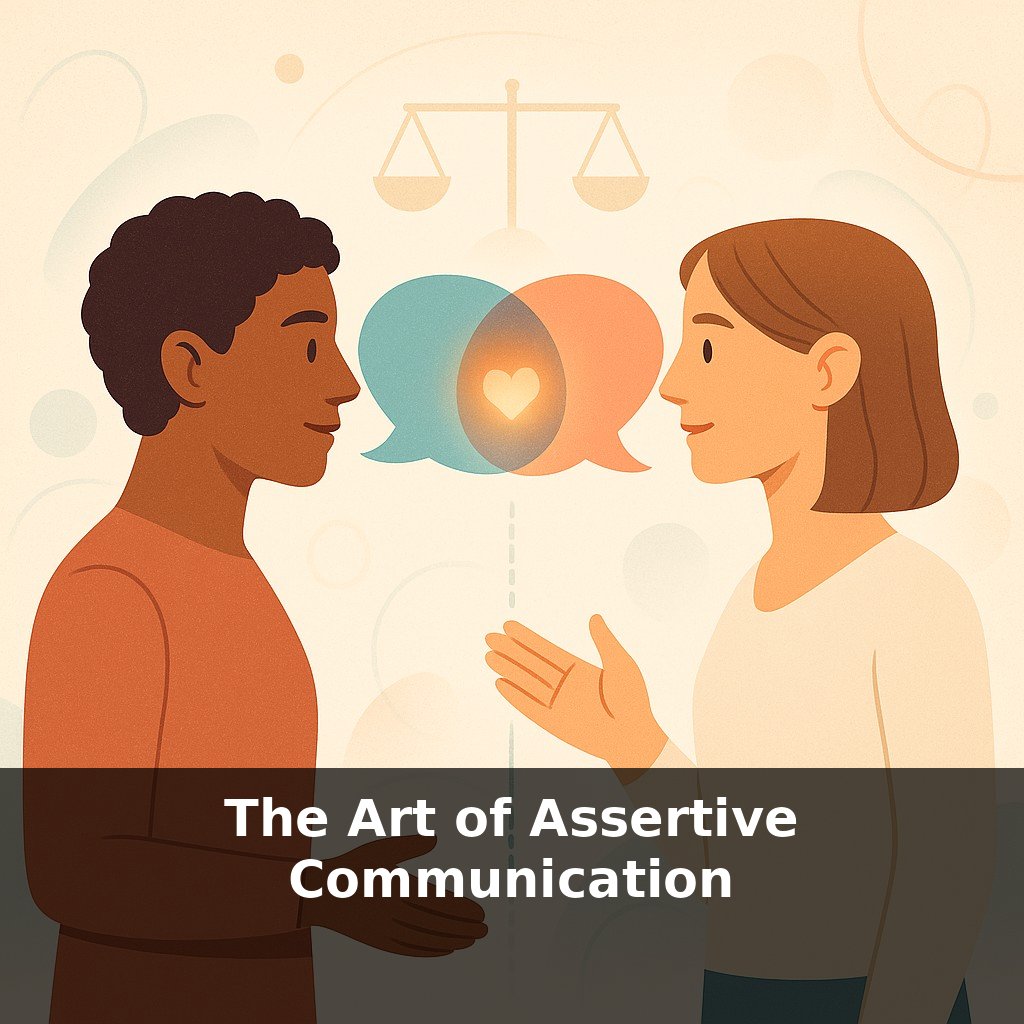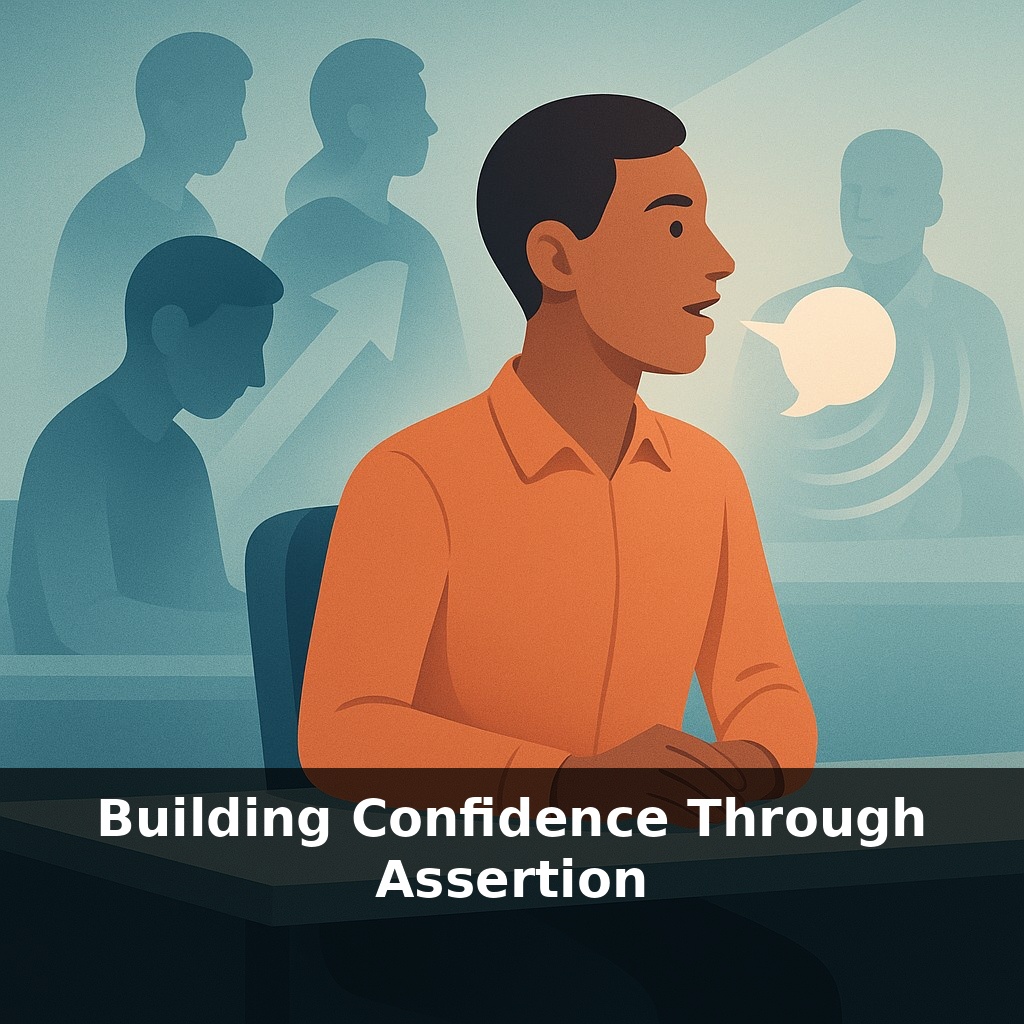
About a third of people rated as “high potential” at work have one thing in common: they’ve had assertiveness coaching. You’re in a meeting, your idea’s on the tip of your tongue, and then someone else speaks first. This episode shows how that exact moment can quietly reshape your confidence.
Only 7 % of your impact in a tough conversation comes from the literal words you choose. The rest is in how you sit, where your eyes go, and whether your voice lands as a question or a decision. That means you can “say” no while your shoulders, volume, and pacing are loudly saying “maybe.”
This is where deliberate practice matters. In one study, an eight-week assertiveness training raised speaking‑up rates in meetings by 28 %. Why? Not because people suddenly discovered perfect phrases, but because they rehearsed specific behaviors—eye contact for 3 seconds, one clear request per sentence, no apologizing for existing.
Across workplaces, 91 % of managers say they link this kind of self‑assertion to who they see as contributors, not just “good team players.”
Here’s the twist: confidence doesn’t have to come first. In fact, many people who look confident are just people who practiced specific assertive moves until their brain updated its story about them. Neuroscience studies show that each time you state a boundary or express a need clearly, you generate a “prediction error” in your brain—evidence that you can handle more than you thought. Do that 10, 20, 50 times in low‑stakes moments and your self‑image starts catching up. This episode is about designing those reps on purpose, especially in your closest relationships.
In close relationships, the assertiveness–confidence loop is especially powerful because the same people keep reacting to you. That creates patterns. If you normally defer and suddenly say, “I’m not available tonight,” their surprise is feedback—not that you’re wrong, but that the pattern is changing.
To change the pattern without blowing up the relationship, work in three layers: content, delivery, and timing.
**1. Content: one clear right at a time**
Vague signals invite others to fill in the blanks. Instead, state one concrete need or boundary per interaction:
- “I can talk for 10 minutes, then I need to get back to work.” - “I’m okay with helping this weekend, not during my workday.” - “I’m not comfortable sharing that.”
Notice the numbers: 10 minutes, this weekend, not during workday. Specifics reduce negotiation and guilt. Aim for sentences under 15 words and avoid stacking three explanations in a row. One short reason is enough.
**2. Delivery: align words, tone, and body**
If your words are clear but your delivery is hesitant, people will lean on your hesitation. Two small adjustments create outsized change:
- Volume: aim for just 5–10 % louder than your casual voice. You’ll feel it; others just hear clarity. - Pauses: after you state a boundary, count “1–2” silently before speaking again. This prevents nervous over‑explaining.
You don’t need dramatic body language. Two cues matter most: shoulders not slumped forward, and eyes on the other person for about 2–3 seconds when you deliver your key sentence.
**3. Timing: start where resistance is lowest**
Think in levels:
- Level 1 (low stakes, mild emotion): correcting a wrong coffee order, asking a friend to lower the music. - Level 2 (moderate stakes): asking a partner to share a chore, telling a colleague you can’t stay late. - Level 3 (high stakes): saying no to a family expectation, negotiating role changes at work.
For the next month, you might aim for 15 Level‑1 reps, 8 Level‑2, and just 2–3 Level‑3. That’s 25 separate moments where you behave slightly more assertively than your default. Each rep is small, but the cumulative signal to your brain—and to the people around you—is large.
This is how your relationships start reflecting a more confident you before you even “feel” fully confident most of the time.
At home, “Level 1” might be telling a roommate, “Please rinse your dishes before bed,” and tracking how many nights you follow through. If you do this 5 nights in a row, then add a “Level 2” ask: “Can we split cleaning so I do the kitchen and you handle the bathroom every week?” If they push back, repeat the request once, unchanged, instead of switching to apology mode.
In a relationship, pick 3 recurring frictions and upgrade just one sentence in each. For example: “Text me if you’ll be more than 15 minutes late,” or “On Sundays, I need 2 hours alone in the morning.” Notice you’re not asking for personality change—only specific behaviors.
With friends, try a “micro‑no” streak: say no to 3 small invitations this month that you’d usually accept out of habit. Each time, stay under 12 words: “I’m going to pass tonight, I need an early sleep.” Stop there.
As tech evolves, your practice options expand. Within 3–5 years, expect assertiveness “gyms”: apps combining VR role‑plays, biometric feedback, and scripted debriefs. You might rehearse a boundary 4–5 times in VR before saying it once to your partner. Schools will likely embed 20–30 minute weekly labs where students practice refusing peer pressure. Start preparing now: note 2–3 recurring situations you’d like to simulate if you had that tech.
Your challenge this week: choose one real conversation and design your own “mini‑simulation.” 1) Script a single sentence you want to say (under 15 words). 2) Practice saying it out loud 5 times, matching tone and posture. 3) Run one low‑stakes “test” version: use that sentence with someone safe (a friend, colleague, or in a small request). 4) Afterward, jot down 3 observations: what you actually said, how your body felt, how the other person reacted.
By Sunday, repeat step 3 in a slightly higher‑stakes moment.
Across the next 30 days, aim for 20 tiny boundary statements and 5 bigger ones. Track them in a simple log: date, person, sentence used, outcome (1–5). After entry #10, review and upgrade one pattern—shorten your sentences, slow your pace, or hold eye contact 1 second longer. By entry #25, you’ll have a personal dataset showing exactly how your impact is changing.
Try this experiment: For the next 24 hours, pick one low‑stakes situation (like sending an email to a colleague or ordering coffee) and clearly state your preference *without* softening phrases such as “if that’s okay,” “sorry,” or “no worries if not.” Before you speak, quickly choose *one* assertive sentence (e.g., “I can do that by Friday, not Wednesday” or “I’d like a quiet table by the window, please”) and use it exactly as-is. Right after, rate your anxiety from 1–10 and your sense of confidence from 1–10, then notice how the other person actually responds versus what you predicted. Repeat this 3 times today in different contexts and compare your scores to see how your confidence shifts with each assertive moment.