A Harvard study found simple ethical checklists cut hospital errors by nearly a fifth. Now, jump to your own life: staring at a job offer, a tough breakup decision, or an AI tool at work. You feel the pressure—yet your “gut” is winging it. What if your gut had a better playbook?
A 2019 University of Chicago study found that students regularly grilled with the Socratic method boosted their critical‑thinking scores by about 23 % in one semester. That’s not just “learning philosophy”; that’s measurable improvement in how they navigate messy choices. Now bring this down to your level: do you stay in a stable job or jump to a risky startup? Do you approve a product feature that’s profitable but might confuse users? Do you call out a friend’s harmful joke or let it slide to keep the peace? Philosophy steps in here—not as abstract debate, but as a set of tools you can actually run these moments through. Consequences, duties, and character traits become lenses, not lectures. Combined with what we know about bias and heuristics, they turn vague unease into structured questions—and those questions into decisions you can defend, even under pressure.
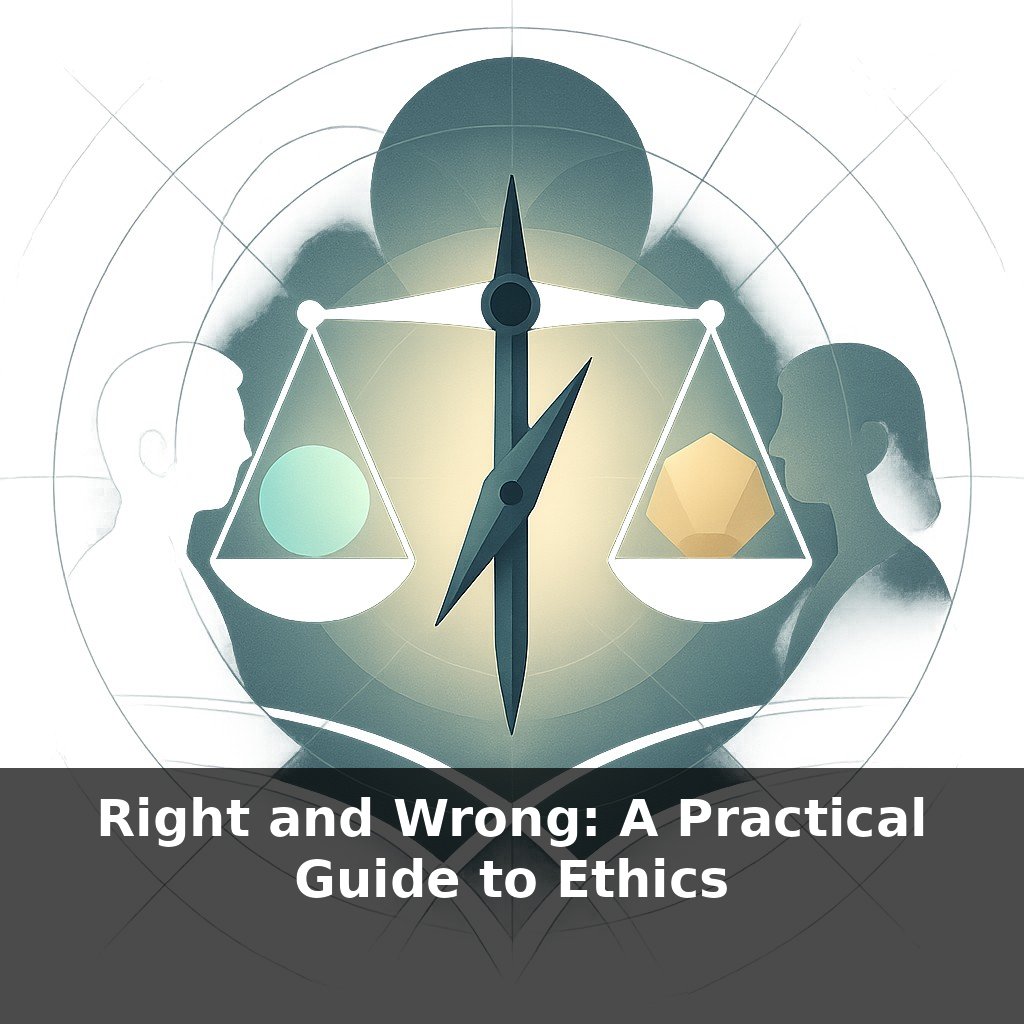
So instead of asking “what feels right?” and stopping there, you can run everyday choices through a few quick lenses. Think of three conversations happening in your head. One voice asks, “How will this play out for everyone involved, three months from now?” Another presses, “Is there a line here I shouldn’t cross, even if no one finds out?” A third wonders, “What kind of person—or team—does this choice slowly turn us into?” Modern decision science adds one more: “Where might I be fooling myself?” Together, these questions turn foggy crossroads into clearer paths.
Start with a live decision and walk it through three lenses plus one “science check.” Take a concrete case: you’re offered a promotion that pays more but will nudge your team toward aggressive sales tactics you privately dislike.
First lens: consequentialist. You project the ripple effects, not just for you but for customers, colleagues, and future you. More income and influence, yes—but maybe more pressure to hit targets that push people into buying things they don’t need. You’re not hunting for a perfect forecast; you’re clarifying trade‑offs and who carries the risks.
Second lens: deontological. Now the question becomes: “What rules or lines are non‑negotiable here?” Maybe your company’s code of conduct bans misleading claims; maybe you have a personal line about never incentivizing dishonesty. Even if the new role is lucrative, crossing that line would feel like using people merely as tools.
Third lens: virtue‑ethical. Instead of “What happens?” or “What’s allowed?” you ask, “Who am I becoming if I say yes?” Are you cultivating integrity, courage, fairness—or training yourself to rationalize? You zoom out from this one choice to its cumulative effect on your character and culture.
Then you add the cognitive‑science check. You ask, “If someone I respected made the opposite choice, what would I think of their reasoning?” That sidesteps self‑serving bias. Or: “If this were a stranger’s story posted online, what details would I need before judging it?” That slows your rush to justify what feels attractive.
Organizations can do this collectively. Patagonia didn’t just pick “environment” as a marketing slogan; it treated environmental impact, legal duties, and corporate character as joint constraints on product and growth decisions. It’s not that every choice became easy—only that there was a shared, examinable logic instead of ad‑hoc impulses.
The point isn’t to turn your life into a flowchart. It’s to give your snap reactions structured friction. Layers of questioning transform “I just have a feeling” into “Here’s what I’m trading, which value I’m prioritizing, and which bias I’m watching for.” Over time, this becomes less like homework and more like a mental habit: a quiet, steady practice of taking your own reasons seriously.
You’re weighing three everyday choices: whether to ghost a recruiter, postpone a hard feedback conversation, or quietly ignore a small data‑privacy concern in a new tool. Run each through the same multi‑lens process, but lightly. For the recruiter, you sketch outcomes for them and for your reputation, check any personal rule about basic courtesy, then ask which response fits the kind of professional you’re trying to be. For the feedback talk, you notice the pull of conflict‑avoidance, then test it against your standards for honesty and care. For the privacy concern, you widen the frame: what precedent are you setting for your future self and team if “minor” issues always get waved through?
Using these lenses is like walking through a gallery where each painting is the same scene rendered in a new style; shifting angles reveals details you’d missed, without dictating which picture you must prefer. Your reasons become visible, and therefore editable, instead of silently steering you.
Future implications stretch beyond formal policies. Decision tools may soon feel like a quiet co‑pilot, surfacing tensions you’d otherwise gloss over: “You’ve prioritized speed three times in a row; want to review long‑term risks?” In teams, recorded reasoning could become as normal as meeting notes, letting new members trace how values shaped choices. Personally, micro‑practices may spread like fitness habits—small, repeated moves that slowly reshape what we notice, question, and refuse.
Treat this like tuning an instrument: small, regular adjustments keep you closer to harmony than rare heroic efforts. Next time you’re stuck, pause long enough to name the tension—speed vs fairness, loyalty vs honesty, safety vs growth. That tiny act of labeling opens a path to reasons you can revise, not just feelings you obey or resist.
Before next week, ask yourself: 1) “The next time I’m stuck on a decision (big or small), how would I explain my choice to a curious 10-year-old—what reasons would I actually give out loud, and do they line up with my real values (like honesty, fairness, or long-term wellbeing)?” 2) “When I feel pulled by convenience—like ordering takeout again, scrolling instead of sleeping, or saying yes to a meeting I don’t need—what would a ‘future me’ who’s living a good life, by my own standards, hope I choose right now?” 3) “In one recurring decision this week (for example, how I respond to a difficult coworker or how I spend my first hour after work), what happens if I treat it as a tiny ‘philosophy experiment’ and deliberately act according to one principle—such as ‘tell the truth kindly’ or ‘choose long-term over short-term’—and then notice how I feel afterward?”