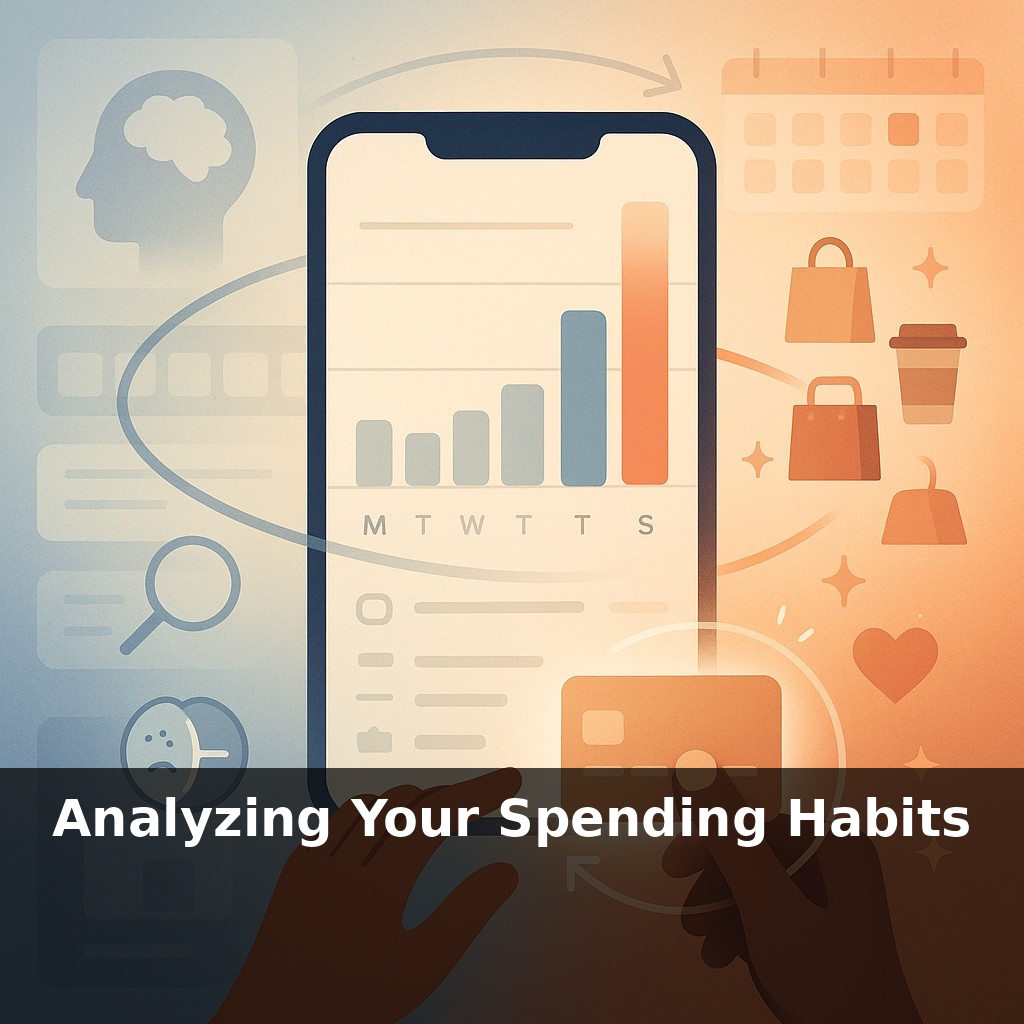
Your bank already knows which day of the week you’re most likely to overspend—do you? On a typical Saturday, one small mood shift can turn a planned day into a shopping spree full of 'treats.' This episode asks: are your feelings quietly steering your wallet?
Your bank statements don’t just show where your money went; they quietly outline who you are on autopilot. Zoom out from any one impulse purchase and you’ll see recurring “routes”: the Tuesday takeout loop, the late-night scrolling spree, the “I survived a rough week” reward run. Each route is tied less to random chaos and more to repeatable situations, people, and environments that nudge you toward certain choices.
This is where spending *habits* come in. Not the dramatic, one-off splurges, but the small, predictable moves that stack up month after month. The coffee you buy only when you commute by car. The upgrades you add only when shopping with a certain friend. The subscriptions you accept because the free trial popped up at midnight.
In this episode, we’re going to treat your recent transactions like a map and start tracing those routes—so you can decide which ones stay, and which ones quietly end.
So instead of staring at a long list of charges and feeling guilty, we’re going to treat that list like raw data you can experiment with. This is where simple categories start to matter: not just “food” or “shopping,” but more specific buckets like “commuting lunches,” “late-night online buys,” or “boredom scrolling spends.” Modern tools quietly do a lot of the heavy lifting already—bank apps auto-tagging transactions, budgeting apps color-coding your month, even card alerts nudging you in real time. Our goal is to read those signals and line them up against what *you* say your money is for.
Start with one simple question: “What *job* did this dollar do for me?” Not “Was this good or bad?” but *what problem was I trying to solve* when I spent it.
Look at a recent week of transactions and, beside each one, tag the *function* it served in your life. Think labels like: - “Save time” - “Avoid discomfort” - “Fit in / social” - “Boost energy” - “Relieve stress” - “Avoid planning” - “Genuine joy”
You’re not judging yet—you’re reverse‑engineering your own operating system. That $18 delivery order might be less about food and more about “I was exhausted and hadn’t planned.” The rideshare might read as “avoided awkward bus ride with coworkers.” The streaming subscription might be “background noise so my place doesn’t feel empty at night.”
This is where behavioral patterns start to surface. Researchers consistently find that cashless payments nudge people to spend more, partly because the “pain” of paying is delayed and blurred. If your “relieve stress” or “avoid discomfort” labels cluster heavily around tap‑to‑pay moments—late‑night scroll buys, one‑click orders—that’s not a moral failing; it’s your environment and payment method teaming up.
Now bring in goals. Instead of the classic 50/30/20 split as a rigid rule, use it as a high‑level lens: - Needs (roughly 50%) - Wants (roughly 30%) - Future you (roughly 20%: savings, debt payoff)
As you scan, ask: - Which “relieve stress” spends are actually *needs* (therapy, childcare) versus wants? - Which “fit in / social” spends truly matter to you—and which leave you feeling flat? - Where is “future you” quietly getting crowded out?
Think of this like refactoring old computer code: you’re not deleting everything, you’re cleaning up the messy parts so the whole system runs smoother. Some transactions will move categories once you’re honest about the job they’re doing. A “fun” bar tab might actually be an expensive coping strategy; a “boring” class or tool might belong under “future you” because it increases earning power.
The goal here isn’t to spend less *everywhere*; it’s to spend more deliberately on what actually delivers value, and less on the auto‑pilot fixes that don’t.
On a random Wednesday, Alex realizes their “just this once” lunches are now a three‑times‑a‑week pattern. One receipt means nothing; twelve in a row, all on office days, start to say, “This is how you handle midday energy dips.” Now compare Alex to Priya, who hardly eats out but has a trail of tiny in‑game purchases. Each one felt inconsequential, but stacked over a quarter, they rival a major bill.
Concrete passes like this reveal different “systems” at work. Maybe your weekday mornings show a string of small taps near the train station—breakfasts, coffees, a snack—while weekends are quiet but punctuated by one big night out. Or your spending spikes the same week rent is due, not because of the bill itself, but because feeling “broke anyway” leads to shrug‑and‑swipe splurges.
Architects use blueprints to spot structural weak points before anything collapses. You’re doing the same: scanning for spots where tiny, repeated choices are quietly reshaping the whole design of your month.
If AI can already summarize your past week of purchases in seconds, the next step is nudging your *future* choices. Expect tools that learn your rhythms—like how streaming services learn your taste—and surface low-friction tweaks: shifting a bill date to match payday, suggesting a cheaper default grocery list, or alerting you when three small “treats” are about to crowd out a goal. The power move won’t be more willpower; it’ll be designing smoother financial defaults.
As you keep tracing these patterns, you’ll start noticing how certain stores, times, or people act like “hot zones” for unplanned swipes—similar to how some intersections seem built for traffic jams. Over the next month, treat each hotspot as a design problem: tweak the route, the timing, or the tools you use there, and watch how your balance responds.
Before next week, ask yourself: 1) “If I open my last 10 debit/credit transactions, which three purchases would I *absolutely* make again tomorrow—and which three instantly make me think, ‘Why did I spend on that?’ What does that contrast tell me about what actually matters to me?” 2) “Looking at my recurring charges (subscriptions, memberships, auto-renewals), which ones would I *fight to keep* if my income dropped by 20%, and which ones would I cancel without much pain?” 3) “In the past week, when did spending genuinely improve my day (more energy, connection, relief), and when did it just distract me or numb me—how can I design next week so I have more of the first type and less of the second?”