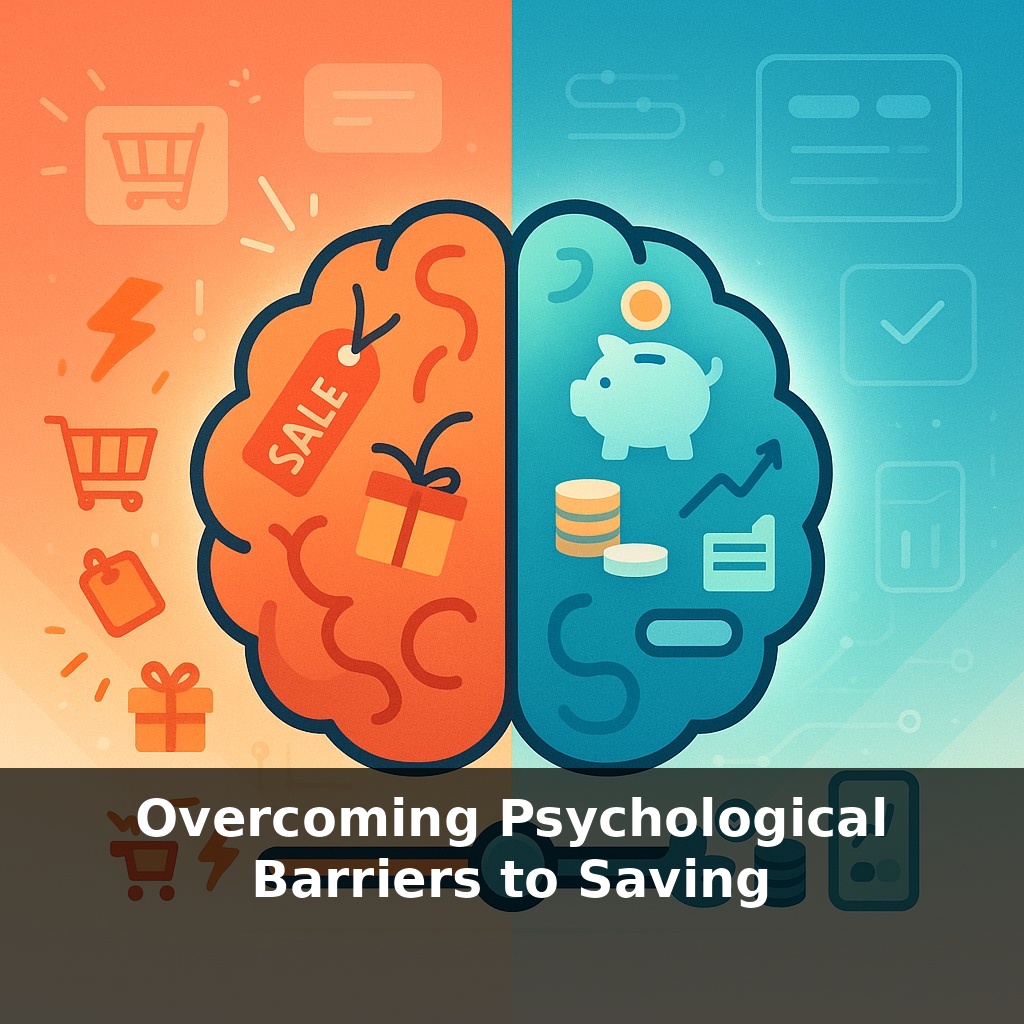
After examining automated savings, we now delve into how most of your brain fights saving money. One part craves that “add to cart” rush; another quietly worries about rent next month. In this episode, we’ll step into that tug‑of‑war and explore how tiny design tweaks can make saving feel surprisingly easy.
Your money habits are less like a single decision and more like a software system running in the background—full of defaults, shortcuts, and bugs you didn’t program on purpose. You already know the code is messy: you mean to save, you plan to save, and then somehow the month evaporates. In this episode, we’re going to look under the hood and actually rewrite some of that code. Instead of asking, “How do I get more discipline?” we’ll ask, “How do I redesign my environment so discipline matters less?” We’ll explore real-world examples—like companies that quietly doubled saving rates just by changing one setting—and translate them into moves you can use at your bank, on your phone, and in your daily routines. Think of this as a live debugging session for your financial life, where we turn your tendencies into tools instead of traps.
We’ll zoom in on the moments your intentions quietly get hijacked: paydays, late‑night scrolling, group outings where “just this once” keeps winning. These aren’t random lapses; they follow patterns your brain finds comfort in—fast rewards, social approval, and the path of least resistance. Behavioral economists have mapped these patterns so clearly that companies use them to guide what you buy and how much you save. In this episode, we’ll flip that script and borrow those same tools—auto‑pilots, prompts, and small “frictions”—to make saving the easiest option instead of the noble, exhausting one.
Most people don’t lose their savings battle at big, dramatic moments; they lose it in tiny, boring ones: “I’ll start next month,” “It’s just $14,” “I’ve had a hard week, I deserve this.” Those micro‑decisions are where four biases quietly run the show.
Present bias makes “later” feel like a different person’s problem. Future‑you might as well be a stranger borrowing your paycheck. So raises, bonuses, even side‑hustle money all arrive tagged in your brain as “spendable now.” That’s why Save More Tomorrow works: it sneaks past present bias by deciding in advance what future pay raises will do, before they ever feel like fun money.
Loss aversion shows up when saving feels like deprivation. Moving $100 to a savings account doesn’t emotionally register as “gaining security”; it feels like “losing” dinners, clothes, upgrades. Your brain weighs that loss more than twice as heavily as the quiet satisfaction of being prepared. The trick is to relabel what counts as the loss: “If I don’t save this, I’m losing future freedom” instead of “If I do save this, I’m losing tonight’s treat.”
Social comparison turns money into a scoreboard you didn’t agree to play. You don’t compare yourself to an average statistic; you compare to your coworker’s vacation, your friend’s remodel, the influencer’s unboxing video. Outward lifestyles are financed by invisible information: debt levels, family help, unstable cash flow. When you chase the visible, you inherit the hidden risks.
Then there’s the dopamine pull. A tap, a swipe, a package on the doorstep—each one hits the reward system that studies see lighting up like a slot machine win. Saving, by contrast, has no animation, no confetti, no tracking number to refresh. It’s quiet and invisible, so your brain treats it as emotionally neutral, even when it’s financially huge.
So the real move is not to “be better,” but to reroute these same forces. Make future‑you feel closer. Make not saving feel like the real loss. Shift your comparisons to people who are calm about money, not flashy with it. And deliberately build small, instant rewards into every step where money moves toward your goals instead of away from them.
Think of a pro sports team preparing for a season. They don’t rely on “trying harder” each game; they redesign practice so the right moves become automatic. You can treat saving the same way by scripting the plays in advance.
For example, one couple labels three savings sub‑accounts “Safety Net,” “House Keys,” and “Work Optional.” Each payday, their banking app sweeps fixed amounts into each bucket. They never “decide” in the moment; the playbook runs by itself, and the named goals keep future‑them emotionally close.
Another person sets a private rule: every time a friend posts a big purchase on social media, she transfers $15 to her own “Flex Freedom” fund. Comparison becomes a trigger to fund her life, not copy theirs.
And to compete with that dopamine rush, some people use visual trackers—a progress bar on a whiteboard or app that fills up with each transfer. The tiny jolt of seeing the bar grow turns quiet progress into something your brain actually wants to repeat.
As banks, apps, and employers bake these insights into their systems, your “default” financial life will quietly shift. Expect savings tools that feel more like fitness trackers than bank ledgers—streaks, milestones, gentle nudges. Your data will train algorithms to time suggestions to your moods and cash swings, raising both convenience and surveillance questions. Over time, the real edge won’t be knowing you should save, but choosing who gets to design the rails your money runs on.
You’re not chasing perfection here; you’re training reflexes. Over time, the goal is for saving to feel as routine as plugging in your phone at night—something you’d feel weird *not* doing. Your challenge this week: pick one friction point (like impulse buys after 9 p.m.) and install a tiny speed bump so that spending has to wait till morning.