Netflix once bragged that its autoplay feature saves people from pressing buttons hundreds of millions of times a day. On the surface, that sounds helpful. But here’s the twist: who’s really deciding when you stop—your thumb, or the invisible systems predicting your next click?
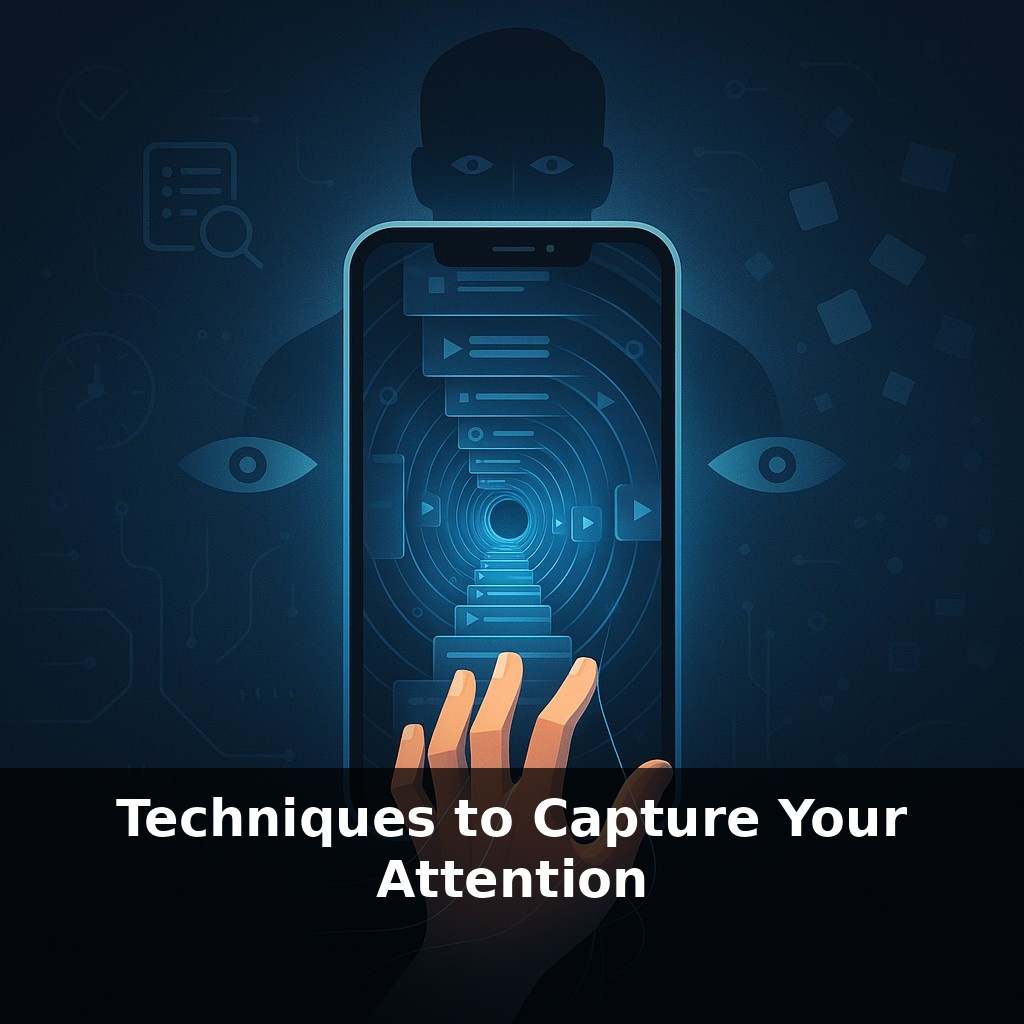
Open an app “just for a second,” and within minutes you’ve drifted three, five, ten screens away from what you came to do. That gap between your intention and your action isn’t an accident—it’s engineered. Today’s attention-capturing techniques mix old-school behavioral psychology with real‑time data on what makes *you* pause, tap, or swipe.
What started as simple tricks—bright icons, red badges, “pull to refresh”—has evolved into systems that continuously test micro‑changes on millions of people at once. A slightly slower fade‑in on a video, a new placement for the “next” button, a different color for a notification dot: each tweak is measured against one metric—did you stay a little longer?
In this episode, we’ll unpack how those tiny design choices, multiplied by algorithms and scale, quietly reshape your habits.
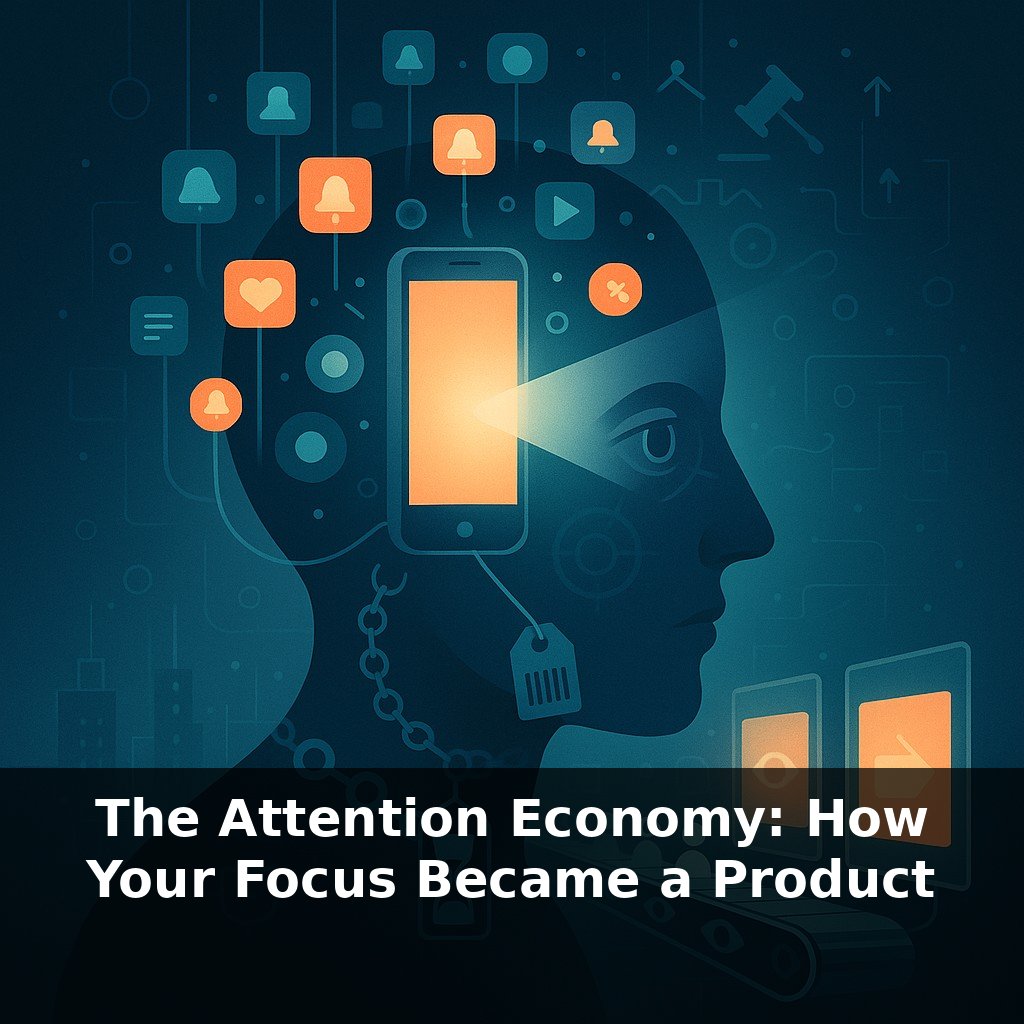
Tech companies don’t just wait to see what you’ll click—they actively shape what appears, when, and in what order. TikTok’s feed learns from each pause and flicker of interest, while YouTube’s suggestions quietly pull most viewers from one video to the next. Think of it less as “content you chose” and more as a constantly shifting menu curated to keep you seated. And because every moment is tracked—how long you linger, what you skip, when you usually open an app—the system refines itself, tuning your feed the way a DJ reads a crowd and adjusts the next song before anyone walks off the dance floor.
Let’s pull back the curtain on how this actually works in your daily apps.
First, there’s the **variable reward loop**. Every time you refresh a feed or open an app, you’re rolling for a new outcome: a funny video, a boring post, a heated comment thread, or nothing much at all. That unpredictability is key. If you knew every third swipe would be good and the rest would be junk, you’d bail quickly. But when the “wins” are irregular, your brain keeps checking “just one more time,” because the next swipe *might* be great.
Now layer in **real‑time personalization**. TikTok, Instagram Reels, YouTube Shorts—they don’t just serve popular clips; they watch *which* second of a video you replay, which creator you scroll past at 0.3 seconds, which topic keeps you lingering. That data feeds systems that try thousands of tiny experiments on you: slower videos, faster cuts, different topics. The loop tightens until the content feels eerily “made for you.”
Even products without ads play this game. Netflix and Spotify want to reduce “churn”—you canceling your subscription. So they tune rows, thumbnails, and “because you watched/listened to…” carousels around a goal: prevent you from hitting the point where you think, “I don’t really use this; maybe I should quit.”
Small interface nudges help lock this in:
- **Red notification dots** instead of grey, because red feels urgent. - **Badges that bundle updates**—“12 new notifications”—so you open to “clear” them and end up staying. - **Endless scroll** instead of pages, because a “Next page” button is a natural exit ramp.
Underneath, recommendation engines work a bit like an investment fund reallocating money: they continuously “invest” more exposure in content that keeps people watching and “sell off” content that loses attention. The twist is that what performs best is often what’s extreme, emotional, or outrage‑inducing—great for engagement, not always great for your mood or your understanding of the world.
And because defaults usually favor more alerts, more autoplay, more suggested content, your “choices” are quietly steered unless you actively push back.
Ever notice how the “unread” count on messages or DMs never says “2 updates,” it says “2 new”? That tiny word suggests something *waiting for you*, not just sitting there. Or how Netflix and Spotify quietly reshuffle covers and titles—slapping “Because you watched…” or “Made for you” on rows that feel more like personal invitations than generic shelves.
Even search is bending this way. When 40% of Gen Z starts a query on TikTok or Instagram, “results” are no longer neutral lists; they’re clips pre‑sorted for entertainment and shareability. You didn’t ask for “the most engaging explanation of climate change,” but that’s often what surfaces first.
Think about notification timing too. Apps learn when you’re most likely to cave: a ping right after work, a “someone liked your post” nudge when you usually scroll. It’s less a random buzz, more a scheduled knock on the exact mental door you tend to open.
Your attention is quietly becoming a bargaining chip in larger battles you never see. As real-time personalization spreads, your feed can start to look less like a window on the world and more like a custom-built tunnel, where every turn is optimized to keep you walking. That matters for more than distraction: it shapes which jobs you hear about, which protests reach you, which health advice you trust. The trade-off isn’t just time; it’s the range of futures you can realistically even notice.
So where does that leave you? Not as a powerless target, but as someone who can notice the “gravitational pull” before it drifts your day off course. The move from simple feeds to AI-tuned streams isn’t slowing down; it’s quietly expanding into shopping, news, even dating. The more you see the strings, the easier it becomes to choose when to dance.
Start with this tiny habit: When you unlock your phone for the first time each morning, tap the search bar and type one word that describes what you want to pay attention to today (for example: “focus,” “writing,” “kids,” “deep work”) and then lock your phone again. That’s it—no notes app, no to-do list, just that single word in the search bar. This tiny interruption teaches your brain to notice where your attention is going *before* apps and notifications start pulling on it.