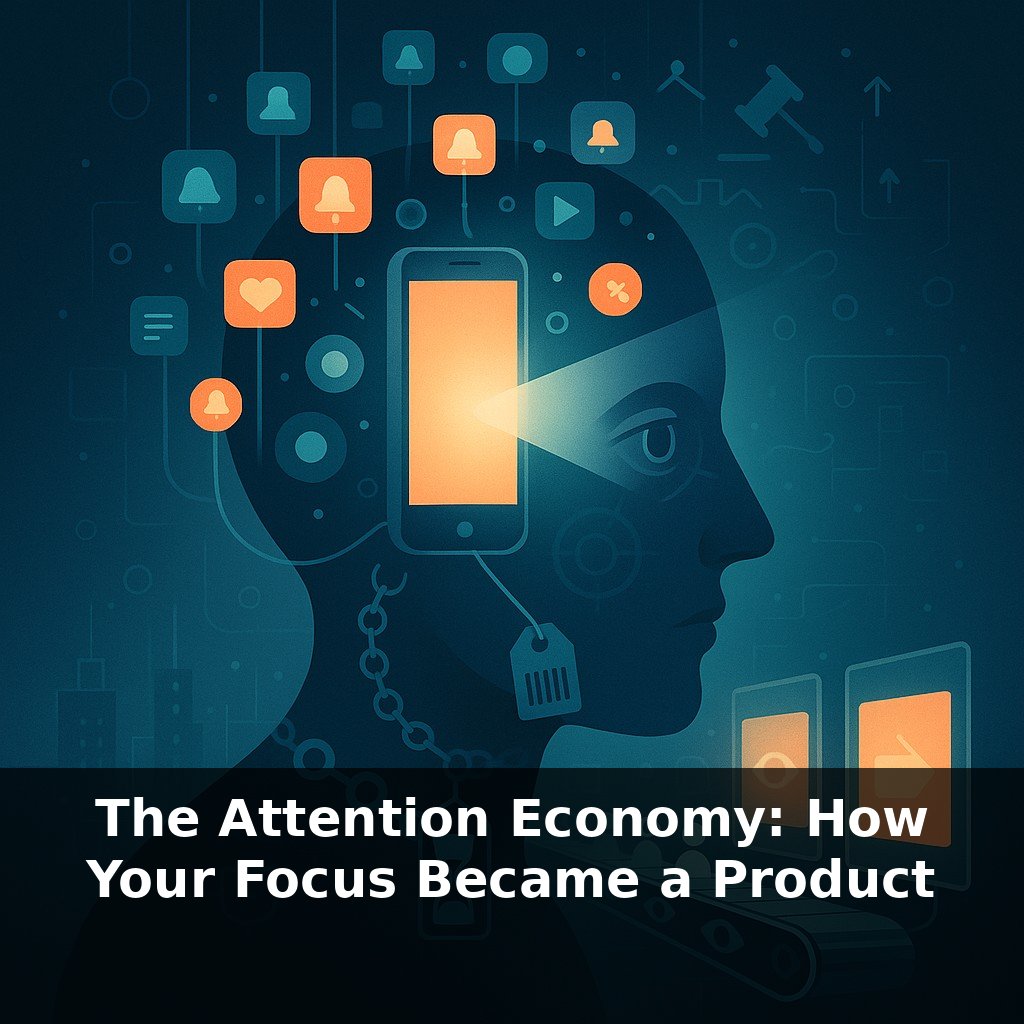
Your phone buzzes so often that, on a typical day, you might barely get a full minute of quiet focus. Yet most people still say, “I’m just bad at concentrating.” Here’s the twist: what if your scattered attention isn’t a personal failure at all, but a profitable business model?
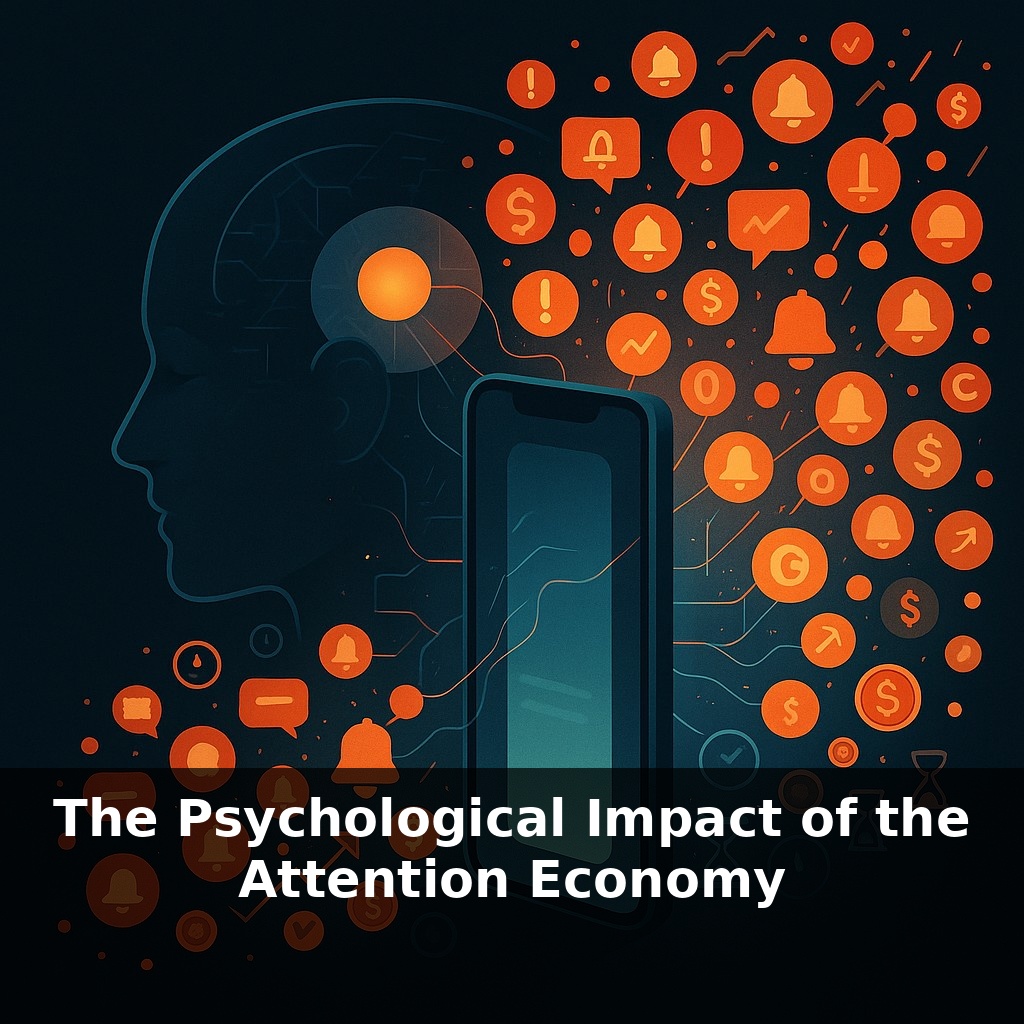
The average smartphone user gets 46 push notifications a day. That’s not just “a lot of pings”—it’s 46 tiny negotiations over what your brain should care about next. In earlier episodes, we followed the money; now we’ll follow the psychology. When your feed refreshes or a badge count ticks up, your brain’s reward system lights up the same circuitry used by slot machines. Over time, this constant micro-dosing of novelty doesn’t just steal minutes; it reshapes what your mind treats as “normal.” Long stretches of quiet focus feel itchy, even wrong. Researchers are now tracking how this constant stimulation links to more task-switching, more stress, and, for some people, real clinical anxiety and depression. In this episode, we’ll map what the attention economy is doing under your skull—and why it’s getting harder to feel at ease doing just one thing at a time.
Over time, this doesn’t just change how you focus; it changes how you *feel* when things are quiet. Many people now report a strange discomfort in stillness: waiting in line, sitting on a train, even pausing between tasks can feel oddly empty unless there’s a screen to fill the gap. Neuroscientists are finding that the brain’s “default mode” networks—once busy with daydreaming, reflection, and creative insight—are being crowded out by rapid-fire inputs. It’s like always skimming headlines and never reading the article; your mind stays busy, but deeper processing, emotional digestion, and genuine rest get pushed to the margins.
Here’s where the story gets more personal: what all this constant input *feels like* from the inside.
Psychologists talk about “cognitive load” — how full your mental workspace is at any moment. Each notification, each flashing badge, each new tab isn’t just visual clutter; it’s a small item on that internal desk. One or two are fine. But across a day of alerts, news, group chats, and algorithmic feeds, that desk is jammed. You’re still functioning, but now you’re working by shuffling piles rather than thinking clearly.
This overload pushes your brain into a mode researchers call “vigilance”: always slightly on alert for the next thing. That state was useful when “the next thing” might be a real-world threat. When the next thing is usually a DM or a trending video, you end up physiologically revved for psychologically trivial events. Heart rate ticks up, breathing shifts, and the body quietly prepares for action that never comes. Over months and years, that mismatch is strongly linked to chronic stress and, for some, anxiety disorders.
There’s also a time cost that isn’t obvious in the moment. UC Irvine’s field studies show people switching screens or tasks roughly every 47 seconds at a computer. Other work finds it can take more than 20 minutes to fully re-immerse in a demanding task after a disruption. Multiply that by dozens of small checks per day, and whole hours of potential deep work dissolve into re-orientation.
For adolescents, this landscape lands on a brain still wiring up its emotion and self-control systems. JAMA Psychiatry reports that those in the heaviest social-media-use group show dramatically higher rates of depressive symptoms. Correlation isn’t destiny, but it raises hard questions: if your sense of self is developing while you’re constantly comparing, being compared, and being interrupted, what does “normal” ever get a chance to feel like?
The emotional signal often shows up first as restlessness: the urge to check, scroll, refresh—sometimes without any clear intention. Over time, that restless checking can become a learned response to boredom, sadness, or mild discomfort. Instead of tolerating those states long enough to understand them, the hand reaches for the screen, and the underlying feelings never get processed.
You can see this most clearly in tiny, ordinary moments. A student opens a textbook, reads a paragraph, then “just checks something” and resurfaces twenty minutes later, vaguely tense and behind schedule. A parent sits down to play with their child, feels an itch of unfinished messages, and half-attends to both, fully present to neither. These aren’t moral failures; they’re predictable outcomes when your environment constantly offers faster, easier hits of engagement than the slow rewards of focus or intimacy.
Socially, this shifts norms. In group chats, a delay of a few hours can feel like neglect. At work, replying instantly becomes a sign of dedication, even when it wrecks deep projects. Friends may interpret “Do Not Disturb” as withdrawal rather than a healthy boundary. Over time, people start to confuse being reachable with being reliable, and being constantly stimulated with being genuinely fulfilled. The psychological cost isn’t only inner turmoil; it’s the quiet erosion of how we relate, work, and relax together.
We’re edging toward a world where “normal” may mean never feeling fully alone with your own thoughts. As feeds seep into commutes, workouts, even brushing your teeth, any quiet moment becomes “unused space” to be filled. Like a city that never turns off its lights, we lose sight of the stars: subtle moods, half-formed ideas, early signals of burnout. Future mental health care may focus less on what you feel, and more on when you *never* allow yourself to feel it.
So the real question isn’t “How do I escape screens?” but “What do I want my limited focus to grow?” Attention is like sunlight on a windowsill: whatever you place there, you’re slowly cultivating. Your challenge this week: notice not just what captures you, but what’s quietly starving when you say yes to every flicker of digital urgency.