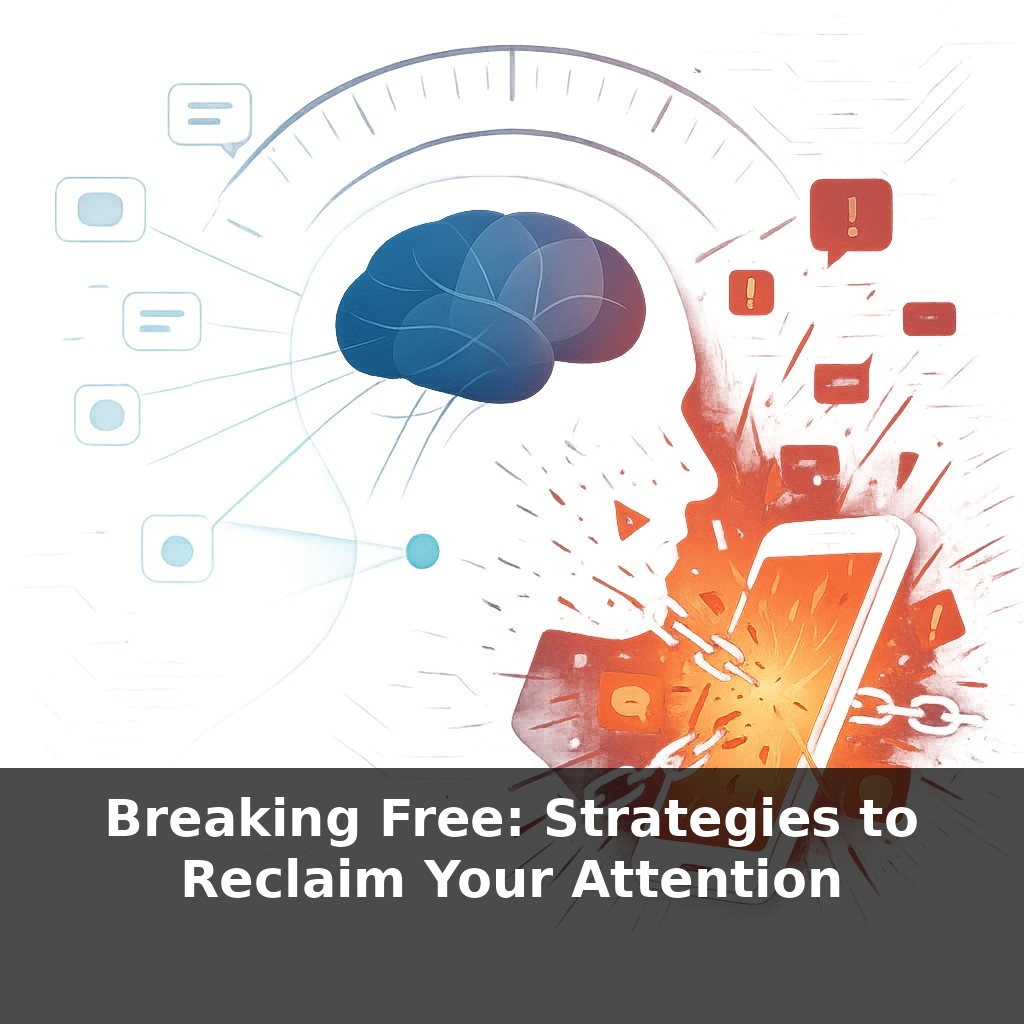
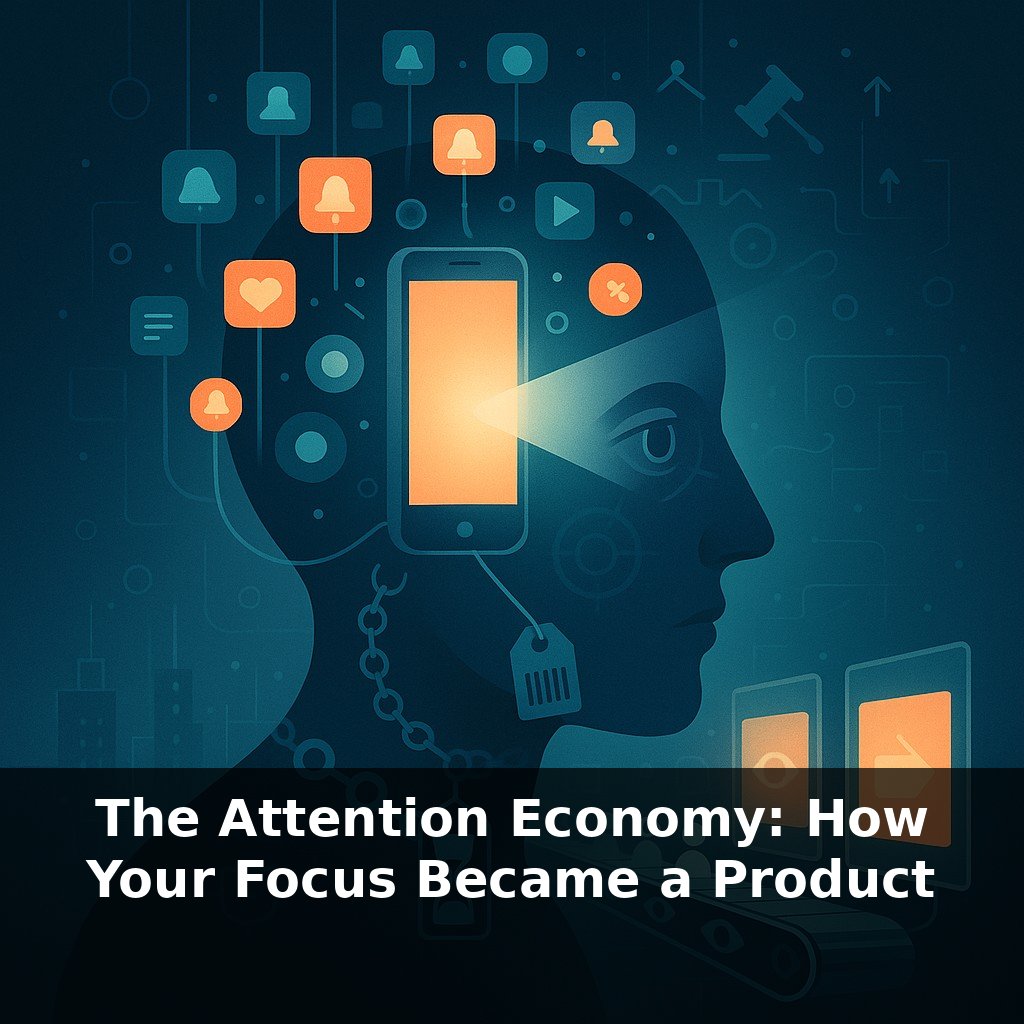
A single buzz on your phone can raise your stress hormone levels by more than a third—before you even look at the screen. Now, hold that in your mind as you scroll, swap apps, and half-listen to someone you care about. Where, exactly, did your attention just go—and who decided that?
Twenty-three minutes. That’s how long it takes, on average, to recover deep focus after a single interruption. Not to check one more thing, not to “just reply quickly”—to truly get back into the mental groove you were in before. Now multiply that by every ping, preview banner, and “quick look” you barely register.
In previous episodes, we explored how platforms are tuned to keep you in this fragmented state because it’s profitable. This episode shifts gears: from what’s being done to your focus, to what you can deliberately do about it.
You can’t out-willpower an entire industry, but you can redesign the small environments you actually control—your home screen, your desktop, your workspace, your habits. Think of it less like “detoxing” from tech and more like renegotiating a contract you never consciously signed.
Here’s the twist: your attention isn’t just under attack—it’s also highly trainable. Studies on “attention training” show that small, repeated adjustments can change how easily you slip into focus, just like gradually increasing weights rewires your muscles. But this isn’t about heroic self-control; it’s about building gentle frictions and smart defaults. Think of those moments when you open your phone for one task and resurface 20 minutes later. The goal isn’t to banish those entirely, but to shorten them, soften their impact, and create more islands of uninterrupted, intentional work and rest.
Most people start by trying to “be more disciplined.” The research points somewhere else: change the *conditions* first, then your behavior follows with far less effort.
Begin with the most aggressive thieves of your concentration: interruptions you didn’t choose. Studies on workplace performance show that even silent banners—no sound, no vibration—can pull your mind off-task because your brain has to decide whether to ignore them. So the first move isn’t to abandon your phone; it’s to demote it from “urgent megaphone” to “tool you consult on your terms.”
One practical approach is notification triage. For a few days, notice which alerts actually require immediate action: maybe calls from family, messages from a small group, calendar reminders. Everything else can shift to summaries, digests, or manual check-ins. Many apps now offer “quiet” modes or batch delivery—features built for this exact purpose, even if they’re buried in settings.
Next, tackle context switching. Cognitive science is blunt here: when you try to juggle tasks, your brain is just toggling. That switch has a cost every time. Instead of aiming for marathon stretches of concentration, use short, protected blocks. Twenty-five to fifty minutes where one tab, one document, or one conversation has priority, followed by a real pause. Not a “pause” where you open three other apps, but a walk, a stretch, a glass of water—something that doesn’t splinter your mind further.
This is where interface design becomes a quiet ally. Small tweaks—grayscale mode, moving social apps off the first screen, turning off red badges—reduce the visual “itch” to check. Some people create a separate “focus” home screen with only tools they use for thinking or creating. The point isn’t purity; it’s to make the easiest action the one you actually want to take.
Alongside environmental shifts, there’s the inner layer: noticing what your mind does *right before* you reach for stimulation. A flicker of boredom, a hard sentence in a report, a mild uncomfortable emotion. Mindfulness practices and simple check-ins—“What am I trying not to feel right now?”—turn autopilot reaches into conscious choices.
Over time, these external and internal adjustments start to work together. You’re not just deleting apps or white-knuckling through cravings; you’re building a daily rhythm where depth, rest, and even play each have a deliberate place.
Think of your mental energy like a monthly paycheck: every open tab, unread badge, or “quick check” is a tiny charge against it. Without a plan, the balance quietly drains away on low-value purchases—refreshing inboxes, skimming headlines, bouncing between chats—until there’s nothing left for the projects or people that actually matter.
Concrete shifts can look surprisingly small. A designer I interviewed created a “morning-only” folder on her phone: banking, calendar, and notes live there, but all entertainment apps are buried two screens deep. She noticed that by noon, she hadn’t yet “spent” her freshest hours on reactive scrolling.
Another example: a sales team ran a two-week trial where internal messages were checked only at the top of the hour. No new tools, no inspirational speeches—just a shared rule. Their manager reported deals moved faster, not slower, because replies came in coherent chunks rather than scattered fragments that broke everyone’s rhythm.
Soon, reclaiming your screen may feel less like willpower and more like urban planning. AI systems could quietly reroute digital “traffic,” delaying low-value pings the way cities time red lights at night. But the same tools could also build hyper-personalized slot machines around your habits. Regulations will likely lag, so individual norms may emerge first—teams treating status bubbles like closed office doors, families adopting “slow channels” for anything that isn’t truly time-sensitive.
Your challenge this week: Treat your day like a limited‑edition playlist. Each morning, choose three “headline tracks” worth your best mental energy—one demanding task, one meaningful conversation, one small joy. Before bed, ask: did I actually give them time, or let side‑quests win? Adjust tomorrow’s “track list” until it better fits the life you want.
Conclusion: Reclaiming your mental budget isn’t about perfection; it’s about choosing where the next unit of energy goes. Small experiments—like moving one app, protecting one hour, or pausing before one tap—work like compound interest. Over weeks, those tiny deposits can fund deeper work, clearer thinking, and a quieter mind than the feed will ever offer.