The Power of Purpose: Why We Do What We Do
📝 Transcript
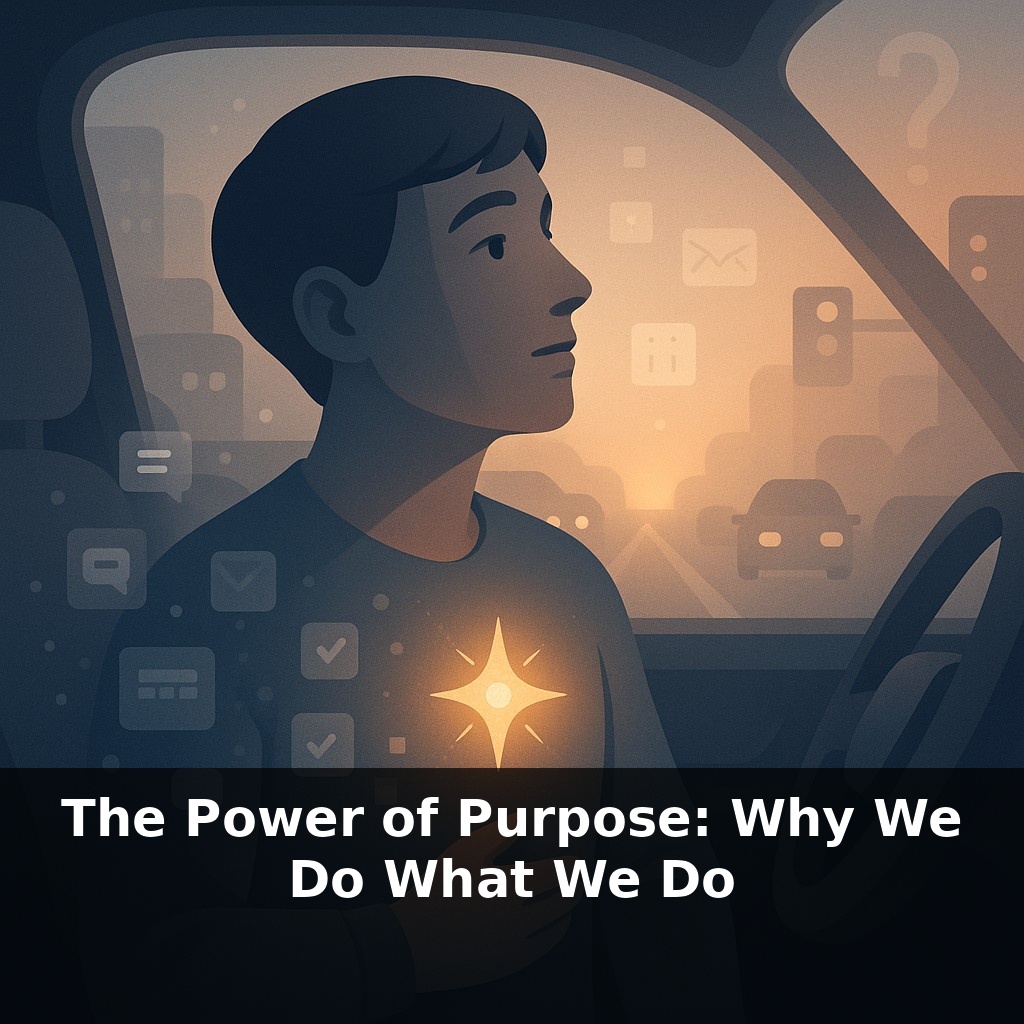
A long-term study found one quiet trait that seemed to protect people more than exercise, wealth, or even optimism: a strong sense of purpose. Now, jump to you—stuck in traffic, checking emails, rushing. Hidden underneath that routine might be the most powerful force in your life.
Maybe your days feel full but strangely hollow: deadlines met, messages answered, boxes ticked—yet something in you keeps asking, “So what?” That quiet discomfort isn’t failure; it’s data. It’s your mind noticing a gap between what you’re busy with and what actually matters to you. In behavioral science terms, most of us run our lives like a cluttered desktop: dozens of open windows, no clear hierarchy, everything marked “urgent,” very little marked “important.” Purpose steps in not as a motivational poster, but as a filter. It doesn’t add more to your plate; it changes what qualifies to be on the plate at all. Today, we’ll explore how tiny, practical shifts—what you say yes to, what you quietly stop doing, what you tolerate less of—can start to realign your routine with that deeper “so what?” that won’t leave you alone.
Think about how you currently “budget” your effort. Many of us spend energy the way we scroll: reactively, whatever pops up next. Purpose quietly changes the sorting rule. It doesn’t shout; it whispers, “This, not that.” In research, people with a clear why don’t have more willpower; they waste less of it on decisions that don’t really matter. Purpose shrinks the menu. Some invites stop feeling tempting, some goals stop feeling like yours. It’s less like cramming more hours into the day and more like unsubscribing from the noise so the signal can finally get through.
If you zoom in on the moments where purpose actually earns its keep, they’re rarely dramatic. They’re the 20 seconds between an impulse and a response: the pause before you say yes to another project, the hesitation before you open an app, the split second when you’re about to give up on something hard.
Behavioral research shows that in those micro-moments, people with a stronger sense of “why” don’t necessarily feel more energized—they interpret discomfort differently. The same late-night grind that feels like meaningless slog to one person can feel like evidence of progress to another who links it to a longer arc. The effort hasn’t changed; the story around it has, and that story changes how long they stay in the game.
This isn’t just about enduring pain. Studies on “stress mindsets” suggest that when people view strain as in-service-of-something-they-endorse, their bodies respond less like they’re under attack and more like they’re being challenged. Heart rate still rises, but blood vessels stay more relaxed; performance improves rather than collapses. In other words, the body keeps score not only of how hard something is, but of whether it feels worth it.
The same pattern appears in learning. When students connect coursework to a self-chosen contribution—helping future patients, designing fairer systems, supporting family—they don’t just try harder; they think differently. They choose deeper strategies, revisit errors, persist through confusing material. Purpose doesn’t add IQ; it changes what you’re willing to wrestle with long enough to get smarter.
At work, this shows up in small, almost invisible choices: whether you raise an awkward concern because it affects the mission, whether you mentor someone even when no one’s tracking it, whether you refine a draft one more round because it represents values you care about. Over time, those choices snowball into reputation, opportunity, even culture.
One helpful way to see this is to treat your attention like a limited investment fund. Every task is a potential asset: some pay quick, shallow returns; others are slow but compound over years. People who are clearer on what they’re building tend to place more “long-horizon” bets—often less exciting today, but far more powerful over a decade.
Think of three people facing the same long, dull task: updating a giant spreadsheet. One treats it as punishment and races through carelessly. Another treats it as a way to look good to their boss and burns out after an hour. The third quietly reframes it: this data will decide which community projects get funded next year. Same screen, same cells, but for that third person, each correction feels like a small act of service, not drudgery. Over months, they become the go-to person for complex, meaningful projects—not because they “like” spreadsheets, but because they’ve attached them to a story they stand behind.
You can see a similar pattern with health. Two runners drag themselves out of bed at 6 a.m. One is chasing a number on a scale. The other is training so they can keep up with their kids in ten years. When it rains, the scale-chaser negotiates with the alarm. The future-parent negotiates with excuses. The weather hasn’t changed; the narrative has.
Purpose quietly reshapes systems, not just schedules. As workplaces, schools, and cities bake “why” into their design, career ladders may look more like branching storylines than straight climbs. Roles could flex around the impact people want, not only the tasks they can do. Expect tension, too: when official missions clash with personal aims, disengagement will spike. The next competitive edge may be less about tools and more about which environments let people align their load with their long-game.
You don’t need a grand revelation to start; you need one honest thread to follow. Notice which tasks leave you quietly proud afterward, even if no one sees. Those are clues. Your challenge this week: treat those moments like bookmarked tabs in your browser—return to them on purpose, expand them slightly, and see what other choices they begin to rearrange.
From this course
The Behavioral Odyssey: Understanding Human Motivation
7 episodesUnlock all episodes
Full access to 7 episodes and everything on OwlUp.
Subscribe — $1.99/monthLess than a coffee ☕ · Cancel anytime