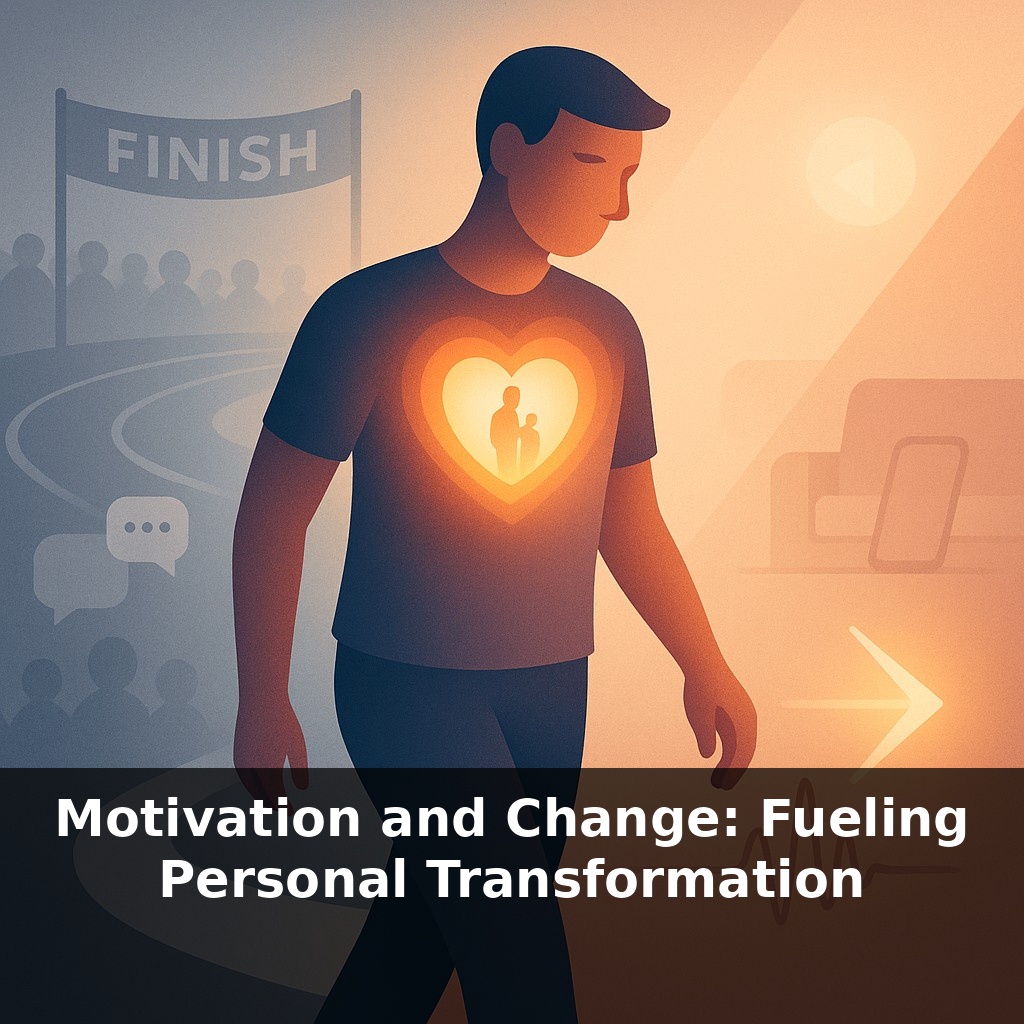
A marathon runner quits one mile from the finish line—not from pain, but boredom. A smoker scrolls past a cash bonus to quit, but stops at a tiny message: “Do this for your kids.” In both moments, one thing quietly decides everything: why the change matters to them.
Some changes stick so deeply they feel like part of who you are; others melt away the moment life gets busy. The difference isn’t willpower—it’s the fuel source. When your motivation runs on other people’s expectations, social pressure, or short-term rewards, it behaves like a discount code: exciting, but quick to expire. Intrinsic motivation, by contrast, runs more like a subscription you chose yourself—linked to what you care about, not what you’re told to chase.
But here’s the twist: you don’t have to wait around for that kind of motivation to magically appear. Research shows you can *engineer* it. By reshaping how you frame goals, designing habits that fit your real life, and using feedback that highlights progress rather than perfection, you can turn fragile bursts of effort into stable identity-level change. In this episode, we’ll unpack how.
Here’s the catch: even when you *know* your “why,” your brain is still running a cost–benefit calculation in the background. Every new behavior is competing with old routines that are faster, easier, and more familiar. That’s why lofty resolutions so often lose to scrolling, snacking, or hitting snooze. Under the hood, your brain is asking, “Is this worth the effort *right now*?” and it heavily discounts future benefits. To tilt that equation, you need structures that shrink the upfront cost, make progress instantly visible, and weave small wins into your daily environment.
Behavioral science points to a simple pattern: people keep doing what feels self-chosen, value-aligned, and immediately rewarded—even when the “real” payoff is months away. So instead of trying to “want it more,” a smarter move is to redesign the *experience* of change so your brain keeps voting yes in the moment.
Start with values, but get specific. “Health” is vague; “being able to get off the floor easily when I’m 70” is concrete. One study found that when people linked exercise to personally meaningful outcomes (like playing with grandkids) rather than generic benefits, they showed higher adherence months later. The key is to translate abstractions into vivid, personally relevant scenes you can actually imagine yourself in.
Next, tighten the link between your actions and a sense of progress. Your brain loves evidence that “this is working.” That’s why step counters and streak trackers matter: they convert invisible benefits into visible signals. But feedback isn’t just numbers. A smoker who notices “I climbed two flights of stairs without wheezing” is getting qualitative feedback that their new behavior is paying off. The more quickly and frequently you notice these micro-upgrades, the easier it is to keep going.
Structure also beats spur-of-the-moment effort. Implementation intentions—the classic “If it’s 7am, then I put on my running shoes”—work because they remove negotiation. You’re not asking, “Do I feel like it?”; you’re following a tiny script. Studies consistently show these scripts don’t just increase follow-through; they also reduce the mental friction of deciding.
Here’s where digital nudges and programs like CVS’s smoking initiative or the NHS Couch to 5K come in. They succeed not just by reminding you, but by timing prompts to when you’re most likely to act, chunking the difficulty, and celebrating milestones you might otherwise ignore. Think of them as scaffolding: temporary supports that help you build a structure you can stand on without them.
Over time, what started as “a thing I’m trying” starts to feel more like “a thing I do”—and eventually, “who I am.” The trick is less about pushing harder and more about arranging your environment, plans, and feedback so the easier choice is also the one that serves the person you’re becoming.
A finance app team once ran an experiment: instead of telling users, “Save more,” they let people name specific things they were saving for—“studio rent,” “visa application,” “emergency vet fund.” Same autosave rules, radically different stick rates. The goal hadn’t changed; the story had.
You can borrow that move. Rather than “be healthier,” label a behavior with the scene it unlocks: “Thursday-night basketball,” “pain‑free backpacking,” “sleeping through the night.” The label becomes a tiny mental shortcut to why it matters *to you*, right when your brain is tempted to opt out.
One metaphor: think of a note‑taking app. A raw idea dumped into an untagged folder vanishes. Tag it well, and you’ll bump into it exactly when it’s useful. Behaviors work similarly. Attaching a vivid tag—“future‑me’s spine,” “calm during quarterly reviews”—helps the right choice surface at the right time, without a pep talk or a lecture.
Future shifts may blur the line between “willpower” and “interface design.” Wearables could soon spot stress spikes and nudge you *before* you break a streak, like noise‑canceling headphones for distraction. AI coaches might learn your “motivation fingerprint,” tailoring prompts the way a good DJ reads a room. At the same time, climate policies and workplace systems will quietly embed these levers, raising a hard question: how much scaffolding improves freedom—and when does it start to script us?
In the end, transformation is less a lightning strike than a series of well‑placed switches. You can also borrow other people’s circuits: copy a colleague’s email routine, a friend’s bedtime wind‑down, a chef’s prep ritual. Treat these like open‑source code—fork, test, and tweak until your daily “defaults” quietly start doing the heavy lifting for you.
To go deeper, here are 3 next steps:
1. **Lock in your “why” with science-backed clarity** by taking the free Values in Action (VIA) Character Strengths survey (viacharacter.org), then reread your top 5 strengths and rewrite your current change goal using at least two of them (e.g., “Using my strength of curiosity, I’ll experiment with a new evening routine this week”). 2. **Build a motivation-friendly environment** by installing the Habitica app and turning one change from the episode (like a 10-minute evening reflection or a daily “implementation intention”) into a quest, then invite one friend or coworker to join your party for built-in accountability. 3. **Upgrade your understanding of motivation and habit loops** by reading Chapters 1–3 of James Clear’s *Atomic Habits* today, and while you read, keep your phone next to you only to immediately implement one environment tweak per chapter (e.g., moving your workout gear next to your bed after the “make it obvious” section).