The first footsteps on the Moon began with silence. No cheering crowds, no roaring engines—just three men alone, strapped to the top of the most powerful machine humans had ever built, about to bet their lives that math, metal, and courage were enough.
Four days after leaving Earth, Apollo 11 slipped into lunar orbit—not with a dramatic swoop, but with a quiet engine burn carefully timed to the second. Now the real gamble began. The crew had rehearsed each step thousands of times, yet almost everything they were about to do had never been tried with humans: undocking a fragile lander, descending toward an unknown surface, and trusting a computer that sometimes flashed cryptic alarms. Mission Control in Houston split into specialist teams, each responsible for a narrow slice of survival: fuel, guidance, communications, life support. While the world watched a television broadcast, these engineers watched flickering numbers, treating every data point like a heartbeat monitor during surgery. The Moon was close enough to fill the windows, but the margin for error had actually shrunk to almost nothing.
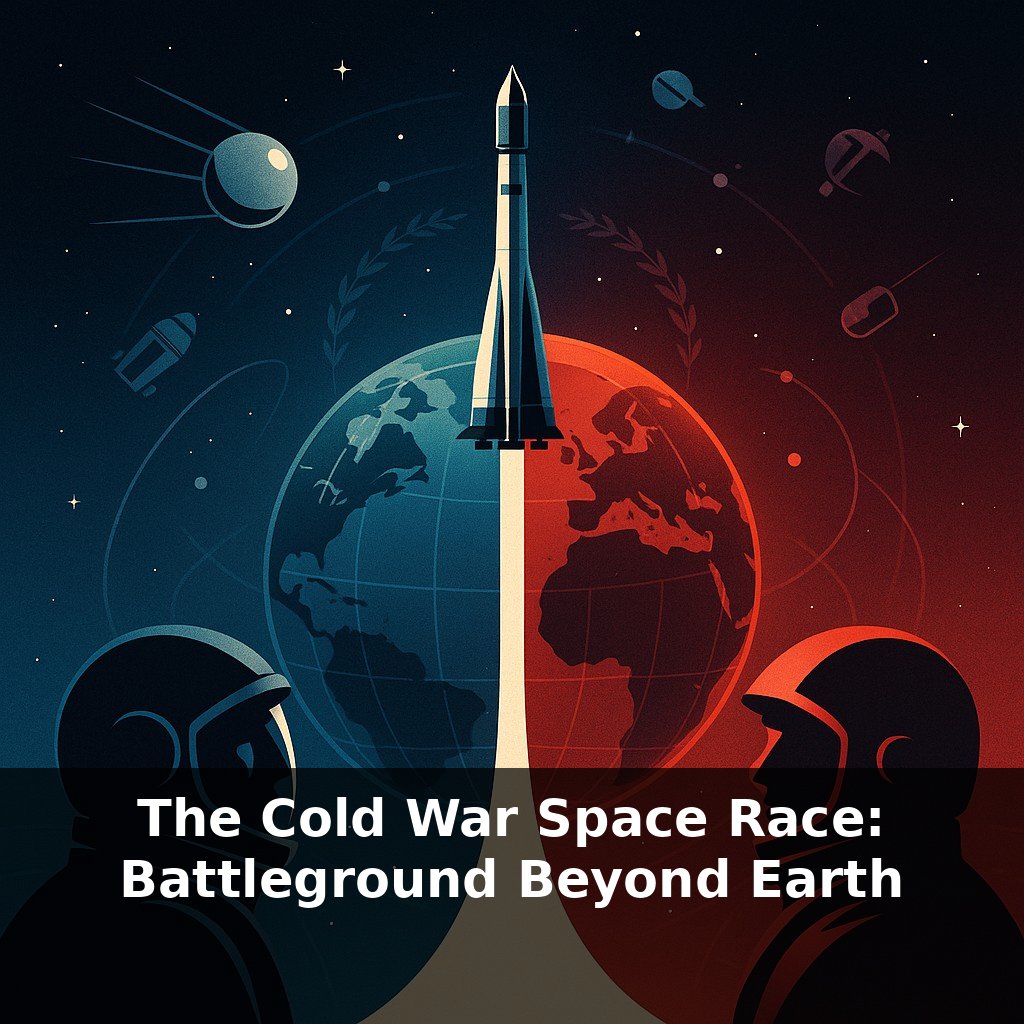
There was another pressure no checklist could capture: the Cold War clock. While engineers focused on numbers, politicians focused on dates, broadcasts, and headlines. The Soviet Union had already shocked the world with Sputnik and Gagarin; now U.S. leaders wanted not just success, but success first. That urgency seeped into tiny technical choices—how much fuel margin to keep, how much risk to accept, when to push ahead despite uncertainty. Like a storm front moving in, geopolitics subtly shaped every “go” or “no-go,” turning a test flight into a statement watched by half the planet.
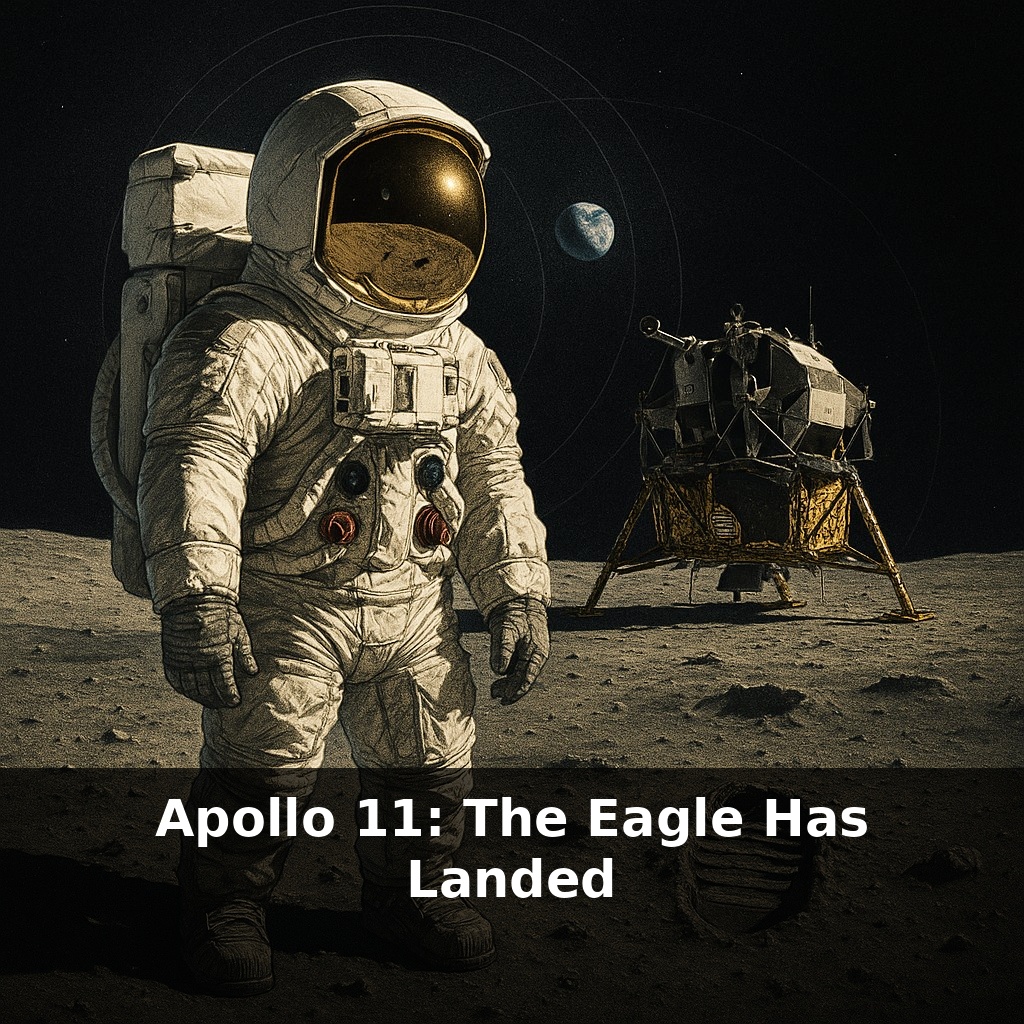
At 102 hours into the mission, one quiet word altered history: “Proceed.” With that, Armstrong and Aldrin left Collins in the Command Module and began dropping away in the Lunar Module, call sign Eagle. The separation was gentle—just a small push from springs and thrusters—but psychologically it was a cliff edge. Collins, orbiting alone, became the most isolated human in existence; Armstrong and Aldrin were committed to a machine that could never reach Earth on its own.
Eagle’s planned descent was partly automated, but it was never meant to be passive. The guidance computer followed a preloaded path, while Armstrong continuously cross-checked altitude, speed, and fuel against what the windows showed. The first surprise came early: radar data didn’t quite match the computer’s expectations. Then the 1202 and 1201 program alarms flashed—cryptic error codes indicating the computer was overloaded but still functioning. In Houston, guidance officer Steve Bales had seconds to interpret them. Years of simulation paid off; he recognized the pattern, judged the situation stable enough, and called “Go.” That single judgment allowed the descent to continue.
As Eagle dropped lower, another problem emerged. The targeted landing point was littered with boulders and a crater—no place to risk fragile landing legs. Armstrong took more manual control, flying forward to find safer ground while Aldrin called out fuel and range data. Each second spent searching ate into a fuel reserve that was already razor-thin.
The landing had been designed with multiple “bailout” points—altitudes and fuel levels where they were supposed to abort if anything looked wrong. Yet every time they hit one of those lines, conditions seemed just barely acceptable enough to keep going. The Cold War pressure wasn’t in the cockpit as a shouted order; it was in the willingness to press past the conservative choice, trading comfort for capability.
When Eagle finally settled on the surface, only about 20–30 seconds of usable fuel remained. In purely engineering terms, that was uncomfortably close. In political terms, it was a triumph of audacity that could be framed as confidence rather than risk. The same burn charts that had kept engineers awake at night now fed victory speeches.
Your challenge this week: take one high-stakes decision from your own life—past or present—and dissect it as if you were Mission Control. List the “bailout points” you had (or could have had), the data you relied on, the pressures you felt but never named, and what “20 seconds of fuel left” would look like in that situation. Then, ask yourself honestly: did you—or would you—call “Abort,” or “Proceed”?
Eagle’s path down wasn’t a straight elevator ride so much as a glide through invisible contours of gravity and velocity, closer to surfing shifting winds than falling off a cliff. Every course correction nudged the spacecraft into a slightly different future, just as a conductor’s tiny changes in tempo can transform the mood of an entire symphony. The real art lay in knowing which deviations were noise and which signaled a hidden cliff ahead. Back in Houston, teams had rehearsed edge cases so thoroughly that oddities—faint radar returns, slight fuel-rate changes, a tone in a pilot’s voice—became meaningful patterns rather than random jitters. That discipline turned an improvised landing site into a calculated risk instead of a desperate guess. In a way, Apollo 11’s descent tested not just hardware but an emerging philosophy of complex systems: accept that surprises are inevitable, and build organizations that can recognize, interpret, and adapt to them fast enough to survive.
Apollo’s real legacy may be how it shrank the gap between “impossible” and “scheduled.” Today’s Artemis planners treat the Moon less as a trophy and more as a training ground: dusty practice for power grids, radiation shelters, and off‑world supply chains. Just as a city tests flood defenses with controlled releases, NASA and private firms will rehearse deep‑space logistics there—learning how to stockpile ice, rotate crews, and debug habitats before trusting the same methods on the months‑long trip to Mars.
Apollo 11 also rewired expectations back on Earth. If three people and a stack of circuits could thread a path to another world, suddenly power grids, vaccines, even climate models felt less like wishes and more like puzzles. The Moon became a kind of distant workshop light—proof that with enough patience, even the darkest garage can hold a working engine.
Start with this tiny habit: When you look up at the moon at night, whisper one sentence aloud describing what the Apollo 11 astronauts had to trust in that moment (like “They trusted a computer with less power than my phone”). Then, the next morning when you open your phone for the first time, spend just 10 seconds imagining yourself in the lunar module cockpit during the landing alarms, calmly choosing your next move instead of panicking. Each day, swap in a different moment from the mission—launch, lunar descent, moonwalk, or re-entry—and give yourself that same calm, decisive “mission control” mindset for one task on your schedule.