Right now, your brain might be more creative than it was five minutes ago—or less—and you didn’t decide that on purpose. A short walk, a stray daydream, or one bold comment from a friend could quietly rewire how your next idea appears. So what exactly is steering that invisible shift?
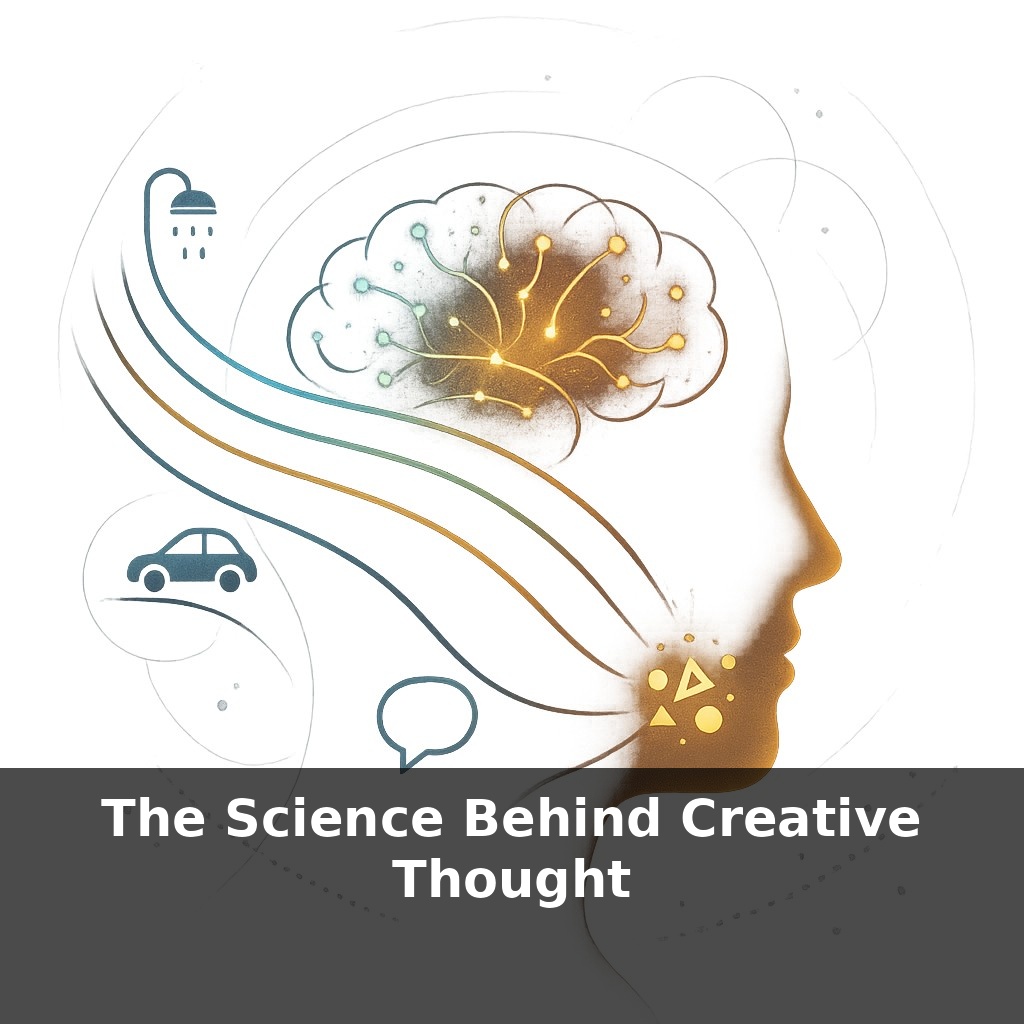
Think of the moments when your best ideas seem to show up “off‑schedule”: in the shower, mid‑commute, or while you’re half‑listening in a meeting. Those flashes feel random, but they’re not. They’re the visible tip of a much larger process—multiple brain systems quietly negotiating what gets your attention, what gets ignored, and what gets stitched together into something new.
The twist: those negotiations respond to surprisingly ordinary things. The way you move your body, the level of risk you sense in a room, even how bored you are can nudge your brain into a more inventive mode or shut it down. Instead of treating creativity like a mysterious mood, we can start treating it more like adjusting studio lighting: not guaranteed magic, but specific knobs you can reach for on purpose. In this episode, we’ll zoom in on those knobs—and how to turn them.
Some of those knobs are built into your wiring; others are surprisingly trainable. Genetics, past experiences, even your current sleep debt set a baseline, but moment‑to‑moment conditions can still tilt the odds in your favor. Think of deadlines that suddenly sharpen your focus or a casual walk that loosens a stubborn problem. Research doesn’t just show *that* these shifts happen—it’s starting to map out *when* and *how strongly*. That means you can stop waiting for “inspiration” and start stress‑testing your own habits: which environments, schedules, and risks reliably give you better raw material to work with?
Here’s where the knobs turn into something you can feel.
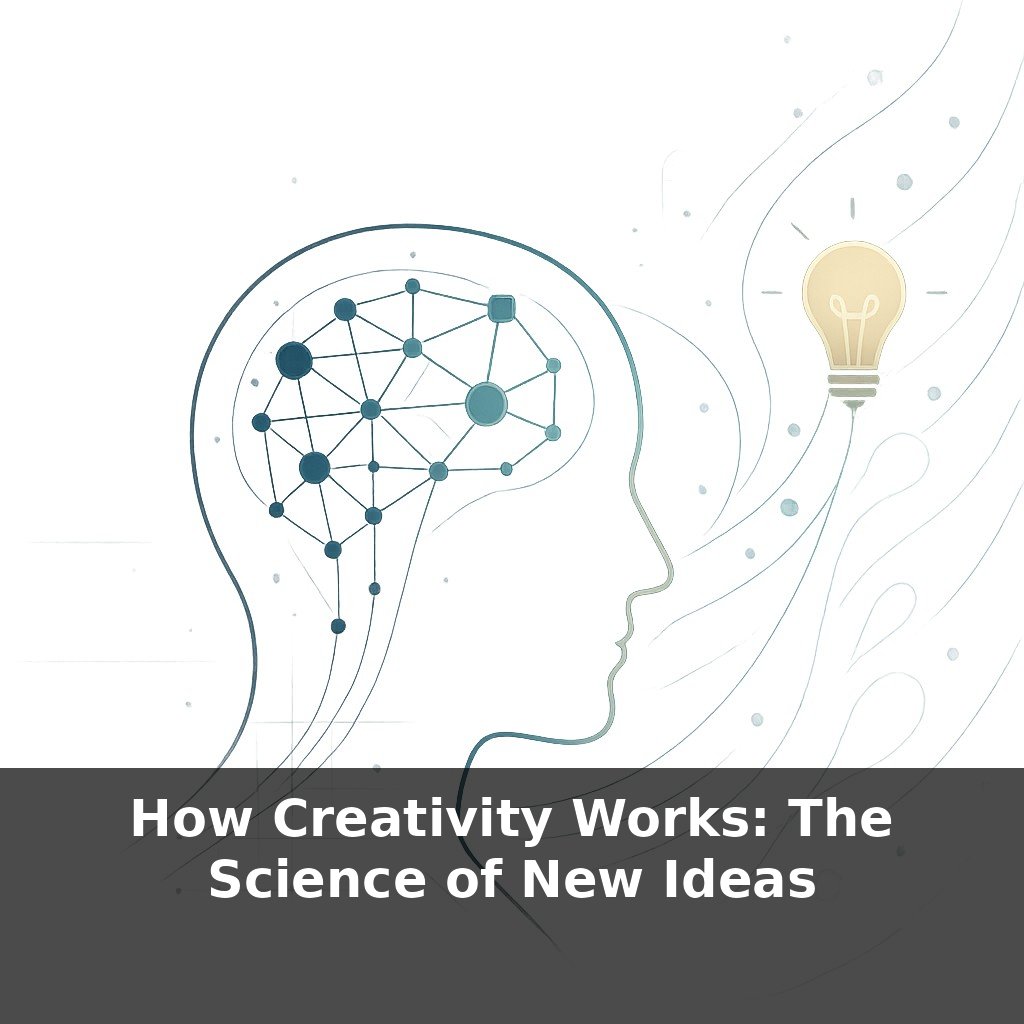
When researchers scan brains during creative tasks, they don’t see a lone “lightbulb” area turning on. They see three big networks pulsing in and out of sync. One tends to light up when your mind drifts and free‑associates, another when you’re concentrating and editing, and a third when something—inside or outside—seems important enough to switch gears for. On your most creative days, it’s not that one of these dominates; it’s that they coordinate unusually well.
That coordination isn’t fixed. People who score higher on divergent‑thinking tests—a lab stand‑in for “coming up with many different possibilities”—show measurably tighter resting‑state connections between their idea‑spinning and idea‑evaluating systems. Even at idle, their brains are better at passing half‑formed notions forward for inspection instead of letting them evaporate. It’s as if the “submit for review” button gets clicked more often, without extra effort.
Chemistry shapes this dance too. Dopamine, which tracks novelty and reward, helps decide when to loosen constraints and when to lock in. Too little, and you cling to familiar patterns; too much, and everything feels like a promising tangent. That’s one reason mild stimulation—a slightly challenging project, a new environment, a conversation with someone who disagrees with you—can feel surprisingly energizing for creative work: it nudges dopamine into a range where your brain is more willing to try alternative paths without completely abandoning structure.
Brain rhythms add another layer. Subtle shifts in electrical activity—especially in alpha and gamma ranges—tend to differ when you’re exploring options versus zeroing in. You don’t feel “alpha at 10 Hz,” but you recognize the states: relaxed, associative meandering versus sharpened, lock‑on focus. Crucially, environments that foster psychological safety, a bit of movement, and exposure to the unfamiliar seem to increase how easily you can slide between those states.
This helps explain why practices like walking meetings, low‑stakes brainstorming rounds, or even changing rooms mid‑project reliably change the feel—and output—of your thinking. You’re not just “getting fresh air”; you’re quietly reconfiguring how these networks talk to one another, and how willing they are to entertain the next odd connection that shows up.
A designer stuck on a logo brief might not “think harder” at the screen, but rotate through three micro‑environments: five minutes sketching on paper while pacing, ten minutes critiquing the rough shapes at the desk, then a hallway chat where a colleague’s offhand comment redirects the concept. What changes isn’t just mood; each context favors a different mix of loose exploration, sharp evaluation, and sensitivity to cues. Pixar’s Braintrust works similarly: raw story pitches arrive messy, but the room’s norm—frank, non‑punishing critique—lets wild ideas surface, get stress‑tested, and either upgraded or gracefully discarded. Over time, teams discover that predictable rituals beat waiting for “genius”: a short solo walk before group ideation, a strict timebox for playful variants, then a quieter pass for pruning. Like tuning a sports car for different tracks, they’re not trying to change the engine overnight; they’re swapping tires, adjusting grip, and choosing the right circuit for the next lap.
A quiet revolution is coming: instead of treating “mood” as random, you may get dashboards showing how different work patterns nudge your mind toward risk‑taking or refinement. Offices could be arranged less like rows of desks and more like a well‑designed app, with distinct “screens” for starting, wandering, and finishing ideas. The risk is turning people into optimization projects; the opportunity is learning to steer, not suppress, those natural shifts you already feel.
Treat this less like chasing lightning and more like learning your own weather. Over the next few days, notice which tiny moves—a change of soundtrack, a cooler room, a looser deadline—shift how ideas feel. Your challenge this week: deliberately tweak one variable per day and treat your mind like a lab notebook, not a verdict on how “creative” you are.