An engineer stares at a whiteboard, erases the entire plan, and asks, “What are we absolutely sure is true here?” That single question helped SpaceX shrink launch costs dramatically. This episode explores how a few such questions can systematically upgrade your creativity.
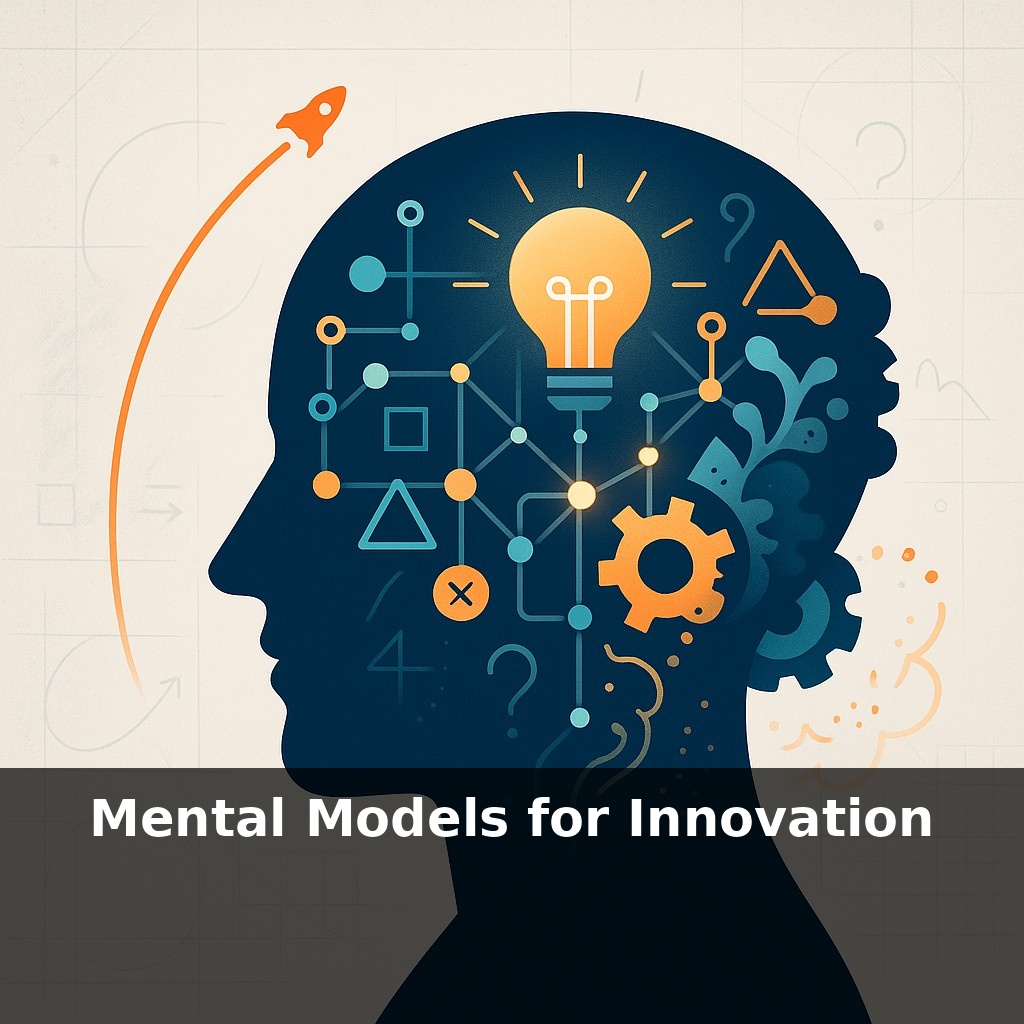
Most people treat creativity like weather: you hope for a sunny day and complain when inspiration doesn’t show up. Innovators treat it more like engineering—they wire in structures that almost *force* new ideas to appear. That’s where mental models come in. They’re not motivational slogans; they’re reusable patterns that change how you see constraints, risks, and opportunities across completely different problems.
In this series, we’ll zoom in on a small set of models that keep showing up in breakthroughs—from product launches to policy changes. Think of a founder redesigning a clumsy onboarding flow or a teacher rethinking how to assess students: the raw challenge is different, but the mental machinery can be the same. We’ll walk through how to plug these models into your own work, test them quickly, and combine them without turning creativity into a rigid checklist.
Most people only notice these models in famous success stories—SpaceX, IDEO, breakthrough startups—and miss the quieter ways they show up in everyday work. A product manager deciding which feature to cut, a nurse redesigning a patient intake form, or a coach rethinking practice drills are all, often unconsciously, using fragments of these patterns. The trouble is, unconscious use is unreliable. The moment pressure rises, we default to habits. The shift we’re after is moving from “I sometimes stumble into good ideas” to “I know *how* I got there, and I can do it again on demand.”
Think of this toolkit as four distinct moves you can make on any tricky problem: strip it down, zoom it out, flip it forward in time, and cycle through reality fast.
First, strip it down with First-Principles Thinking. Instead of asking, “How do we improve our onboarding?” you ask, “What *must* happen for a new user to succeed here?” Maybe it’s only three things: understand value, trust the product, complete one key action. Once those essentials are on the table, everything else is negotiable. That’s the same logical move behind rethinking materials and processes in rocketry, but you can apply it to pricing, hiring, or even your personal schedule.
Second, zoom out with Systems Thinking. Here you stop treating the issue as an isolated task and start mapping the moving parts: incentives, feedback loops, bottlenecks, delays. A hospital reducing ER wait times doesn’t just “add staff”; it traces how triage rules, lab turnaround, software alerts, and even parking all interact. You’re not hunting for a single fix—you’re looking for leverage points where a small change cascades.
Third, flip time forward with Second-Order Effects. The tempting feature that “will only take a sprint” might, two quarters from now, triple support tickets and fragment your codebase. A discount campaign that boosts signups today might train customers to delay purchases until the next sale. This model forces you to draft a “future press release”—not just what happens next week, but what becomes normal if this decision scales.
Fourth, cycle through reality with a Build–Measure–Learn loop. Here the emphasis is on speed with intention: define the smallest version of your idea that can teach you something non-obvious, put it in front of real people, and decide what to change or kill based on evidence. McKinsey’s finding that rapid experimenters outgrow peers isn’t about luck—it’s about racking up more *informed* attempts per unit of time.
Crucially, these aren’t rival philosophies. A strong innovator will, in a single afternoon, strip a problem down, map its system, forecast consequences, and then design one sharp experiment to test the riskiest assumption first.
A straightforward way to see these moves is in small, real-world decisions. Take a local café noticing a dip in weekday traffic. One owner might instinctively launch a “buy one, get one” promo. Another pauses and runs the toolkit. They isolate the few non-negotiables of a great visit, then sketch the surrounding system: office schedules, nearby bus stops, Wi‑Fi reliability, order bottlenecks. Second-order thinking nudges them to ask: “If we train customers to only come when there’s a discount, what does that do to next quarter’s revenue?” Instead of a blanket promo, they test one sharp change: a pre-order pickup shelf aimed at nearby co-working spaces, measured over two weeks. That tiny experiment might reveal unexpected results—perhaps shorter lines attract remote workers who start holding regular meetups there, turning a small tweak into a stable new demand stream.
Your challenge this week: pick one nagging problem and consciously run at least two of these moves on it, even if only on a scrap of paper.
Soon, AI copilots will handle the “busywork thinking” the way spreadsheets replaced hand calculators. When that happens, the differentiator won’t be who can crank through tasks faster, but who can decide *which* problems are worth solving and *how* to frame them. Expect job interviews to sound less like quizzes and more like live problem studios: “Walk me through how you’d reframe urban noise,” or “Show me three different models you’d use on this supply issue,” with your reasoning becoming your real résumé.
Over time, you’ll notice certain models becoming your “go-to plays,” the way a point guard learns when to pass, shoot, or slow the game down. As you stack a few wins, start a tiny “model log”: when a decision goes better than expected, jot down which lens you used. That record becomes a private playbook you can refine instead of reinventing.
Start with this tiny habit: When you catch yourself thinking “that won’t work” about an idea at work, quietly add the word “unless…” and finish that sentence in your head. Don’t try to fix the whole idea—just come up with one tiny “unless” twist, like “unless we tested it with only 3 customers first” or “unless we tried it just for next week’s meeting.” If you’re in a meeting, jot that single “unless” phrase in the margin of your notes or in a corner of your screen so it doesn’t get lost. Over time, you’ll train your brain to switch from automatic criticism to automatic experimentation.