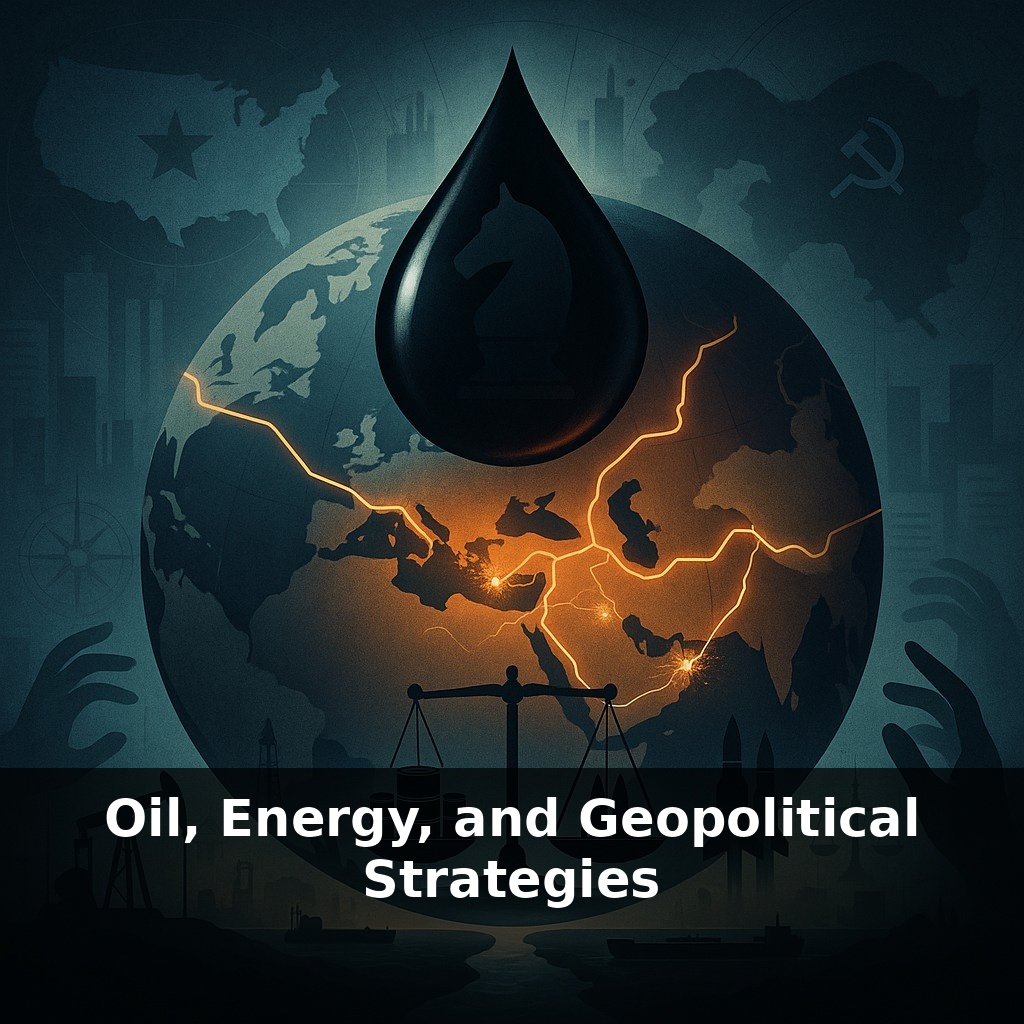
By the early 1980s, oil supplied nearly half of all the energy humanity used—yet no one voted for the people who controlled it. A desert pipeline blown up, a narrow strait threatened, a price quietly changed in Vienna…and whole governments suddenly stood or fell.
By the late Cold War, a superpower’s strength could be measured not only in warheads, but in barrels per day. Oil flowed through treaties, coups, and boardrooms long before it reached any gas tank. Western Europe’s “economic miracle” after Marshall Plan aid quietly depended on cheap Middle Eastern crude; the Soviet Union’s social spending relied just as quietly on hard-currency oil exports. When prices spiked or sank, it wasn’t just markets reacting—it was strategy.
This era forged habits we still live with: U.S. naval patrols in chokepoints like the Strait of Hormuz, OPEC’s coordination with non‑OPEC states, Moscow’s use of pipeline routes as bargaining chips. Energy security became a permanent agenda item in NATO meetings, not a temporary crisis. To understand today’s debates over sanctions, “energy independence,” or Russian gas in Europe, we have to see how oil became embedded in Cold War playbooks.
Oil also reordered maps and job descriptions. Shipping routes hardened into strategic corridors; sleepy ports turned into global fuel stops; small desert monarchies suddenly managed budgets larger than some NATO members. Inside Western finance ministries, energy desks grew as important as defense desks, because a distant refinery fire could jolt inflation at home. On the Soviet side, each new pipeline to Europe was debated like a treaty: which clients to favor, which transit states to trust, how much leverage to risk. Oil wasn’t only traded; it was scheduled, pledged, and quietly weaponized.
In Washington after 1973, “energy crisis” stopped being a headline and became a planning category. The U.S. didn’t just build the Strategic Petroleum Reserve; it rewired policy so that fuel economy standards, suburban commuting patterns, and even speed limits became national‑security issues. The International Energy Agency (IEA), created in 1974, coordinated emergency stockpiles and demand‑restraint plans among major importers—an economic NATO for oil shocks. When prices soared again in 1979 after Iran’s revolution, those new institutions helped rich consumers avoid a full repeat of the 1973 panic, and signaled to producers that importers now talked to each other.
Producers adapted too. OPEC states learned that pushing prices too high could accelerate conservation, nuclear power, and North Sea drilling. They also discovered internal discipline was fragile: Iran‑Iraq war damage, Saudi‑Iran rivalry, and fiscal needs in places like Nigeria and Venezuela made quotas hard to respect. Meanwhile, non‑OPEC output from Alaska, the North Sea, and Mexico quietly eroded the cartel’s share, like new competitors undercutting a once‑dominant firm in a maturing industry.
For Moscow, the export story was different. Its customers in Eastern Europe often paid in soft currency or barter, so real profits came from sales to the West. When oil was dear in the late 1970s, that felt like a windfall that could cover both guns and butter. When prices collapsed in the mid‑1980s—partly due to Saudi overproduction and slowing OECD demand—the USSR discovered how exposed it was. Fewer petrodollars meant harder choices: cut imports of grain and technology, trim support for allies, or squeeze domestic consumption further.
Chokepoints added a military edge. The “Tanker War” phase of the Iran‑Iraq conflict turned the Gulf into an arena where insurance rates, naval escorts, and missile ranges determined who dared ship crude. U.S. reflagging of Kuwaiti tankers under the Stars and Stripes was more than symbolism; it signaled that sea‑lane security for oil was now a standing mission, not a temporary escort job. In NATO exercises and Warsaw Pact planning alike, drills increasingly treated refineries, ports, and pipelines as targets whose loss could cripple a front faster than any tank battle.
Think of Cold War oil strategy like a high‑stakes options market. States weren’t just buying and selling barrels; they were constantly pricing future risks and political payoffs. When Japan signed long‑term contracts with Indonesia in the 1970s, it was less about today’s tanker and more about locking in tomorrow’s bargaining power. Western Europe’s deals for Soviet gas worked similarly: cheaper fuel now in exchange for a quiet, growing dependence that Moscow could someday price in.
Smaller players learned to write their own derivatives, in a sense. Norway used North Sea revenue to build a sovereign wealth fund, converting finite wells into a diversified portfolio—stocks and bonds instead of extra tanks. Mexico, by contrast, borrowed heavily against expected oil income and was punished when prices slid, opening the door to IMF programs and U.S. leverage.
Even corporate boardrooms mirrored this calculus. Multinationals hedged by spreading refineries across continents, so a coup or embargo in one zone didn’t wipe out their refining “positions” elsewhere.
Your challenge this week: trace one modern headline—about gas prices, sanctions, or a pipeline dispute—back to at least one Cold War‑era decision or infrastructure choice. Identify the company, treaty, or field involved, and note how a move made decades ago still shapes today’s energy bargaining power.
Today’s “green race” may quietly echo yesterday’s oil contests. As states scramble for lithium and rare earths, they’re not just buying deposits; they’re lining up future leverage. EV and battery supply chains can become tomorrow’s pressure points, nudging trade deals and defense ties. A country that pairs flexible grids with storage and modest fossil use might, like a cautious investor, ride out swings in any single resource—turning volatility into a source of quiet bargaining power.
Today’s contest may hinge less on guarding wells than on redesigning demand itself: insulation rules, transit choices, and grid software can blunt the sting of any single exporter. Think of it as learning new routes through a crowded city; the more paths you map, the harder it becomes for any one tollbooth to stall your entire trip.
Before next week, ask yourself: How does my daily energy use (gas in my car, heating, flights, delivery orders) tie me—very specifically—to the geopolitical leverage of major oil producers, and what one swap to a lower-oil alternative am I actually willing to make this week (e.g., public transit once, carpooling, or skipping a short-haul flight)? If a sudden oil supply shock hit tomorrow and doubled prices overnight, which two parts of my life or business would be most vulnerable, and what’s one concrete step I can take today to reduce that vulnerability (like renegotiating a supplier, testing remote work, or checking energy-efficiency upgrades)? Looking at my investments, retirement accounts, or company strategy, am I unintentionally betting on the status quo of petrodollar dominance, and what’s one specific change—such as reallocating a small portion toward renewables, grid infrastructure, or efficiency tech—that would better align with the energy transition trends discussed in the episode?