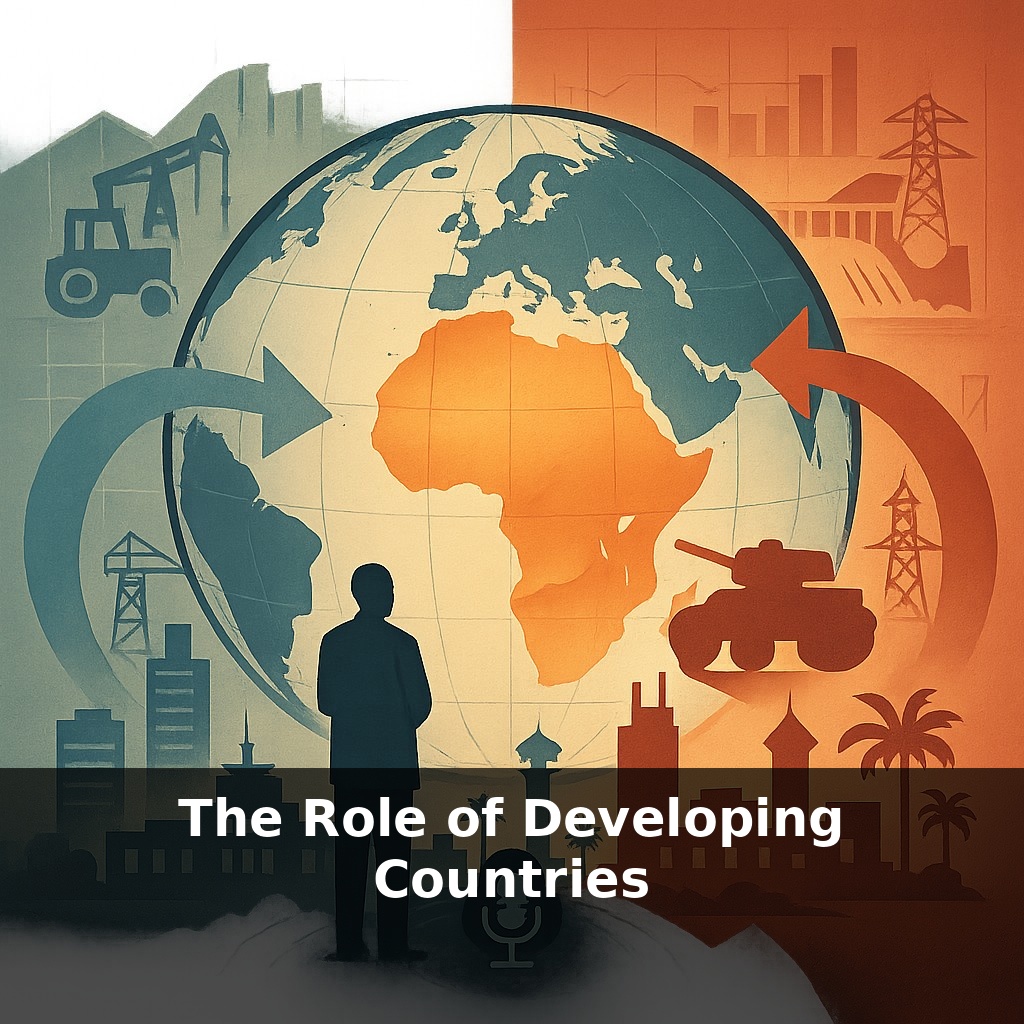
A newly independent country in the 1960s could wake up one year flooded with aid money, tractors, and engineers from Washington—then the next year, see Soviet-built dams and tanks arrive instead. The paradox: development plans doubled as battle plans in a war no one officially declared.
By the late 1950s, leaders in Accra, New Delhi or Jakarta weren’t just drafting five‑year plans; they were fielding competing offers that arrived with fine print written in the language of the Cold War. An airfield wasn’t just an airfield—it was a potential bomber runway or export hub. A university scholarship program wasn’t just about education—it was a pipeline for future allies.
Superpower envoys learned quickly that these governments were not passive recipients. Many experimented with “non‑alignment,” playing Washington and Moscow against each other to extract better terms, more equipment, or political backing at the UN. Some used food aid to calm urban unrest; others leveraged military credits to tame rival factions at home.
Like a small firm negotiating between two giant investors, every signature on a loan or training deal could shift a country’s long‑term trajectory in ways that only became visible decades later.
Some leaders aimed to turn that rivalry into long‑term leverage. They didn’t just weigh who offered more cash; they compared strings attached, repayment schedules, and whether projects built export capacity or just prestige. Others misread the moment, locking into glamorous megaprojects that generated headlines but not revenues. Domestic politics mattered too: a steel mill might be placed in a ruling party stronghold rather than where ore or railways actually were, like planting a factory in the desert because that’s where your voters live, not your resources.
The fiercest contests often unfolded not in parliaments but in planning ministries and central banks. One finance minister might sit with USAID advisers proposing roads, ports and export zones; next week, a Soviet delegation would arrive with blueprints for dams, steel complexes and training institutes. The competition reshaped entire development models.
Three broad patterns emerged. First, showcase allies: places like South Korea or, on the other side, Cuba. Here, superpowers tolerated high up‑front costs because “success” could be televised. Generous grants, imports of machinery, and access to rich markets let some of these economies climb the value chain faster than their peers. South Korea leveraged U.S. grants and security guarantees to push land reform, protect infant industries, and pour money into education—choices local elites endorsed, not Washington.
Second, swing states: India, Egypt, Indonesia, Yugoslavia. These governments accepted mixed packages—World Bank loans alongside Soviet‑built plants, Western technical missions beside Comecon trade deals. Rather than copy a single blueprint, they assembled hybrids: partial planning, partial markets, carefully rationed foreign investment. That experimentation helped some diversify away from raw‑material exports, but it also created bureaucratic thickets and overlapping obligations to multiple sponsors.
Third, disposable clients: regimes backed mainly for bases, minerals or voting blocs at the UN. In these cases, guns and prestige projects arrived faster than accountants. Railways ended in mines and ports useful for commodity export, not in networks joining domestic markets. Health and primary education often lagged behind military spending. By the early 1980s, the debt pile‑up in many such countries reflected years of borrowing for projects that produced little foreign exchange.
Local leaders were not all alike. Some, like Tanzania’s Julius Nyerere, used external rivalry to attempt ambitious social transformations, betting on rural collectivisation and rapid literacy gains. Others channelled aid into patronage: import licences, state‑owned firms stuffed with loyalists, and security services that outgrew basic public administration. Where institutions to audit, tax, and maintain infrastructure stayed weak, even well‑designed projects decayed.
Your challenge this week: pick one developing country you’re curious about—say Ghana, Vietnam, or Chile. Trace one major Cold‑War‑era economic decision: a dam, a land reform, a big nationalisation or privatisation. Ask: Who financed it? Which side cheered it on? Then, follow its afterlife: Is that dam still generating power and revenue, or is it a stranded asset? Did that reform broaden opportunity, or entrench a new elite? You’re not just doing history; you’re mapping how global rivalry hardened into today’s winners, strugglers, and stuck‑in‑the‑middle economies.
Kenya’s story offers a concrete glimpse of how high‑stakes choices played out. Western donors underwrote tea and coffee schemes, export‑oriented roads, and tourism infrastructure, while Soviet advisers occasionally courted unions and student groups rather than ministries. The result wasn’t a clear “win” for either side, but a pattern: sectors tied to foreign exchange boomed, while local manufacturing and low‑income regions often lagged.
Or consider Algeria, which poured energy windfalls and Eastern‑bloc credits into heavy industry far from its main consumer markets. Plants ran below capacity; spare parts had to be imported with precious hard currency. When oil prices fell in the 1980s, debts that once seemed manageable suddenly constrained every new policy choice.
Think of these cases less as morality tales and more as early blueprints for today’s debates over Chinese Belt and Road loans, Gulf sovereign wealth funds, or climate finance aimed at the same corridors and ports.
Today’s climate funds, Belt and Road corridors and Gulf investment zones sit on top of those earlier choices like fresh layers of concrete on old foundations. A port once upgraded for Cold‑War shipping lanes might now chase container traffic or green‑hydrogen exports; a training deal might echo in today’s tech diaspora. Your future tax bill, job market, even blackout risk can hinge on how past crises were “resolved” rather than truly fixed. History here is less a museum than a partly finished construction site.
Cold‑War money didn’t just build roads; it carved habits into ministries—who they call for cash, which currencies they trust, which statistics they massage. Like grooves worn into a well‑used tool, those habits shape today’s talks over green tech, migration, and debt relief, quietly steering choices that look “new” but follow very old paths.
Before next week, ask yourself: 1) “Looking at my own country, where do I most clearly see the ‘resource curse’ or dependency on raw commodity exports the podcast described, and how is that shaping people’s daily lives around me?” 2) “If I had to choose one local industry that could realistically move us up the value chain—like processing our own minerals, food, or textiles instead of exporting them raw—what would it be, and who (a specific company, co‑op, or community group) is already trying to do this that I could learn more about or support?” 3) “When I buy something this week that’s imported from a rich country, how would that purchase look different if it were produced here under fair labor and environmental standards, and what trade‑offs—price, quality, convenience—would I honestly be willing to accept to make that shift possible?”