Right now, humans pump out over 100 times more carbon dioxide than volcanoes. So here’s the puzzle: if our planet is constantly flooded with gases, metals, and dust, why isn’t Earth’s surface just chaos? In this episode, we’ll step inside the quiet systems that keep it all in balance.
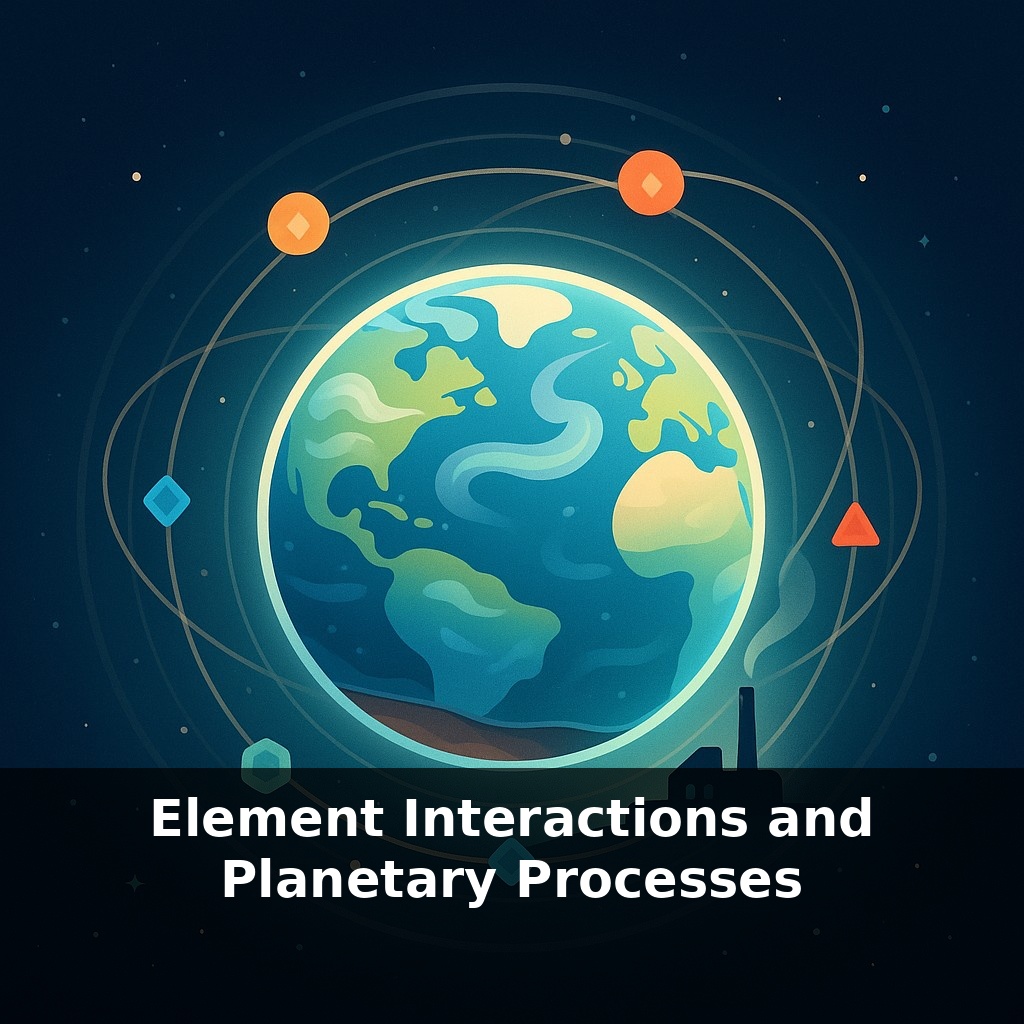
Start with a handful of elements—carbon, nitrogen, oxygen, sulfur, silicon, iron, phosphorus—and you can reconstruct most of Earth’s story. These aren’t just ingredients in rocks and air; they’re restless travelers, constantly traded between volcanoes, oceans, soils, and living cells. Each exchange tweaks climate, habitability, and even the color of the sky.
When silicate rocks crumble, they quietly pull CO₂ from the air. When microscopic life captures nitrogen, entire food webs ignite. A dust grain leaving the Sahara can carry enough phosphorus to help feed a forest an ocean away.
In this episode, we’ll follow those journeys: how deep Earth motions lift fresh rock to the surface, how rain and roots break it down, how gases climb to the stratosphere and sometimes tear holes in our ozone shield, and how all these motions co‑author a planet that can stay alive.
Yet the real twist is how slowly and unevenly these element exchanges run. Carbon can linger in deep ocean waters for centuries, while a nitrogen atom might race from a lightning bolt into a leaf within days. Oxygen levels in the air have swung wildly over Earth’s history, sometimes high enough to fuel giant insects, sometimes barely enough for complex life. And these cycles don’t respect boundaries: city smog alters mountain snowmelt; fertilizer runoff helps shape coastal dead zones; a single eruption can tint sunsets worldwide, yet barely dent global CO₂ compared with our engines.
Start with the solid parts of Earth, and the story quickly stops being solid at all. Deep below your feet, silicon, iron, sulfur, and carbon are shuffled in slow motion by plate tectonics: ocean crust dives, heats, and partially melts; only some elements escape upward in magmas, while others are locked away for millions of years. That selective recycling is why Earth’s surface chemistry today looks nothing like it did early in its history.
When plates move, they don’t just reshape continents; they redraw chemical trade routes. Uplifted mountains expose fresh minerals that can react with water and air. Iron-bearing rocks rust, stripping oxygen from rainwater and locking it into solid minerals. Phosphorus, once trapped in crystals, is freed grain by grain and eventually washed to rivers and coasts, where it can either nourish ecosystems or get buried again in marine muds.
Biology hacks these geologic flows. Roots fracture rock faster than frost alone, exuding acids that speed up mineral breakdown and pull key nutrients into soils. Microbes in those soils juggle nitrogen between forms that plants can use, forms that leak back to the air, and forms that slip into groundwater. A tiny shift in their activity—say, from warming or fertilizer—can amplify into regional changes in crop yields or coastal oxygen levels.
The atmosphere is both highway and referee for these exchanges. Oxygen built up not because it was produced, but because other elements stopped efficiently removing it. Once rocks and oceans became less “hungry” for oxygen, the gas could accumulate, transforming weathering styles, ocean chemistry, and the kinds of metabolisms that could thrive.
Meanwhile, trace components like chlorine and bromine, mostly harmless when locked in salts or rocks, become powerful once industrial chemistry or rare eruptions loft them high enough. In the stratosphere, they reorganize oxygen into different forms, cooling that layer and subtly shifting how energy moves through the whole climate system.
Over geologic time, these intertwined loops behave more like the evolving codebase of a complex app than a set of isolated features: change one module—tectonics, biology, or atmospheric composition—and previously stable behaviors can refactor into something entirely new.
Think of each major element as a star player with a different training schedule. Carbon moves on the “season” timescale: forests and oceans can reshuffle it over decades to centuries. Nitrogen is more like a daily practice—storms, microbes, and fertilizers can swing its forms in soils and rivers within hours to weeks, changing which plants win or lose in a field. Phosphorus barely moves at all unless something does work: grinding glaciers, plows, or desert winds that loft dust across oceans.
Zoom into a single raindrop falling through polluted air: sulfur and nitrogen compounds dissolve into it, turning it slightly acidic. Where that drop lands—on limestone, granite, or a metal rooftop—decides whether it quietly neutralizes, deepens a crack, or corrodes infrastructure. Scale that up, and entire mountain ranges wear differently, releasing distinct mixes of ions to rivers.
Even the deep ocean acts as a delayed echo. Iron trickling off continental margins can fertilize plankton blooms thousands of kilometers away, but only when currents, light, and temperature line up just right.
Future work will treat Earth more like a programmable system than a fixed backdrop. Enhanced weathering tests, deep‑sea mining trials, and satellite tracking of dust and volcanic plumes will act like “live edits” to planetary code, revealing which tweaks are reversible and which lock in long‑term shifts. The open question is how much deliberate control we can safely exert before feedbacks outpace our capacity to predict or govern them.
In the end, these cycles behave less like background scenery and more like an intricate operating system that never fully shuts down. Tug on phosphorus in a rainforest and you might nudge nitrogen in distant seas. Your challenge this week: treat every cloud, breeze, and patch of soil as visible code, and ask, “What is this line trying to run?”